New Delhi
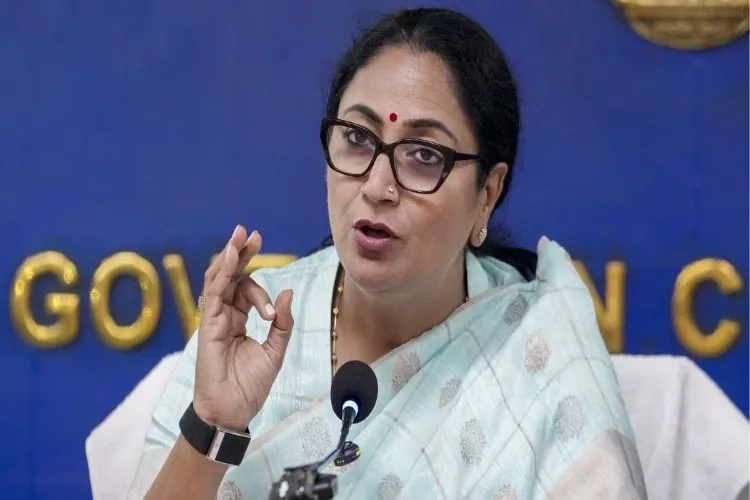
Delhi Chief Minister Rekha Gupta on Thursday stated that the Delhi EV Policy 2026 is not merely a step towards a cleaner environment but also a public-interest policy designed with the economic well-being of ordinary citizens in mind.
According to the Chief Minister's office, the policy aims to reduce both the initial purchase cost and the lifetime operating expenses of electric vehicles, thereby encouraging more people to adopt them.
According to Chief Minister Rekha Gupta, the primary question on most people's minds before buying an electric vehicle is whether it will actually save money. The Delhi EV Policy 2026 provides a clear and positive answer to this question. The policy offers a host of benefits, including purchase incentives, bonuses for scrapping old polluting vehicles, lifetime road tax exemptions, waivers on registration fees, and lower operating and maintenance costs compared to petrol and diesel vehicles. This is why electric vehicles are becoming the most prudent economic choice for households, commercial drivers, and businesses of all sizes.
She explained that under the policy, eligible beneficiaries purchasing electric two-wheelers will receive a purchase incentive of up to Rs 30,000, a scrapping incentive of Rs 10,000, a lifetime road tax exemption, and a complete waiver of registration fees. Thanks to these benefits, in addition to tax-related savings, an initial saving of over Rs 50,000 will be possible. Eligible beneficiaries purchasing electric auto-rickshaws (L-5 category) will receive a purchase incentive of up to Rs 50,000, a scrapping incentive of Rs 25,000, a lifetime road tax exemption, and a waiver of registration fees. This enables an initial saving of over Rs 75,000, excluding tax benefits, the release said.
Under the EV policy, buyers of electric rural service vehicles will receive a scrapping incentive of Rs 15,000 upon scrapping their old vehicle. Eligible beneficiaries purchasing electric N-1 goods carriers will receive a purchase incentive of up to Rs 1 lakh, a scrapping incentive of Rs 50,000, a lifetime road tax exemption, and a registration fee waiver. This allows for an initial saving of approximately Rs 1.50 lakh, in addition to tax benefits, the release added.
Delhi CM Rekha Gupta stated that while the EV policy does not provide a purchase incentive for private electric cars, an eligible buyer who scraps a conventional fuel-powered car to purchase an electric car will receive a scrapping incentive of up to Rs 1 lakh.
Additionally, they will benefit from a lifetime road tax exemption and a registration fee waiver. Due to these provisions, buyers will gain significant financial advantages despite the absence of a direct purchase incentive.
She highlighted that the policy's key feature is the combination of multiple financial benefits rather than a single type of subsidy. Eligible buyers can substantially reduce the vehicle's actual purchase cost by availing themselves of the purchase incentive, scrapping incentive, lifetime road tax exemption, and one-time registration fee waiver. This has made Delhi one of the most attractive states in the country for purchasing electric vehicles, the release said.
Gupta remarked that the government has decided to utilise public funds where they yield the greatest benefit for ordinary citizens. With this approach, priority has been given to vehicle categories such as two-wheelers, three-wheelers, and N-1 goods carriers, as these are primarily used by middle- and low-income families, commercial drivers, delivery partners, and small businesses. Instead of providing purchase subsidies for private cars, the government has focused its investment on vehicle categories that will yield the greatest positive environmental impact and strengthen the livelihoods of millions.
She stated that the road tax exemption under this policy is not limited to the policy's tenure but applies for the vehicle's entire lifespan.
Additionally, there is a full waiver on registration fees at the time of purchase. These benefits not only lower the acquisition cost but also make electric vehicles more economical compared to traditional petrol and diesel vehicles.
The savings extend beyond the initial purchase; the energy cost per kilometre for electric vehicles is significantly lower than that of petrol or diesel vehicles.
Furthermore, having fewer moving parts results in lower maintenance and servicing costs. Over the vehicle's lifetime, these operational savings often exceed the value of the initial incentives provided by the government, the release noted.
READ MORE: A Muslim village proves cleanliness, harmony, development go together
The Chief Minister noted that over 300 registered electric vehicle models are currently available in Delhi. These include affordable scooters, premium motorcycles, electric auto-rickshaws, and commercial cargo vehicles. Growing competition among various companies has improved product quality, expanded consumer choices, and led to electric vehicles suited to diverse income groups and needs.








_(1).webp "Representational Image")
.webp)


.webp)