New Delhi
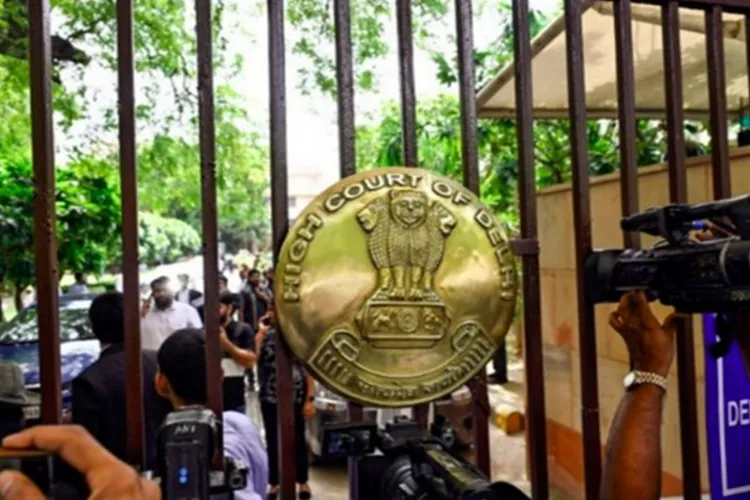
The Delhi High Court on Wednesday issued notice to the Delhi government and several authorities on a Public Interest Litigation (PIL) raising serious concerns about child trafficking at railway stations in the national capital.
The matter was heard by a bench of Chief Justice DK Upadhyaya and Justice Tejas Karia. The PIL has been filed by Just Rights for Children Alliance and the Association for Voluntary Action.
While issuing notice, the Court observed that the petition highlights a grave issue, stating that child trafficking at railway stations and surrounding areas appears to be widespread and continuing despite repeated concerns raised by courts in the past. The bench noted that although authorities, including the Railways, have framed Standard Operating Procedures (SOPs), the situation on the ground does not seem to have improved.
The Court directed the Delhi government and the Department of Women and Child Development to file their replies within four weeks. It also sought responses from the Union Ministry of Railways, the Commissioner of Police, and the National Commission for Protection of Child Rights (NCPCR).
The Court further asked the NCPCR to submit not only a reply to the petition but also data on child trafficking cases in Delhi within six weeks, to assist the Court in passing appropriate directions.
According to the petition, the PIL has been filed due to serious lapses by authorities in rescuing and rehabilitating trafficked children at railway stations in Delhi. It alleges that due to a lack of proper action, many children are not being safely rehabilitated and are instead being returned to traffickers, resulting in violations of their fundamental rights.
The petition also claims that such inaction is contrary to the SOPs issued by the Ministry of Railways for the care and protection of children in contact with railways.
The petitioners state that they have been working on child rights issues for several decades, focusing on identifying, rescuing, rehabilitating, and educating children through various interventions, including legal action and public awareness. They also point out that their efforts have contributed to important court judgments relating to child labour, trafficking, missing children, and child protection.
The PIL refers to several Supreme Court judgments in the Bachpan Bachao Andolan cases, where directions were issued to authorities for creating proper rehabilitation systems, prohibiting child labour in certain sectors, ensuring registration of FIRs in cases of missing children, and framing effective procedures to deal with trafficking and child protection. These judgments underline the need for proper care, protection, and rehabilitation of children.
The petition is based on five rescue operations carried out at Old Delhi Railway Station, New Delhi Railway Station, and Anand Vihar Terminal. During these operations, several children were rescued from trains and railway premises by the petitioners along with the Railway Protection Force (RPF). However, it is alleged that despite these efforts, the Government Railway Police (GRP) failed to take necessary steps as required under existing SOPs.
The petition further claims that essential procedures such as registration of FIRs, proper age verification, identification of guardians, and production of rescued children before the Child Welfare Committee were not followed. As a result, some rescued children were allegedly sent back to traffickers, and adequate rehabilitation or safety measures were not provided.
READ MORE: Aneesa Sayyad: The ‘Golden Girl’ of Indian shooting
During the hearing, Advocate Prabhsahay Kaur referred to a specific incident where a minor girl was rescued but was not produced before the appropriate child welfare authority. Instead, she was allowed to leave and was later found working again at the same railway station during a subsequent raid.
Expressing concern over the situation, the Chief Justice questioned the Delhi government's counsel on the steps being taken to address the issue. The Court remarked that the seriousness of the problem could be observed by anyone visiting railway stations for a short duration.










.webp "Representational Image")
.webp "Defence Minister Rajnath Singh")

_(1).webp)