Bhakti Chalak/Pune
At a time when religious polarisation often dominates public discourse, a small village in Maharashtra has offered a powerful counter-narrative of harmony and shared faith.
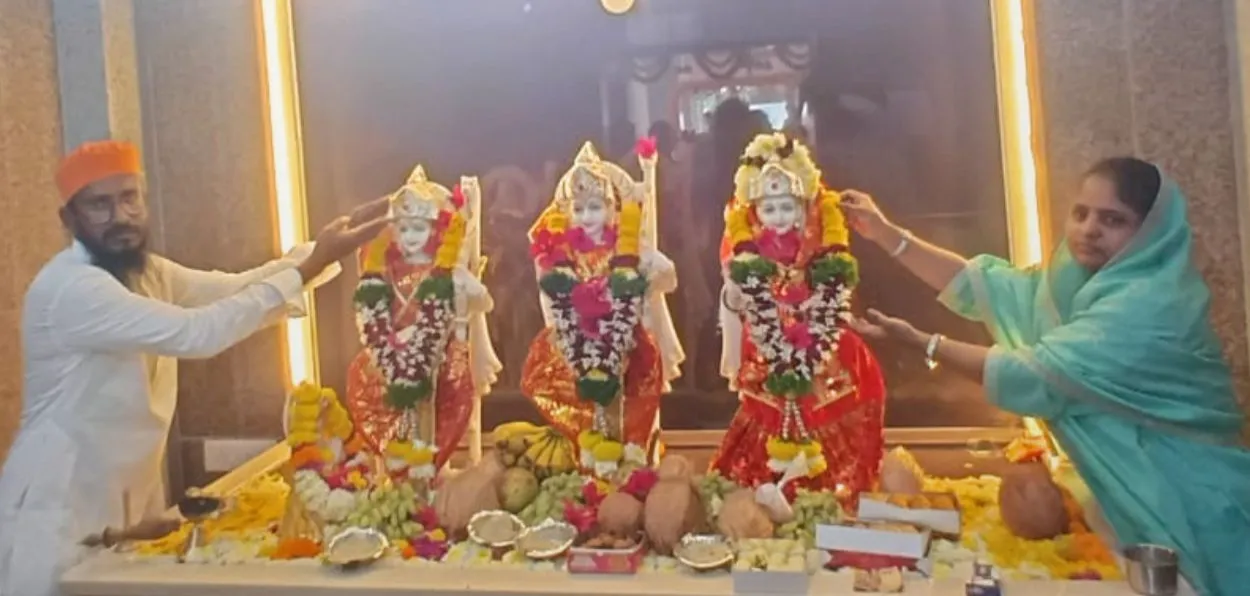
In Nimbut village, located in Baramati taluka of Pune district, a Muslim couple was invited to perform a rare and symbolic gesture—placing a silver crown on the idol of Lord Ram during Ram Navami celebrations.
The festival, which marks the birth of Lord Ram and is celebrated by Hindus across the world, held special significance this year for Nimbut. The village inaugurated a newly built Ram temple, where seven idols were consecrated in a ceremony attended by residents from all communities.
As part of the rituals, the temple management committee organised a ceremony to adorn the deities with silver-crafted crowns. In a departure from tradition—where Hindu priests typically perform such rituals—Taufiq Shabuddin Syed and his wife Parveen Syed were chosen to place the crown on the idol of Lord Ram.
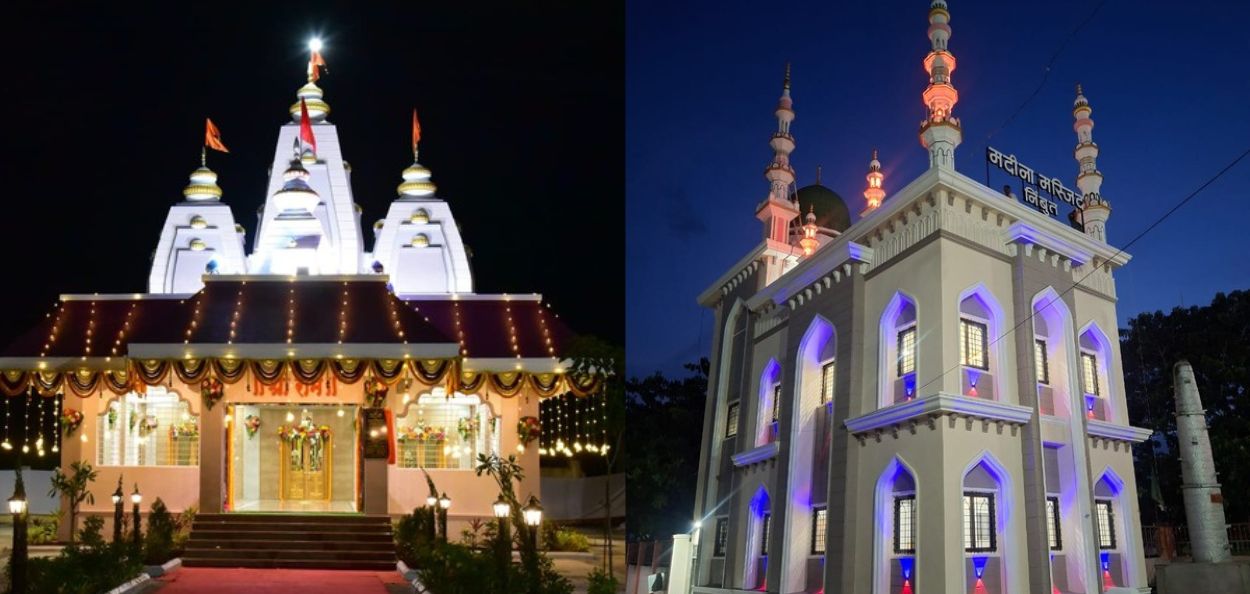 The temple and mnosque of village Nimbut
The moment, witnessed by a large gathering of villagers, stood out as a rare and meaningful example of interfaith trust and unity.
The initiative was conceptualised by Satish Shivajirao Kakade, a local leader known for spearheading development work in the village. Kakade emphasised that true progress goes beyond infrastructure and must include social cohesion.
“For me, development is not just about roads and water, but about connecting hearts,” Kakade said. “During elections, politicians often divide people along caste and religious lines. But whether it is a temple or a mosque, God is one. He looks only at devotion, not religion.”
Kakade’s vision led to the implementation of a unique concept in Nimbut—“one temple and one mosque.” With government support and community contributions, the village now has both structures standing side by side. Funds amounting to ₹55 lakh were allocated for the mosque and ₹60 lakh for the Ram temple, with villagers adding further contributions. Today, the mosque and temple, valued at ₹80 lakh and ₹85 lakh respectively, symbolise the village’s commitment to coexistence.
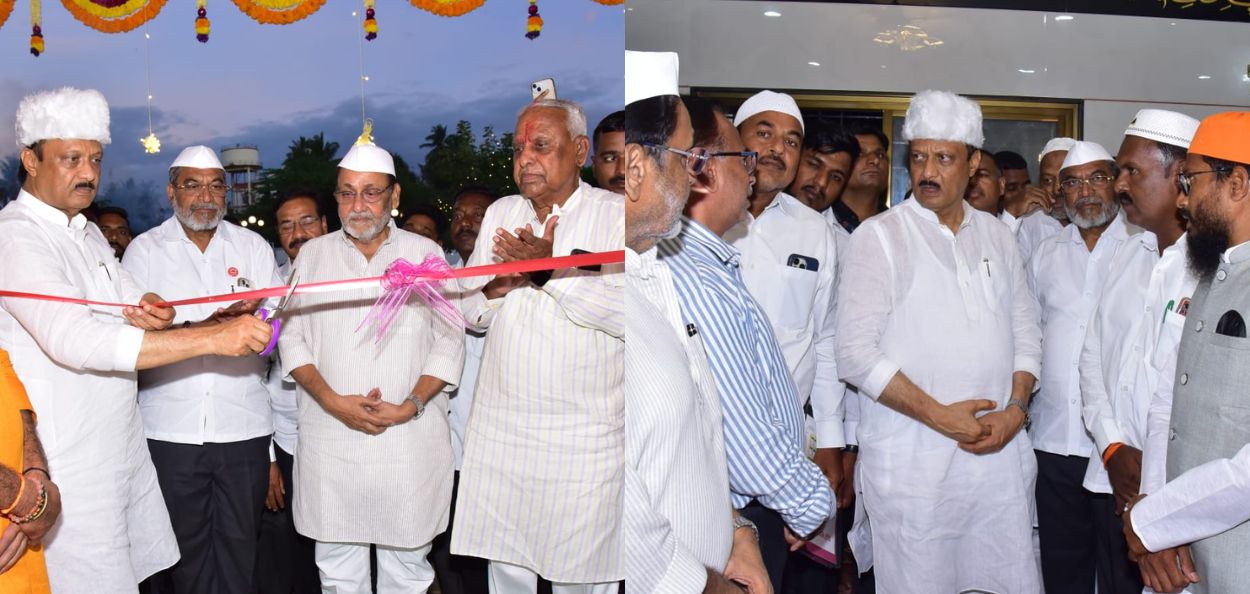 Ram Mandir in Nimbut being inaugurated by Ajit Pawar
For Taufiq Syed, the experience was deeply emotional. “This is the highest moment of my life,” he said. “At a time when people are hesitant to even visit each other’s places of worship, the honour given to us is immense. I couldn’t believe it at first, but when I placed the crown on Lord Ram’s idol, I felt this is what India truly stands for.”
He added that the example set by Nimbut could inspire other parts of Maharashtra and beyond.
The spirit of inclusivity extended further, with seven couples from different communities—including Dhangar, Mali, Gosavi, Vadari, and Muslim families—participating in the crowning ceremony.
Kakade also recalled that when the temple and mosque were inaugurated in December 2015, prominent leaders Ajit Pawar and Nawab Malik shared the stage—an event he believes may be among the first in the country where both structures were inaugurated together.
“Some say the temple is beautiful, others praise the mosque,” Kakade said. “But my satisfaction lies in having built both equally.”
Looking ahead, Kakade plans to continue promoting inclusive values. In September, the village is set to install bronze statues of prominent figures such as Mahatma Jyotiba Phule, Dr A.P.J. Abdul Kalam, and Ahilyabai Holkar—leaders known for advocating equality, education, and scientific temper.
ALSO READ: Inspirational story of Kolkata’s ‘Hijabi Biker’ Alima Rahman
In Nimbut, the message is clear: harmony is not just an ideal, but a lived reality.

_(1).jpg "Visitors gather at the Santosh Mitra Square Durga Puja pandal, themed on the 150th anniversary of Vande Mataram and its historic role in India's freedom movement, ahead of the festival, in Kolkata")
.jpg "Gujarat’s women entrepreneurs bring their craftsmanship to life during Navratri")






_(4).webp)
_(2).webp)