Mumbai
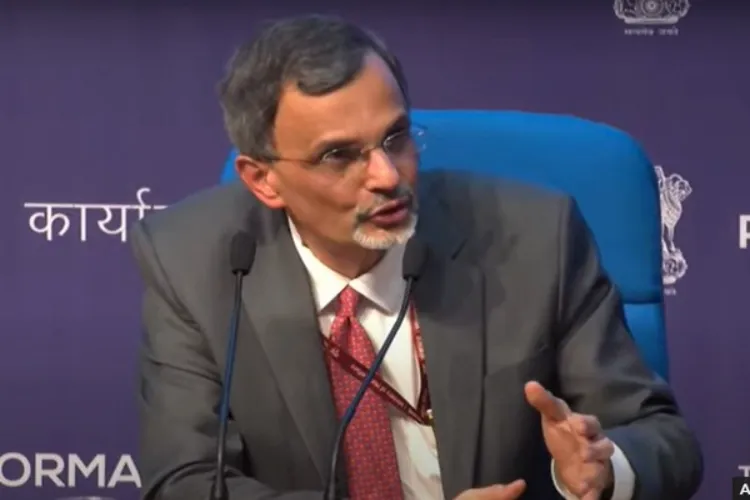
India’s Chief Economic Adviser V. Anantha Nageswaran on Friday said managing macroeconomic indicators such as the current account deficit (CAD) and balance of payments (BoP) has become a major priority for the government amid rising global energy prices triggered by the West Asia conflict.
Speaking at an event on securitisation in Mumbai, Nageswaran said the conflict and disruptions around the Strait of Hormuz have caused a significant “energy shock”, pushing up global prices due to supply concerns.
“In the current context of having to deal with the energy price, energy shock, current account deficit and the balance of payments, these have assumed a much larger priority and urgency at this point,” he said.
He cautioned that financial markets must evolve in line with real economic activity and warned against excessive focus on derivative products, recalling their role in triggering the Global Financial Crisis.
On microfinance norms, Nageswaran criticised rigid numerical income thresholds such as the existing Rs 3 lakh annual income cap used to determine eligibility. He argued that such limits should instead be linked to ratios or broader economic conditions, noting that thresholds set when India was a USD 1 trillion economy may no longer be appropriate now that the economy has crossed USD 4 trillion.
Commenting on the Reserve Bank of India’s Reserve Bank of India Priority Sector Lending (PSL) mandate, he said the industry should appreciate the framework because it has helped expand lending volumes to underserved sectors.
READ MORE: Bashir Badr: people's poet whose words echoed from college canteens to political corridors
PSL norms require banks to allocate a fixed share of their adjusted net bank credit to sectors such as agriculture and small businesses to improve credit access across the economy.