New Delhi
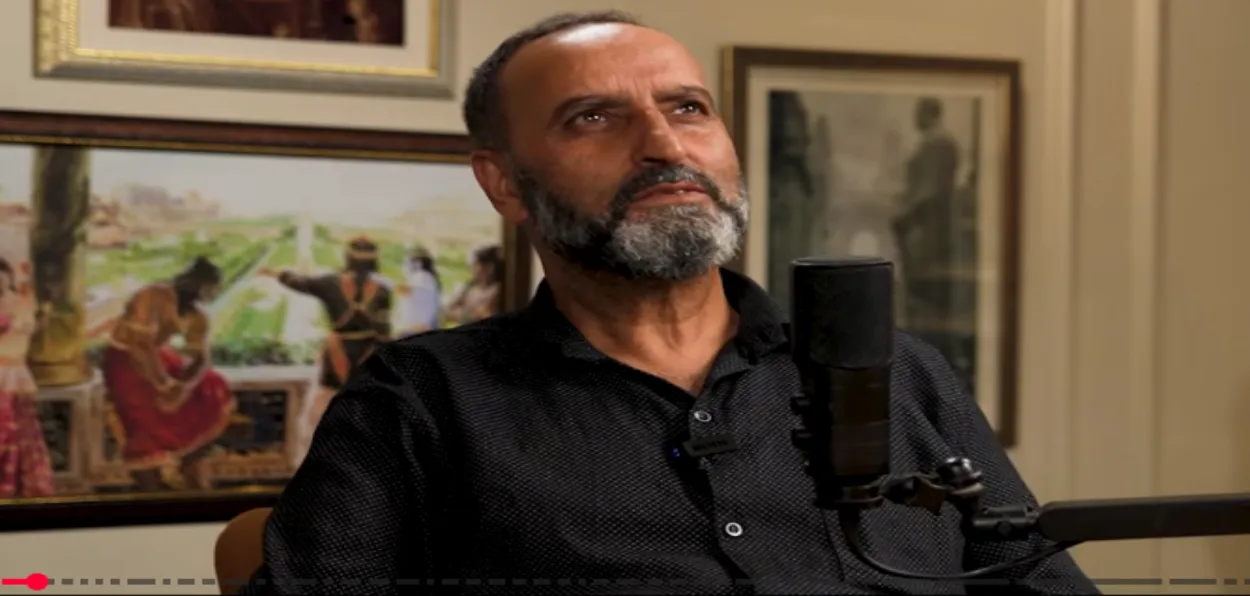
Mushtaq Ahmad Bhat, a former militant who once worked with ISI and later became an Indian Army asset and joined the Territorial Army, has exposed Pakistan’s exploitation of Kashmiri Muslims.
He said this in the most elaborate and boldest interview of a key Kashmiri figure linked to Pakistan’s plans of spreading terrorism in Kashmir. The interview spans four hours and is divided into four chapters: Radicalisation, Return, Exposure and Reflection.
Bhat, who belongs to Pulwama, claimed that he was involved in setting up a factory manufacturing Indian currency for being pumped into India, something that was shown in the blockbuster movie Dhurandhar.
According to Bhat, he oversaw the distribution of counterfeit notes across South Kashmir.
His remarks have renewed attention on the Khanani network, which has previously been accused by Indian agencies of aiding terror financing and economic sabotage and the counteraction by the Narendra Modi government of demonetising Rs 500 denomination notes and subverting the ISI’s mega plan to ruin the Indian economy.
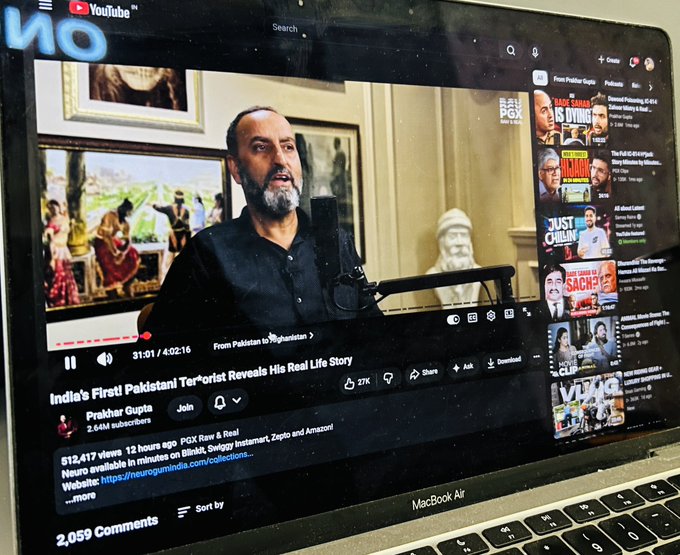 Screenshot of the Podcast
He revealed that Pakistan once set up a fake refugee camp overnight in Pakistan-occupied Kashmir, brought in girls to fake cry for American officials to spread heinous, vile propaganda against the Indian Army, like Kunan-Poshpora.
He spoke about a lot of instances of ISI’s treachery of Kashmiris and how the agency used brutal means to force them on the path of terrorism and repeatedly describes witnessing what he considered "double-dealing" by handlers and commanders.
Bhat had joined the Hizbul Mujahideen, a terror group of mostly Kashmiri youth in the early nineties.
He said a young Kashmir boy who had come to become a terrorist and fell in love with a local girl in Muzaffarabad had vanished overnight. “ISI officials said, if they start falling in love, who will fight the jihad?” he said on the podcast.
He said he was drawn to militancy as a teenager because of the power the militants wielded. “The girls were attracted to young militants, and it was but natural for most of us to go for the trend." He took militancy as a serious option and crossed over to Pakistan.
Later, when his grandfather, a village head and a Congress leader, was killed by terrorists, he pretended to support the killing. “I also said it’s good that he was killed for being a Hindustani.”
Shocking revelation by ex-terrorist Mushtaq Ahmad Bhat:
— Megh Updates 🚨™ (@MeghUpdates) June 20, 2026
"The Khanani brothers printing fake Indian currency at an ISI established printing press shown in Dhurandhar is fact.
I was handling half of its distribution via south Kashmir. I was the financer."pic.twitter.com/AblhTTkWbU
However, soon he realised that Pakistan was manipulating the Kashmir issue for its own strategic purposes. He then became an Indian asset while keeping in the cover of the Hizbul Mujahideen militant. He passed on valuable information about ISI's plans, routes of terrorist infiltration and most importantly, the Kargil operation.
Later, when his cover was blown, he joined the Territorial Army and joined a counter-terrorism operation in Kashmir.
Interestingly, Bhat, who claims he comes from a family that has always been loyal to the Congress party, said Amit Shah and PM Modi had done a great service to the people and especially the youth of Kashmir by weaning them away from joining terrorist groups.
He is of the view that the Home Ministry should always have control over Kashmir. “Give home to local politicians, and I can bet overnight A 1000 youth will join terrorist groups.
Being an Army Man, he helped persuade many young Kashmiris to abandon militancy and return to civilian life.
He also said the decision of the Kashmiri Pandits to leave their homes, though painful, was the best thing that happened to the community. “Had they remained in Kashmir, their youth would be made to join terrorist groups, and more people would be killed.”
READ MORE: A visit to PoJK reveals the other Kashmir is not so 'azad'
He said Kashmiri Pandits must consider themselves lucky to have escaped the tragedy that struck Kashmiri Muslims during three decades of terrorism.








_(1).webp "Maharashtra Deputy Chief Minister Eknath Shinde")
_(1).webp "Representational Image")
.webp)