Mumbai (Maharashtra)
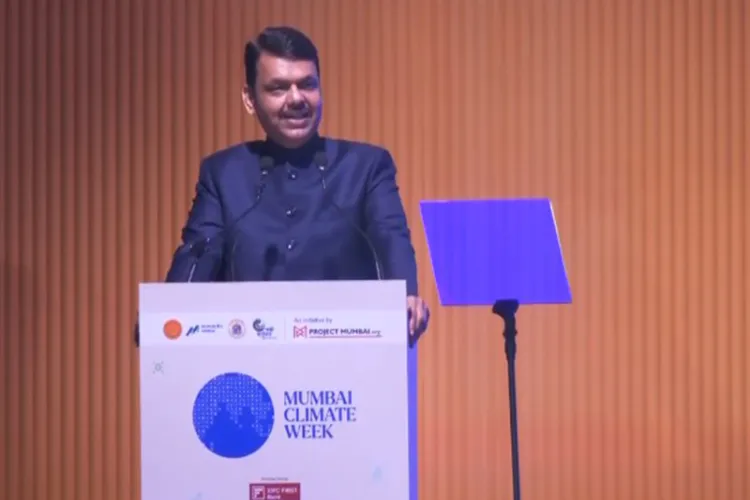
Maharashtra Chief Minister Devendra Fadnavis on Tuesday inaugurated Mumbai Climate Week, highlighting the city's potential as a climate finance hub for the Global South. He called on global institutions to partner in developing scalable, sustainable infrastructure models that can be replicated across emerging economies, stressing the urgent investment needs of developing nations.
Addressing global leaders, innovators, philanthropists, and young change-makers gathered for the week-long summit, Fadnavis said, "Mumbai Climate Week marks an important milestone: India's first platform dedicated to accelerating climate action at scale, with a focus on empowering Mumbai, India, and the Global South. And there is no better city to host this conversation than Mumbai a city that has remained resilient through its glorious history."
He emphasised the real-world impact of climate change on Mumbai, noting, "When Mumbai experiences extreme rainfall, it is not a mere statistic. It is trains halted, homes flooded, businesses disrupted, and livelihoods interrupted. When heat waves intensify, it is not a graph on a presentation; it is construction workers, street vendors, and farmers facing real hardship."
The CM praised India's clean energy progress, stating that "Under the leadership of Prime Minister Narendra Modi ji, India has crossed over 260 gigawatts of renewable energy capacity, one of the fastest clean energy expansions globally. Just a few days ago, India added an additional 55 gigawatts to its 552-gigawatt installed capacity in just one year, led by 75% renewable sources, much of it from Maharashtra."
Outlining the state's climate strategy, Fadnavis said We are scaling green hydrogen, electric mobility, biofuels, and sustainable infrastructure. Across Maharashtra, renewable energy adoption is expanding in industrial corridors, electric mobility is accelerating in cities, and large-scale infrastructure projects are integrating sustainability into design.
He also called for global collaboration in climate finance, noting, "Mumbai, as India's financial capital, can become a climate finance gateway for the Global South. Developing economies require trillions of dollars for sustainable infrastructure, and we invite global institutions to partner with us in building scalable models that can be replicated across emerging economies."
Fadnavis stressed an inclusive climate transition and lifestyle changes through initiatives like Mission LiFE.
"India has also presented to the world the idea of 'Mission LiFE': Lifestyle for Environment. It reminds us that sustainability is also about behaviour. Responsible consumption, efficient resource use, and mindful living are powerful drivers of change. When policy, finance, technology, and lifestyle converge, transition becomes transformative. History will not judge us by declaration; it will judge us by execution. By the megawatts we deploy, by the emissions we avoid, by the cities we protect, by the farmers we support, and by the systems we modernise. Maharashtra stands committed to scaling solutions. 'Mumbai stands ready to lead. India stands ready to partner'," he said.
READ MORE: Brotherhood is necessary for growth: Grand Mufti to PM Modi
He added that Mumbai Climate Week must therefore become more than a platform for dialogue; it must become a platform for delivery. 'Mumbai stands ready to lead. India stands ready to partner'.
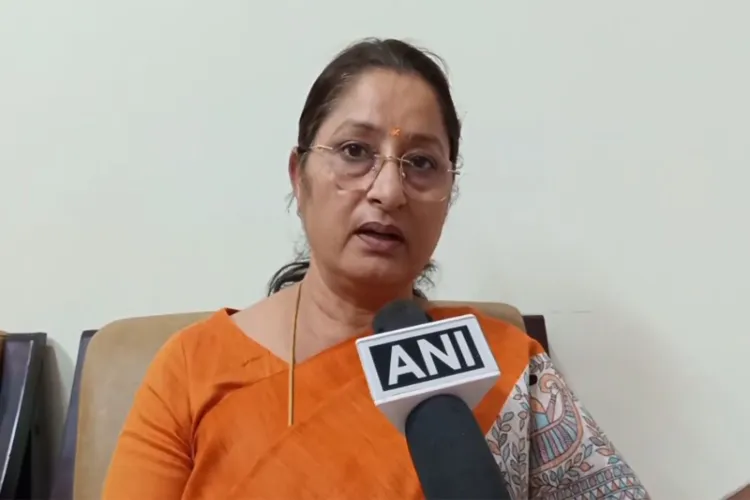
The summit saw participation from Union Minister Pralhad Joshi, Maharashtra Cabinet Minister Pankaja Munde, newly elected Mumbai Mayor Ritu Tawde, MMRDA Commissioner Sanjay Mukherjee, UNEP Global Head Martin Krause, and senior officials from Project Mumbai, who collaborated on the event.









.webp)