Nuremberg
India expects to conclude and sign the legal framework for the interim trade agreement with the United States before the end of March, Commerce Secretary Rajesh Agrawal said on Tuesday.
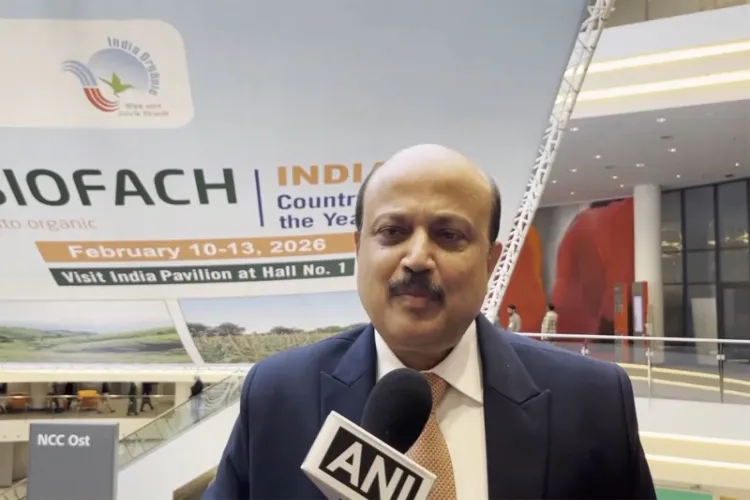
Speaking to ANI on the sidelines of BIOFACH 2026, Agrawal said the joint statement issued by India and the US outlines the broad understanding reached between the two sides, which now needs to be translated into a formal legal document.
“The interim agreement reflected in the joint statement has to be converted into a legally binding text. That process is currently underway,” he said.
While expressing optimism about the timeline, Agrawal acknowledged that legal drafting could take time. “We are hopeful that the agreement can be finalised and signed before the end of March. However, drafting a document acceptable to both sides may require additional time. That said, March remains the target for making it operational,” he added.
On sectors expected to benefit the most, the Commerce Secretary pointed to India’s strength in labour-intensive industries. He said the US has traditionally been a strong market for Indian exports in these sectors, and the interim agreement would further support their growth.
“India’s unique advantage lies in labour-intensive manufacturing. With this framework in place, these sectors should see smoother access and renewed growth in the US market,” Agrawal said.
Responding to concerns over the proposed 18 per cent tariff ceiling, he noted that India’s competitors in the same region face similar or even higher tariff levels. He said once the tariff costs are absorbed by consumers and industry, market access would continue without major disruption.
Agrawal expressed confidence that Indian exporters would be able to compete effectively, revive disrupted supply chains and regain momentum lost during the holiday season. He said exports were expected not only to maintain recent growth trends but also expand further in the coming years.
On the protection of sensitive sectors such as dairy, he said India had maintained a firm negotiating stance. “India has always been clear that sectors impacting farmers, fishermen and dairy cannot be opened up,” he said.
Highlighting recent trade negotiations, Agrawal said India had safeguarded sensitive sectors across all five trade agreements concluded over the past year. In cases where limited access was provided, he said tariff rate quota (TRQ) mechanisms were used to ensure domestic interests remained protected.
The Commerce Secretary said industry and exporters had responded positively to the interim deal, noting that extensive consultations were held with stakeholder ministries and businesses during negotiations.
“Businesses have welcomed the outcome. In a global environment where reciprocal tariffs are becoming the norm, this agreement works in India’s favour and supports export growth,” he said, adding that there were no major concerns raised by industry.
Commenting on export performance, Agrawal said India continued to perform well in both merchandise and services exports, with services showing particularly strong growth. “The January trade data will be released on February 15, and we expect positive numbers,” he said.
READ MORE: Khan Sir’s affordable hospital in Patna becomes lifeline for poor
India is participating as the Country of the Year at BIOFACH 2026 in Nuremberg, where it is showcasing its organic sector through 67 co-exhibitors from over 20 states at a 1,074-square-metre pavilion.