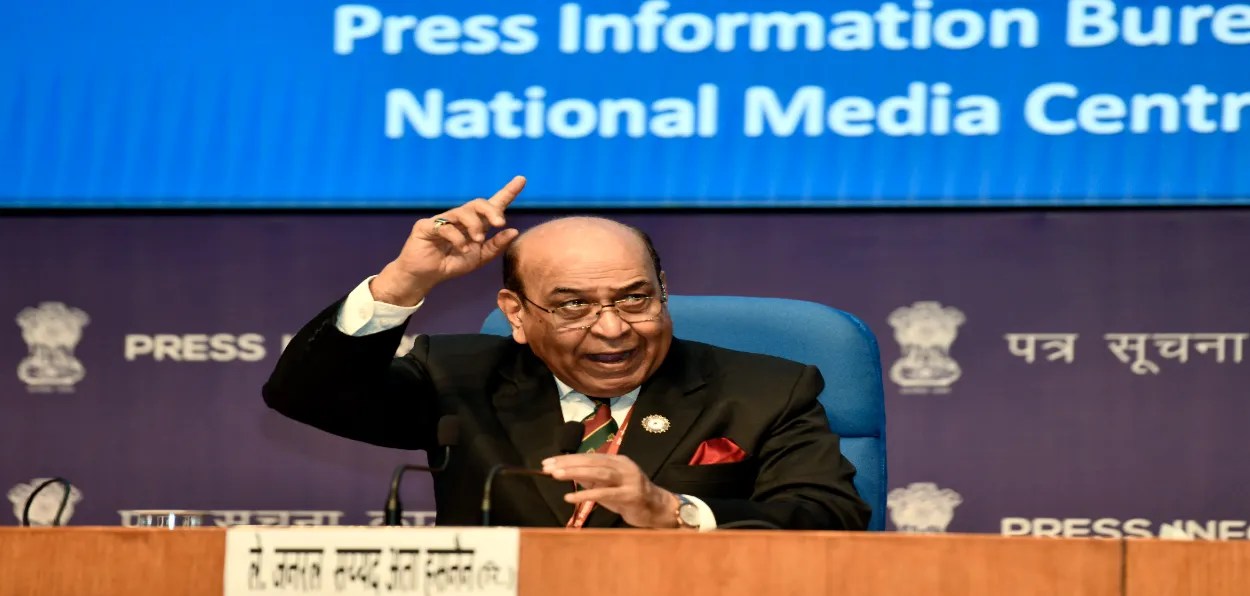
.webp "Jammu and Kashmir Chief Minister Omar Abdullah")
Jammu
Since the formation of the Jammu and Kashmir National Conference-led government in Jammu and Kashmir in 2024, a total of 5,881 development works worth ₹22,275 crore proposed by MLAs during pre-budget discussions for the Budget Estimates 2025–26 have been included, officials from the finance department said.
Under the Constituency Development Fund (CDF), legislators have so far recommended around 12,000 works worth about ₹313 crore against an allocation of ₹427 crore, indicating significant progress in fund utilisation.
Chief Minister Omar Abdullah, who also holds the Finance portfolio, presented his maiden budget in the J&K Assembly in March 2025 after extensive pre-budget consultations with stakeholders, including legislators from both treasury and opposition benches.
The consultative process was continued ahead of the presentation of the government’s second budget on February 6.
Officials said that following pre-budget discussions for the Budget Estimates 2025–26, details of 7,909 works identified by MLAs were forwarded to various administrative departments for feasibility checks, cost estimates and consideration under sectoral priorities of the UT CAPEX Budget.
Out of these, departments have so far accommodated 5,881 projects with a total cost of ₹22,275 crore. A budget of ₹986 crore has already been earmarked in 2025–26 for their time-bound completion.
Officials said development works recommended by public representatives are executed through funding from UT Capex, District Capex and the CDF.
While UT Capex is mainly used for larger projects, many grassroots-level developmental works are carried out through District Capex and CDF funding.
During the current financial year 2025–26, around 71,500 works worth about ₹1,307 crore are underway under District Capex funding. Authorities said administrative approvals, tendering and project allotments have been completed quickly, and about 96 per cent of the new works are already under execution.
So far, around ₹500 crore has been utilised for these projects.
To ensure timely execution and transparency, multiple monitoring mechanisms have been introduced. Funds are allocated and tracked through the Budget Estimation and Allocation Monitoring System (BEAMS) of the finance department.
Another monitoring mechanism, the Photographic Record of On-site Facility (PROOF), allows authorities to track project progress using geo-tagged photographs before contractors’ payments are cleared.
Officials said all completed works undergo 100 per cent physical verification annually by field officers of the Planning, Development and Monitoring Department across the Union Territory’s 20 districts.
READ MORE: Mumtaz Thaha, Thrissur’s first Muslim woman Councillor
Additionally, details of ongoing projects — including approvals, sanctions, contracts and funds released — are available in real time to the public through the Janbhagidari Portal, while regular review meetings are conducted at departmental and district levels to monitor implementation.












.webp)