Jammu
The pension bill of the Government of Jammu and Kashmir is projected to double over the decade between 2020 and 2030, with nearly 2.48 lakh retired employees currently receiving pension benefits, officials said.
The administration also clarified that there is no proposal to revive the Old Pension Scheme (OPS), stating that it would be fiscally unsustainable and could pose risks to long-term financial stability.
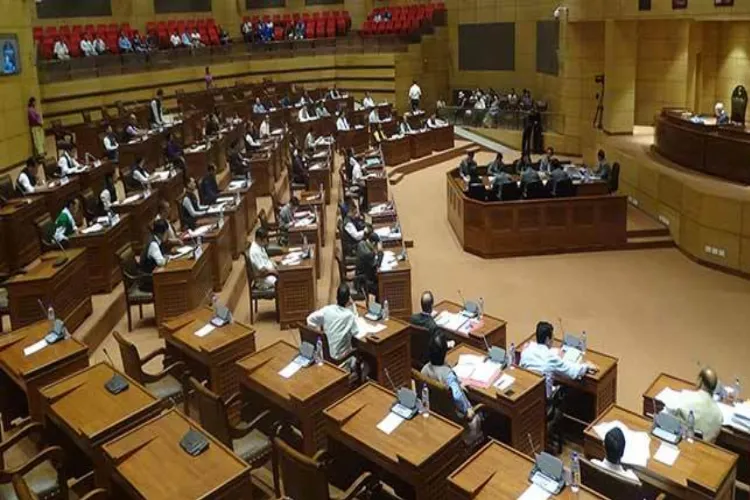
According to official data shared in response to a cut motion in the Jammu and Kashmir Legislative Assembly, the pension outgo stood at Rs 5,829 crore in 2020–21 and is projected to reach Rs 11,798 crore by 2030–31.
The pension expenditure has steadily increased over the past five years. The government paid Rs 6,668 crore in 2021–22, Rs 7,463 crore in 2022–23, Rs 8,364 crore in 2023–24, Rs 9,350 crore in 2024–25, and Rs 9,127 crore in 2025–26.
Officials said the pension burden is likely to keep rising in the coming years due to the growing number of retirees, with the expenditure expected to touch nearly Rs 11,798 crore by 2030–31.
They added that pension liabilities could continue expanding until the early 2040s, after which the burden is expected to stabilise as most employees covered under OPS retire.
The government said the introduction of the National Pension System (NPS) in 2010 created a more sustainable framework, as it involves a dedicated pension fund and professional fund management, unlike OPS which operates without a separate fund.
Officials noted that Jammu and Kashmir, being an expenditure-driven region with limited revenue sources and investment avenues, has seen a disproportionate rise in pension liabilities over the years.
Earlier data also showed that pension expenditure nearly doubled from Rs 731 crore in 2004–05 to Rs 1,495 crore in 2009–10.
Following a cabinet decision in 2009, the government replaced the OPS with the NPS for all employees appointed on or after January 1, 2010, through amendments to the Jammu and Kashmir Civil Service Regulations.
READ MORE: J&K's only woman CM Mehbooba Mufti injected compassion into politics
Officials maintained that while the administration remains committed to honouring pension obligations under OPS, it is also ensuring that development spending is not adversely affected. Once pension liabilities stabilise around 2040, a larger share of resources is expected to become available for development activities, they added.








.webp)