Chandigarh
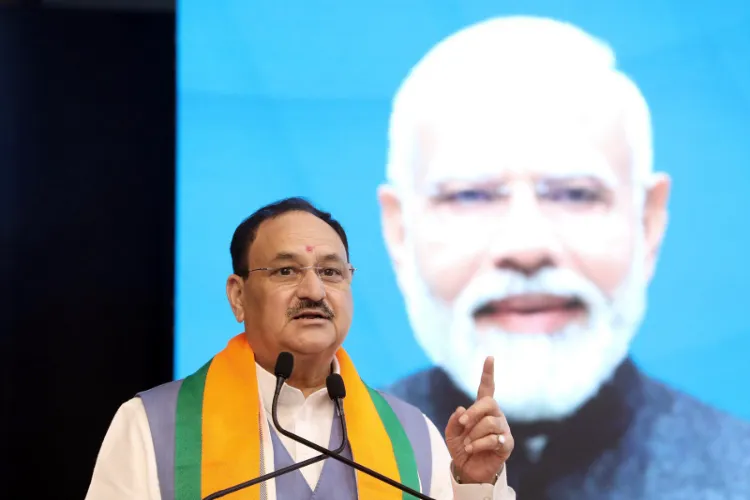
Union Health Minister J P Nadda on Thursday said India has made significant progress across sectors over the past decade under the leadership of Prime Minister Narendra Modi, with notable advancements in healthcare as the country moves toward the goal of a “Viksit Bharat”.
Speaking at the 10th National Summit on Good and Replicable Practices and Innovations in Public Health Systems in Chandigarh, Nadda highlighted key reforms in strengthening health infrastructure, as well as progress in science, innovation, and technology.
He pointed to the National Health Policy of 2017 as a major shift from the earlier approach of the late 1990s, which was largely focused on treatment. The newer framework, he said, adopts a more comprehensive model that includes prevention, health promotion, curative care, rehabilitation, and geriatric services.
During the event, Nadda launched several initiatives, including the Swasth Bharat and Janani portals, a compendium of best practices, integrated training modules for primary healthcare teams, and the updated Rashtriya Bal Swasthya Karyakram (RBSK-2.0).
Emphasising the role of Ayushman Arogya Mandirs, also known as Health and Wellness Centres, he said nearly 1.85 lakh such facilities have been established as the first point of contact for healthcare services across the country. These centres, he added, are central to expanding preventive care, including screenings for conditions such as hypertension, diabetes, and cancers like oral, breast, and cervical cancer for individuals above 30 years of age.
Nadda also underlined the importance of maternal and child healthcare, noting that a comprehensive package of 12 services is being provided under related programmes. He said institutional deliveries have increased from 79 per cent to 89 per cent, reflecting improved access to healthcare services.
While acknowledging progress, he stressed the need for continued improvement. Around 50,000 of the total centres have implemented National Quality Assurance Standards (NQAS), but he said more work remains. He called for regular audits and better evaluation mechanisms to ensure quality outcomes from these facilities.
Citing recent global assessments, Nadda said India has seen a substantial decline in child mortality indicators. According to a 2025 UN report, the under-five mortality rate has fallen by 79 per cent, while the infant mortality rate has dropped by 73 per cent. Referring to the World Health Organization’s malaria report, he added that despite housing about one-sixth of the global population, malaria prevalence in India is relatively low.
Describing the summit as an important platform under the National Health Mission, Nadda said it helps showcase practical innovations and strategies for strengthening the public health system.
READ MORE: RJ Saima's Purani Jeans revived love of golden era music among youth
The event was also attended by Haryana Chief Minister Nayab Singh Saini, state Health Minister Arti Singh Rao, and other senior officials.










_(1).webp "Senior Congress leader Ashok Gehlot")

.webp)