




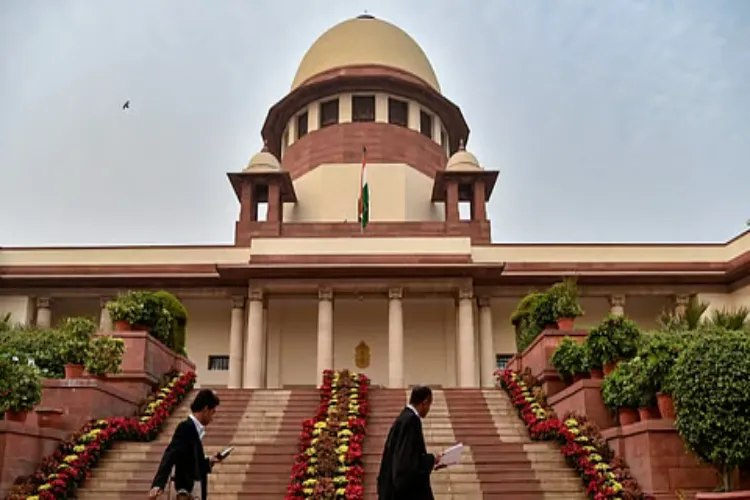
New Delhi
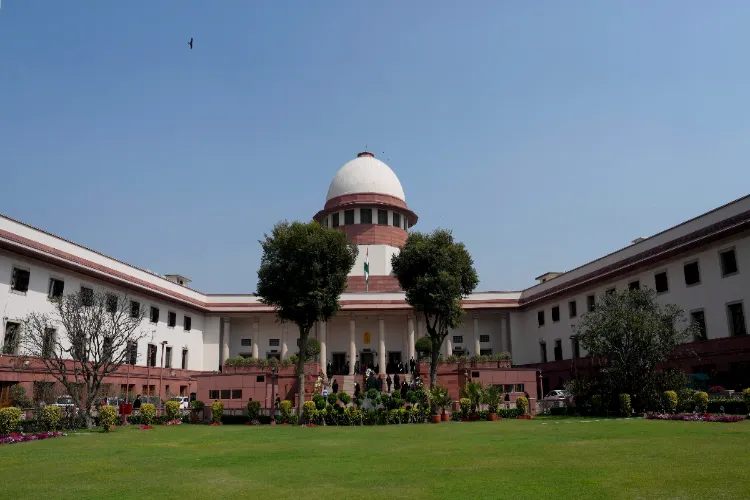
The Supreme Court of India on Monday said a nine-judge Constitution bench will commence final hearings on April 7 on petitions dealing with alleged discrimination against women at religious places, including the Sabarimala Temple, and on the scope and ambit of religious freedom across faiths.
In September 2018, a five-judge Constitution bench, by a 4:1 majority, had lifted the ban on the entry of women aged between 10 and 50 into the Ayyappa shrine at Sabarimala in Kerala, holding that the centuries-old practice violated constitutional guarantees.
Subsequently, on November 14, 2019, another five-judge bench headed by then Chief Justice Ranjan Gogoi referred the larger issue of discrimination against women at places of worship to a bigger bench by a 3:2 majority. That bench framed broad questions on religious freedoms, observing that such issues could not be decided in isolation without considering the facts of individual cases.
Apart from Sabarimala, the reference included questions relating to the entry of Muslim women into mosques and dargahs, as well as the entry of Parsi women married to non-Parsi men into the holy fire place of an Agiary.
On May 11, 2020, another bench ruled that a five-judge bench had the authority, while exercising review jurisdiction in the Sabarimala matter, to refer substantial questions of law to a larger bench. However, the cases were not taken up for nearly five years due to the COVID-19 pandemic and were later not listed under subsequent chief justices.
On Monday, a bench comprising Chief Justice Surya Kant, Justice Joymalya Bagchi and Justice Vipul M Pancholi said the nine-judge bench would hear the matter from April 7 to April 22.
The court directed all parties to file their written submissions on or before March 14. Appearing for the Centre, Solicitor General Tushar Mehta said the Union government supported the review petitions against the 2018 verdict that allowed women of all age groups to enter the hill shrine.
The court appointed advocate Krishna Kumar Singh as nodal counsel for parties supporting the review, while advocate Shashwati Pari was named nodal counsel for those opposing it. Senior advocate K Parameshwar, along with Shivam Singh, was appointed amicus curiae to assist the court.
As per the schedule laid down, review petitioners and supporting parties will be heard from April 7 to April 9, while those opposing the review will make submissions between April 14 and April 16. Rejoinder arguments, if any, will be heard on April 21, followed by final submissions by the amicus on April 22.
Earlier, the bench outlined seven key constitutional questions for consideration, including the scope of the right to freedom of religion under Article 25, its interplay with the rights of religious denominations under Article 26, and whether such denominational rights are subject to other fundamental rights beyond public order, morality and health.
The court will also examine the meaning and extent of “morality” under Articles 25 and 26, including whether it encompasses constitutional morality, the limits of judicial review over religious practices, the interpretation of the phrase “sections of Hindus” under Article 25(2)(b), and whether individuals not belonging to a religious denomination can challenge its practices through public interest litigation.
READ MORE: Neerja Mattoo for popularising Kashmiri mystic poets
The nine-judge bench is expected to evolve guiding principles to ensure “substantial and complete justice” in matters concerning freedom of religion and gender equality across faiths.










.webp "Union Home Minister Amit Shah")
.webp "Union Minister of Parliamentary Affairs Kiren Rijiju")
.webp)

.webp)


_(1).webp)