Srinagar
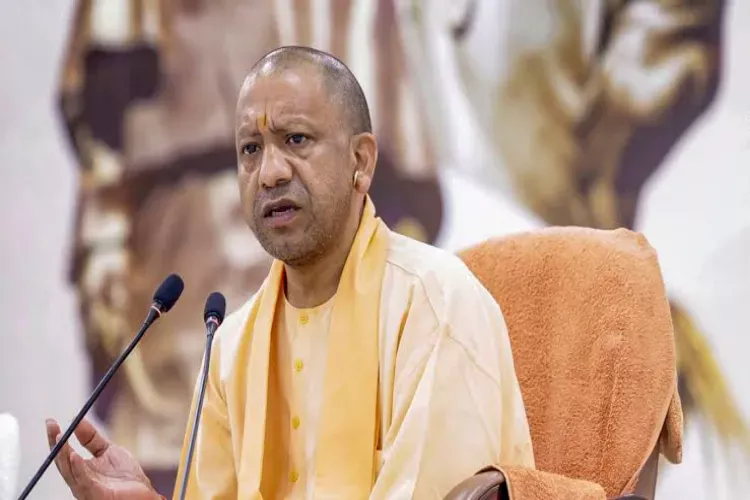
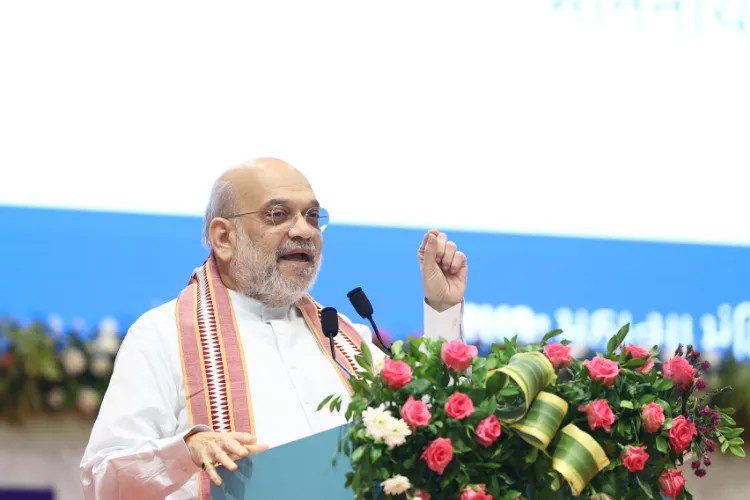
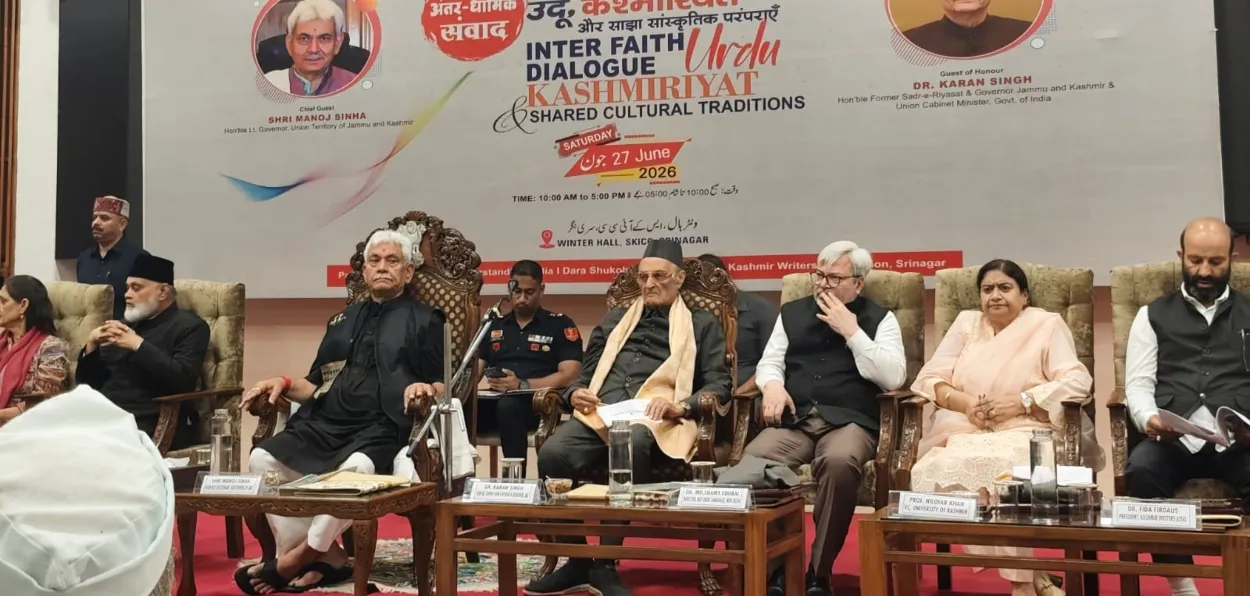
Lieutenant Governor of Jammu and Kashmir Manoj Sinha reflected on Kashmir's historic identity as a land where multiple faiths have flourished together in an atmosphere of mutual respect. He emphasised that Kashmir has throughout its history preserved and celebrated religious diversity while nurturing a culture rooted in tolerance, spirituality, and human dignity.
Stressing the urgent need to carry this invaluable legacy into the future, the Lieutenant Governor called upon scholars, educational institutions and civil society to work collectively to strengthen the foundations of interfaith harmony.
The seminar, a significant affirmation of Kashmir's centuries-old tradition of coexistence and spiritual inclusiveness, was jointly organised by the Inter Faith Harmony Foundation of India (IFHFI) and the National Council for Promotion of Urdu Language (NCPUL), in collaboration with the Temple of Understanding–India, the Dara Shukoh Centre, Srinagar, and the Kashmir Writers Association.
Addressed the Interfaith Dialogue organized by @CouncilUrdu & Inter-Faith Harmony Foundation of India.
— Office of LG J&K (@OfficeOfLGJandK) June 27, 2026
Sharing my speechhttps://t.co/haOarOLiCv pic.twitter.com/NdKf4FnWJt
The seminar deliberated on the enduring relevance of interfaith dialogue, the cultural legacy of Kashmiriyat, and the unique role of the Urdu language in nurturing India's civilizational diversity.
Dr Md. Shams Equbal, Director of the National Council for Promotion of Urdu Language (NCPUL), New Delhi, spoke about the inherently pluralistic spirit of the Urdu language and described it as a cultural bridge rather than merely a linguistic medium.
He said the Urdu language has historically absorbed the finest elements of India's composite civilization.
Dr Khwaja Iftikhar Ahmad, President of the Inter Faith Harmony Foundation of India (IFHFI), outlined the Foundation's sustained efforts over the years to promote harmony among India's religious communities.
Dr Ahmad observed that the time had come to focus greater attention on Jammu and Kashmir—a land that has, for centuries, served as one of the finest examples of religious coexistence, spiritual synthesis and cultural pluralism. He expressed confidence that reviving the spirit of Kashmir's shared heritage would significantly strengthen national integration and social harmony.
Addressed the Interfaith Dialogue organized by @CouncilUrdu & Inter-Faith Harmony Foundation of India. Highlighted India’s legacy as an ancient civilization rooted in mutual respect, where diverse faiths coexist, flourish, and teach the world the wisdom of peace. pic.twitter.com/xjBnjedyTG
— Office of LG J&K (@OfficeOfLGJandK) June 27, 2026
Dr Jyotsna Singh, Founding Director of the Dara Shukoh Centre, Srinagar, highlighted the Centre's remarkable work in reviving Kashmir's traditional arts, vernacular crafts and indigenous cultural heritage. She emphasised that, alongside preserving material culture, the Centre has consistently sought to revive the intellectual and spiritual traditions associated with dialogue, mutual respect and civilizational exchange.
Dr Nilofer Khan, Vice Chancellor of the University of Kashmir, underlined the importance of academic forums dedicated to dialogue and cultural understanding in the present times. She said universities must remain spaces where diverse ideas can meet in an atmosphere of openness, respect and intellectual freedom.
She added that the University of Kashmir would always remain committed to supporting programmes aimed at strengthening communal harmony, preserving Kashmir's composite culture and promoting meaningful academic engagement on issues of national importance.
The inaugural session reached its intellectual zenith with the presidential address delivered by Dr. Karan Singh, veteran statesman and President of the Temple of Understanding–India.
Dr. Singh offered profound reflections on the philosophical foundations of dialogue among civilisations. He emphasised that the world's spiritual traditions ultimately converge on the universal human values of compassion, truth and service.
ALSO READ: Yusuf Khan picks Mewati folk music over engineering for perpetuating legacy
He captivated the audience by reciting selected verses of the celebrated poet Faiz Ahmed Faiz, reminding listeners that poetry possesses a unique ability to transcend social and religious boundaries and awaken a shared human consciousness.