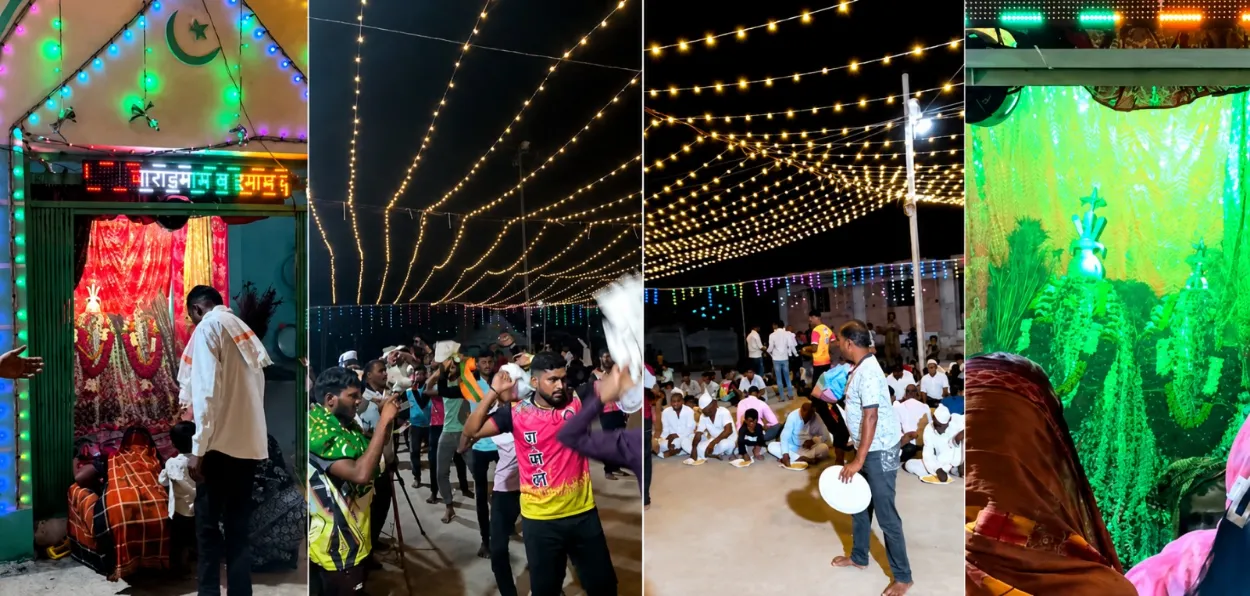
Bhakti Chalak
Muharram is observed by Muslims, especially Shias, across the world to mourn the martyrdom of Prophet Muhammad's grandson, Imam Hussain, and his family in the tragedy of Karbala. The mourning lasts for the first 10 days of Muharram, the opening month of the Islamic calendar. A unique feature of Muharram in Maharashtra is the large-scale participation of the Hindu community in its observance.
In rural Maharashtra, Hindus and Muslims have observed Muharram together for centuries. However, one village stands out for keeping the tradition alive despite not having a single Muslim resident.
The village is Beradwadi (Bhusaniwadi), home to the Ramoshi (Berad) community, which traces its legacy to the early revolutionary Umaji Naik and Bahirji Naik, the legendary chief spy of the Maratha Empire.
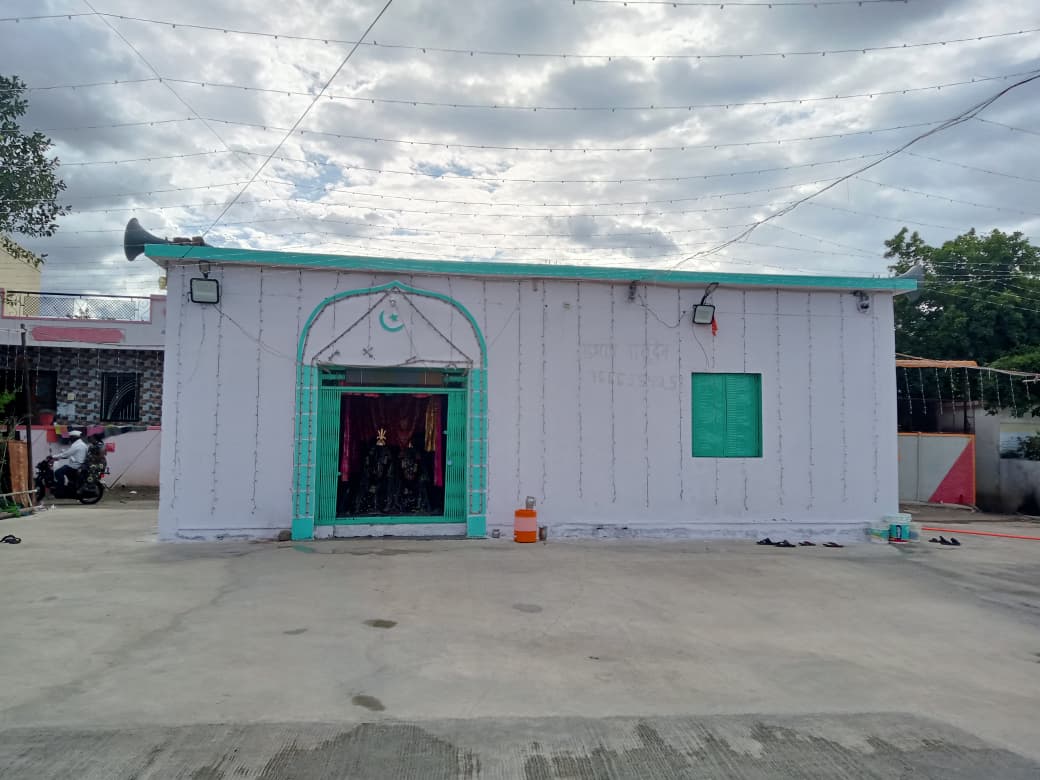 The place where Taziya are kept in the village
Although there is not a single Muslim household in the village, the centuries-old Muharram tradition continues to be an integral part of its cultural identity and communal unity.
During the 10 days of Muharram, the entire village is immersed in devotion to the Twelve Imams and Qasim Imam Sahib.
To ensure that the Peer worship rituals are performed according to tradition, the villagers invite Muslim Mujawars (clerics) from neighbouring villages, who conduct all the ceremonies in accordance with Islamic customs.
The village youth also gather to play 'Karbal', a traditional game similar to Lezim.
The Ramoshi community has long been known for its resistance to injustice. Carrying forward that legacy, the people of Bhusaniwadi have linked the Muharram observance with social awareness and community service.
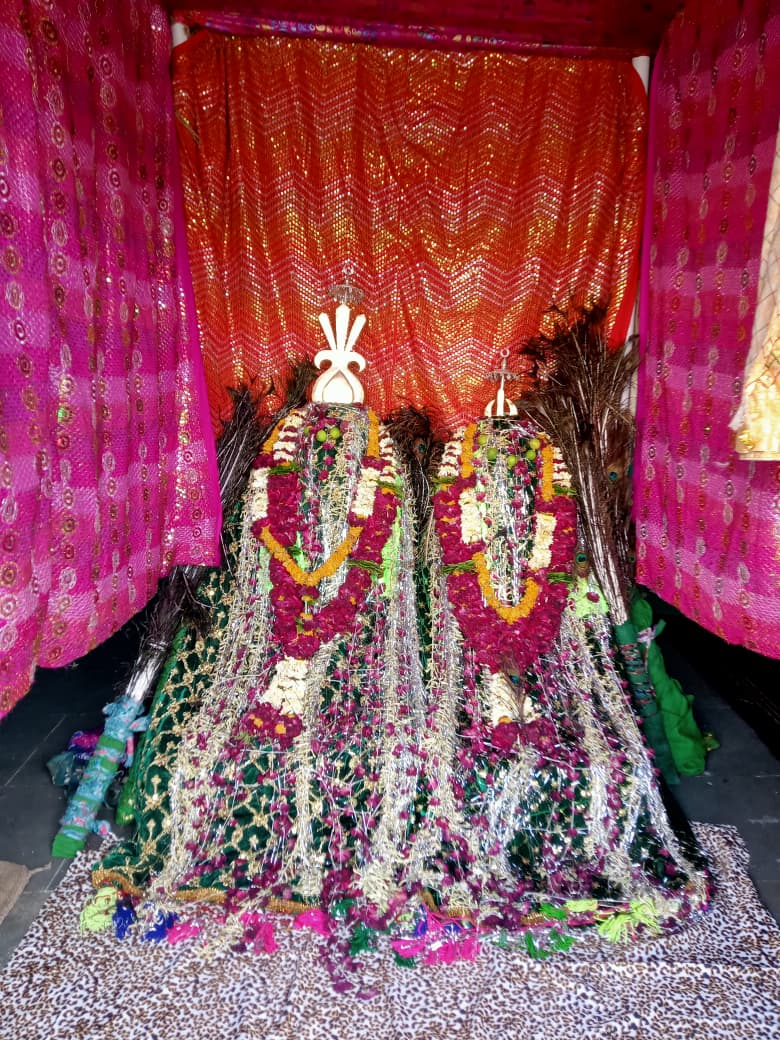 Taziya in the village
Several welfare activities are organised during Muharram. Blood donation camps are held to help needy patients, while songs and theatre performances are staged to raise awareness about social issues.
The 10-day Ashura period also strengthens communal harmony within the village. Families come together for a community feast known as Mahaprasad.
Many young villagers who have migrated to cities such as Mumbai and Pune for jobs or business return home specifically to participate in the Muharram observances. During this period, the village becomes a hub of family reunions.
Umesh Bhokle, a youth from Beradwadi, shares daily videos of this unique tradition on his Instagram page.
Speaking to Awaz-The Voice, Umesh said, "To give this tradition a modern touch, I made a video every day and shared it on Instagram. Lakhs of people watched and shared the videos, and we received an overwhelmingly positive response from the public."
He added, "Even though there is not a single Muslim in our village, we have kept this tradition alive, and I am proud of that. Our generation will carry this tradition forward in the same spirit."
Speaking about the village's unique observance, Ankush Mandle, a sports teacher at Shri Shanmukheshwar Vidyalaya, said, "The Muharram observance in Beradwadi is the backbone of our village's unity. Our ancestors have preserved this tradition since the pre-Independence era, and today we are carrying it forward. There is not an iota of caste discrimination in our village. We all come together with the belief that God is one for everyone. The village has immense faith in the Twelve Imams and Qasim Imam Sahib."
Deputy Sarpanch Dashrath Mandle said, "Our village is known by three names—Anantpur, Bhusaniwadi, and Beradwadi. Muharram has strengthened the bonds of love and brotherhood among the people here. Even though there is not a single Muslim household in the village, people from all communities come together to observe the tradition of Peer Baba. That is the true identity of our village. This tradition, passed down through generations, is our greatest pride."
ALSO READ: Muharram in India: A living tradition of interfaith harmony
Revenue official Shivshankar Mandle said, "The Twelve Imams and Qasim Imam Sahib are the principal centres of faith in our village. Whenever anyone leaves home for an important task, they first invoke the name of Imam Sahib and pay their respects. We believe that his blessings ensure success in every endeavour. During Muharram, everyone who has settled in other cities returns home. This observance has therefore become a symbol of our emotional and cultural unity."










.webp)