




New Delhi
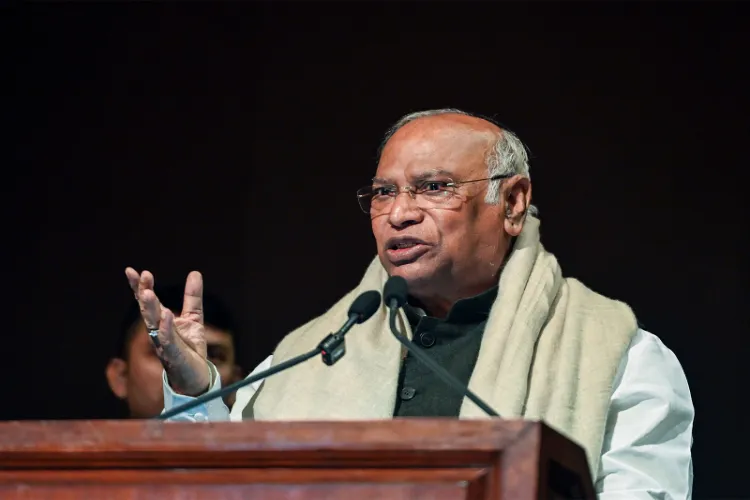
Congress President Mallikarjun Kharge launched a sharp attack on the Prime Minister Modi-led government over the Economic Survey 2025-26's call to "re-examine" the Right to Information (RTI) Act, accusing it of systematically weakening one of India's most powerful transparency laws.
In a post on X, Kharge said the Survey's suggestions, including a possible ministerial veto on disclosures and shielding service records, transfers and staff reports of bureaucrats, reflected the government's intent to dilute public accountability. "The Economic Survey has called for 're-examination' of the RTI Act... After killing MGNREGA, is it RTI's turn to get murdered?" he asked.
The Economic Survey has called for "re-examination" of the Right to Information Act.
— Mallikarjun Kharge (@kharge) January 30, 2026
It also suggests a possible "Ministerial veto" to withhold information and wants to explore the possibility of shielding public service records, transfers and staff reports of bureaucrats from… pic.twitter.com/njBRyDzroy
Listing what he termed a pattern of erosion since 2014, Kharge said more than 26,000 RTI cases were pending as of 2025. He alleged that amendments introduced in 2019 allowed the Centre to control the tenure and pay of Information Commissioners, weakening their independence. Kharge also criticised the Digital Personal Data Protection Act, 2023, claiming it gutted the RTI Act's public interest clause and enabled the government to use privacy as a shield against scrutiny.
He further pointed out that until December 2025, the Central Information Commission functioned without a Chief Information Commissioner, marking the seventh such vacancy in 11 years. Kharge also highlighted the killing of over 100 RTI activists since 2014 and accused the BJP of failing to implement the Whistleblowers Protection Act, 2014, passed during the Congress-led UPA regime.
The Economic Survey 2025-26, however, said the RTI ACT may require re-examination not to dilute its spirit but to align it with global best practices. It suggests exempting brainstorming notes and draft papers until decisions are finalised, protecting confidential service records from "casual" requests, and exploring a narrowly defined ministerial veto subject to parliamentary oversight.
ALSO READ: I received my wages for hard work of decades: Ghafruddin on Padma Shri
The Survey stressed that these were suggestions for debate and reiterated that the RTI Act's core purpose remains promoting transparency, containing corruption and enhancing public participation in democracy.
"The Act is best understood not as an end in itself, but as a means to strengthen democracy. The wiser path is to keep it anchored to this original aim: enabling citizens to demand accountability for decisions that affect them, while also ensuring that space for candid deliberation and respect for privacy remain protected. That balance between openness and candour is what will keep the RTI Act true to its purpose," the Survey said.
_(1)_(1).webp "Jagannath Rath Yatra")







_(1)_(1).webp)

.webp)
_(1).webp)
.webp)
