Bhopal
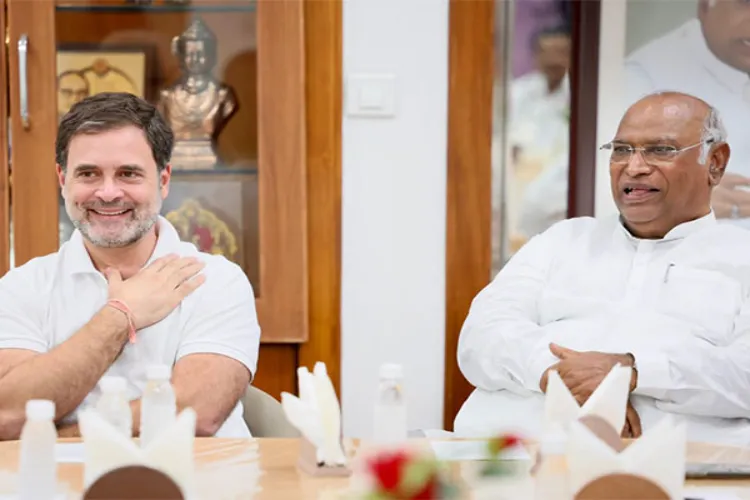
Congress president Mallikarjun Kharge and Leader of Opposition in the Lok Sabha Rahul Gandhi will engage with farmers and address a gathering at the party’s ‘Kisan Maha Chaupal’ in Bhopal on Tuesday, as part of protests against the interim trade agreement between India and the United States.
Party leaders said elaborate arrangements have been made for the event at Jawahar Chowk, with Congress workers reaching out to villages across the region to explain why the agreement is being projected as detrimental to farmers’ interests and the national economy.
Madhya Pradesh Congress president Jitu Patwari, Leader of Opposition in the state Assembly Umang Singhar, former Union minister Arun Yadav and other senior leaders have released appeal videos on social media, urging farmers and citizens to participate in large numbers.
In one such message, Patwari alleged that Narendra Modi had entered into a trade deal with the US that puts Indian farmers under pressure. He said Kharge and Rahul Gandhi would lend strength to farmers’ voices at the ‘Kisan Maha Chaupal’ in Bhopal.
Echoing the criticism, Singhar claimed that prices of key crops such as cotton, soybean, maize and mustard have been declining after the India–US agreement. He said promises such as doubling farmers’ income remain unmet, while cultivators continue to struggle with debt and distress.
Questioning the state government’s priorities, Singhar asked why core agricultural concerns were being ignored even as Madhya Pradesh marks a ‘Farmer Welfare Year’. He described the ‘Maha Chaupal’ as a crucial platform to defend farmers’ dignity and rights.
READ MORE: We want to ensure that no Hajj pilgrim dies: Kiren Rijiju
Earlier, Congress legislators staged protests in the state Assembly, terming the interim trade agreement a serious threat to farmers. They warned that the pact could adversely affect agricultural markets and the rural economy if implemented.