New Delhi
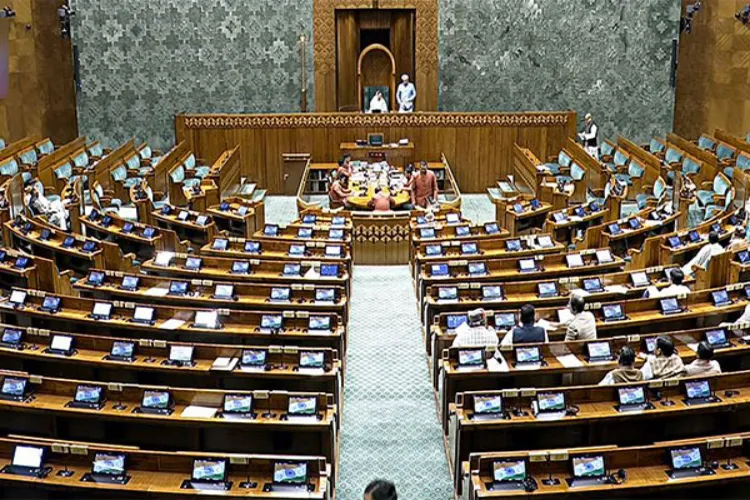
The ruling Bharatiya Janata Party (BJP) on Monday strongly defended the proposed Central Armed Police Forces (CAPF) Bill, 2026, in the Rajya Sabha, asserting that the government led by Narendra Modi is firmly committed to safeguarding the interests and morale of the country’s paramilitary forces.
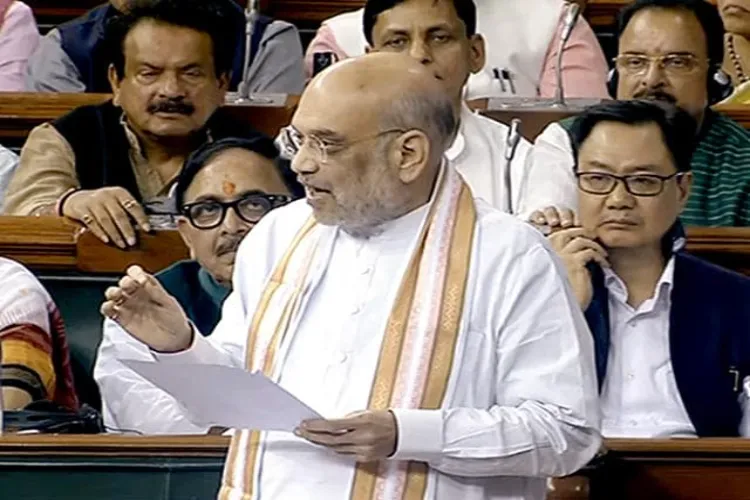
Participating in the discussion, BJP MP Sudhanshu Trivedi rejected the Opposition’s criticism of the Bill, which seeks to streamline administrative structures and promotion policies within the CAPFs. He emphasised that the legislation aims to remove ambiguity in career progression and reduce legal disputes arising from overlapping roles.
The proposed CAPF (General Administration) Bill, 2026, introduces significant changes to the promotion framework, including the removal of the existing 20 per cent deputation quota for Indian Police Service (IPS) officers at the Deputy Inspector General (DIG) level. According to Trivedi, this move will create more opportunities for cadre officers within the forces.
He explained that under the new structure, personnel entering at the Assistant Commandant level will have clearer pathways for advancement. “Assistant Commandants will now be able to rise to the DIG level, 50 per cent will reach the Inspector General (IG) level, and one-third can progress up to the Additional Director General (ADG) rank,” he said, adding that the system has been designed to ensure uniformity across all forces.
Addressing concerns that the Bill could adversely affect morale, Trivedi argued that such fears are exaggerated. He pointed out that the CAPFs have a strength of nearly 11 lakh personnel, while gazetted officers constitute only about 1 to 1.5 per cent. Among them, IPS officers account for an even smaller fraction.
“Therefore, the changes impact only around 0.10 to 0.15 per cent of the total force. It is not logically sound to claim that this will demoralise the entire CAPF structure,” he said.
The BJP leader also took a swipe at the Opposition, particularly the Indian National Congress, recalling past decisions during the UPA government. He referred to the case of Parliament attack convict Afzal Guru, stating that delays in his mercy petition had affected the morale of security personnel at the time.
Highlighting the critical role played by CAPFs, Trivedi described them as not just the first line of defence but the “main line of internal defence” for the country. He noted that these forces operate both at the borders and in internal security situations, making their efficiency and morale crucial for national stability.
He further elaborated on the proposed distribution of senior posts under the Bill. While 50 per cent of IG-level positions will be filled by cadre officers and the remaining by IPS officers, two-thirds of Additional DG posts will continue to be held by IPS officers. The Director General (DG) positions, he said, will remain exclusively with IPS officers to ensure effective coordination with state police and other agencies.
Trivedi argued that officers with diverse experience, including service in state police and central agencies, are better equipped to handle complex coordination challenges in internal security operations.
“The Modi government is deeply connected to ground realities and is making continuous efforts to strengthen these forces,” he said, adding that critics of the Bill lack a proper understanding of operational requirements.
Also speaking on the Bill, M Thambidurai of the All India Anna Dravida Munnetra Kazhagam (AIADMK) stressed the importance of welfare measures for CAPF personnel. He called for improved housing facilities and stronger mental health support systems for security forces.
Thambidurai also referred to the The Emergency as a “dark period” in India’s democratic history, criticising the actions taken during the tenure of former Prime Minister Indira Gandhi. He noted that several leaders from the DMK had been jailed during that time, while expressing confidence in the AIADMK-led NDA’s prospects in the upcoming Tamil Nadu Assembly elections.
ALSO READ: Alfiya Pathan: The rising boxing Star from Nagpur, aspiring to be the Next Mary Kom
The discussion highlighted sharp political differences over the Bill, even as the government maintained that the reforms are aimed at improving efficiency, clarity, and career progression within India’s vital internal security forces.


.webp "Justice Poonam A. Bamba with Captain Amarinder Singh")









.webp "J&K CM Omar Abdullah")

.webp)
.webp)