New Delhi
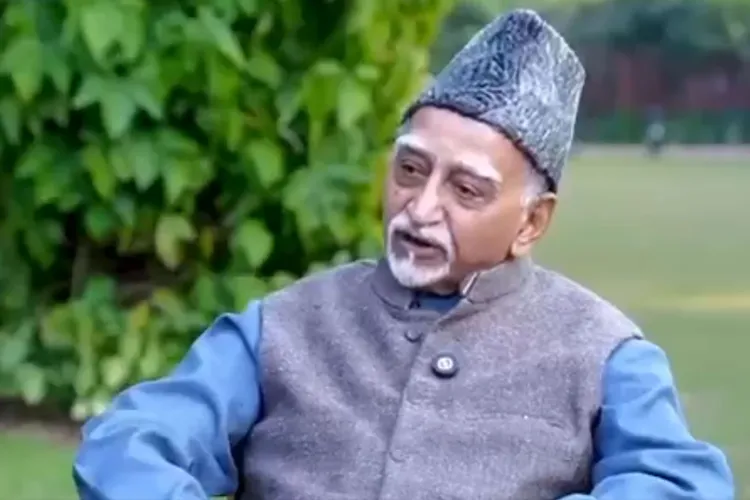
Former Vice President Hamid Ansari has said that India has not yet been able to eliminate electoral malpractices, warning that the growing influence of money power continues to undermine free and fair elections and weaken democratic representation.
In his new book Arguably Contentious: Thoughts on a Divided World, Ansari argues that the country’s political system reflects a deeper “ideological decadence”, marked by declining constitutional morality and distorted electoral outcomes.
“We have yet to succeed in eradicating electoral malpractices. We have allowed money power in all its manifestations to distort electoral outcomes and failed to make them free and fair,” Ansari writes, adding that Indian democracy remains “half full”.
The former vice president, who served two consecutive terms between 2007 and 2017, says electoral democracy in India has largely been practised mechanically, without evolving into a fully representative system. He notes that existing electoral procedures have often aggravated deviations instead of correcting them.
“Our political process depicts ideological decadence and a declining observance of constitutional morality. Society, too, shows a weakening respect for moral order and public conscience,” he observes.
Ansari also flags the rise of majoritarian tendencies and what he describes as the weaponisation of history to target specific communities, warning that such trends have deepened social divisions.
Referring to recent academic studies on religious minorities — who make up nearly 20 per cent of India’s population — Ansari says discrimination against these groups is often traced to ideas that originated during the period leading up to the Partition of 1947.
“These studies argue that violence was not merely accidental but was integral to the nation’s foundation, even as the need for fraternity coexisted with the imperative of restoring order,” he writes, adding that such interpretations cannot be dismissed entirely when assessing social cohesion today.
On secularism, Ansari notes that while India has formally embraced the principles of religious freedom, equality and state neutrality, their application has often been inconsistent, resulting in contradictions and anomalies.
He also expresses concern over Parliament’s declining role as a forum for scrutiny and accountability. According to him, disruptions — once criticised in opposition — are now normalised in government, often accompanied by silence from the leadership and reduced engagement with parliamentary committees.
The outcome, Ansari writes, is a steady erosion of debate, dissent and informed scrutiny, raising concerns beyond the mere conduct of periodic elections.
ALSO READ: A boy's journey from Kupwara to India’s top labs as scientist
Published by Rupa Publications, Arguably Contentious is a collection of Ansari’s speeches, lectures and essays, examining the intersection of diplomacy, pluralism and policy. The book reflects on India’s political, social and cultural challenges, including rising polarisation, the strain on secularism and ongoing debates over the idea of India.













.webp)