Ashhar Alam/New Delhi
“My name is Mohammed Deepak,” these words of a well-built young man to a mob that was trying to intimidate a Muslim shopkeeper in Kotdwar town of Uttarakhand, led to the goons losing control and dispersing in no time.
Deepak, a gymnasium trainer, confronted a group of locals as they were harassing the local Muslim shopowner in the marketplace for using the name "Baba" for his shop. As the shopkeeper' and his son were trying to argue with the aggressive local youth, Deepak intervened.
When asked who he was to defend the shopkeeper, he said, "My name is Deepak Muhammad."
The video of this entire scene was uploaded on social media, and it went viral in no time.
As soon as the video of Deepak's brave act was posted on X, netizens, both Hindus and Muslims, praised him for his courage and sense of being Indian.
The brief but emotionally charged incident unfolded this week at Baba School Dress and Matching Centre, a small, decades-old shop run by the family of Shoaib Ahmed in Kotdwar, Uttarakhand .
The shop became the focus of an altercation after a group allegedly associated with a right-wing outfit objected to the use of the word “Baba” in its name, questioning whether a Muslim-owned establishment should carry it.
Mad Respect to Deepak for protecting the Idea of India 🔥
— D (@Deb_livnletliv) January 30, 2026
H!ndutva goons went to h@rass an old Muslim man asking him to change the name of his shop.
But then came Deepak who stood like a ROCK and kicked the goons out
"Hindu Musalman mat karna bs#k mere yahan par" #deepak pic.twitter.com/l9VGySBle2
His intervention emboldened other residents, many of whom had known the Ahmed family for years. The conversation, though heated, shifted in tone as locals rallied not around faith, but familiarity and shared history. The situation was eventually brought under control, preventing further escalation.
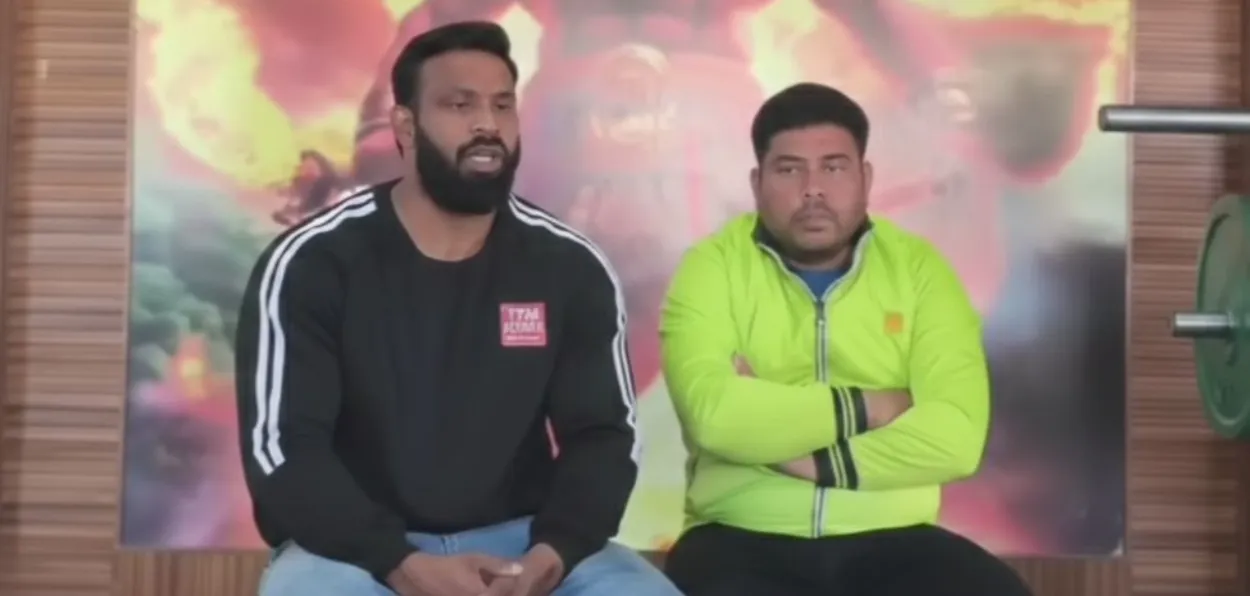
Deepak was also accompanied by his friend Vijay Rawat:
बहादुर दीपक कुमार के साथ एक और बहादुर व्यक्ति विजय रावत भी मौजूद थे। विजय रावत ने कहा, “मेरा धर्म किसी भी धर्म को गाली देना नहीं सिखाता। जो लोग हमें आपस में बाँटना चाहते हैं, उन्हें रोका जाना चाहिए। मैं सभी धर्मों का सम्मान करता हूँ। हमारा देश सभी धर्मों के साथ मिलकर चलता है।… pic.twitter.com/TF6X7LPTn4
— Ilyas (@Ilyas_SK_31) January 31, 2026
What began as a verbal challenge soon grew uncomfortable for Wakeel Ahmed, the elderly father of the shop owner, who was asked to justify both the shop’s name and his right to use it. Voices grew louder, and the crowd thickened. In a climate where such confrontations often spiral quickly, the situation seemed headed toward escalation.
That is when Deepak Kumar, a local Hindu resident, stepped in. Refusing to be a silent spectator, he questioned the group’s reasoning and reminded them that Muslims are equal citizens of the country. When asked his own identity, his reply, “My name is Mohammed Deepak”, cut through the noise. The statement was not about religion; it was about dismantling the very idea that names, faith, or labels decide who belongs.
Some Muslims said Deepak should be honoured:
Deepak, who fearlessly protected a Muslim shopkeeper from a violent Bajrang Dal mob, showed the kind of bravery our society needs.
— Mohd Shadab Khan (@VoxShadabKhan) January 31, 2026
Our group of friends wants to honor him. If anyone can share his contact, please do, we want to personally present him a token of appreciation.… pic.twitter.com/dULvkf9hsW
In the aftermath, Shoaib Ahmed said the locality has since returned to normal and that his family faces no immediate threat. While a complaint was lodged, the family chose not to pursue the matter further in the interest of peace. Wakeel Ahmed expressed gratitude to those who stood by them, stressing that communal harmony has long been the foundation of the neighbourhood.
ALSO READ: A boy's journey from Kupwara to India’s top labs as scientist
Deepak Kumar later released a video urging people to reject hatred and stand for unity. He said targeting individuals based on religion weakens the country’s social fabric and reminded viewers that humanity must come before identity.
As incidents of religious intimidation continue to surface across Uttarakhand and India, the Kotdwar moment stands apart, not for the confrontation, but for the courage of an ordinary citizen who chose empathy over silence, and unity over fear.