New Delhi
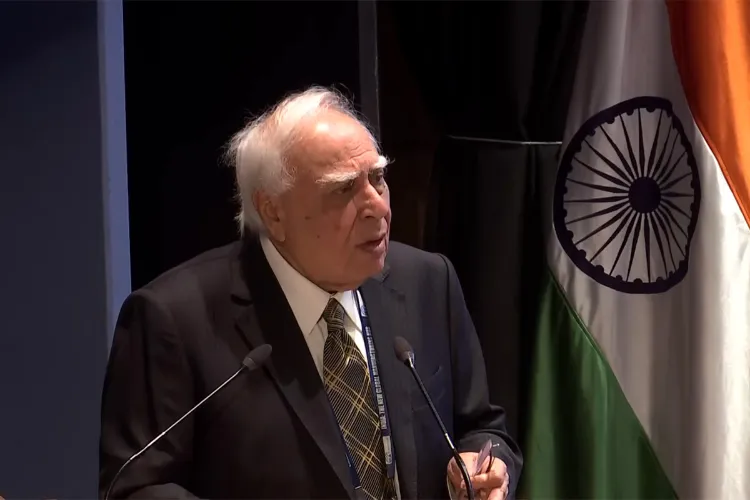
Amid the controversy surrounding the University Grants Commission’s Equity Regulations, Rajya Sabha MP Kapil Sibal on Saturday criticised the Modi government, saying its consistent refusal to consult stakeholders is evident in all major decisions it takes.
Speaking to PTI, the former Union human resource development minister, however, refrained from offering a direct opinion on the UGC regulations, citing that the matter is currently pending before the Supreme Court.
“The issue is before the Supreme Court, and it would not be appropriate for me to comment on it. But speaking in a broader sense, in a country like India, every section of society must be taken along,” Sibal said.
He stressed that India’s aspiration to become a developed nation can be realised only when policies and their implementation are inclusive. “We talk of a ‘Viksit Bharat’, but that can happen only when all sections of society are taken care of — both at the policy level and in execution,” he said.
Sibal cautioned that attempts to create divisions within society would ultimately harm the country’s future. “We are Indians first. Only then do we belong to a community, caste, region or language. India’s diversity should be viewed as a strength, not a weakness,” he added.
The Supreme Court on Thursday stayed the UGC’s recently notified equity regulations aimed at preventing caste-based discrimination in higher education institutions, observing that the framework was “prima facie vague”, could have “very sweeping consequences” and might divide society with a “dangerous impact”.
The apex court also sought responses from the Centre and the UGC by March 19 on petitions challenging the University Grants Commission (Promotion of Equity in Higher Education Institutions) Regulations, 2026. The pleas argue that the definition of caste-based discrimination under the rules is limited to Scheduled Castes, Scheduled Tribes and Other Backward Classes.
Asked whether the issue could have been handled better, Sibal said the government’s approach since 2014 has been to function without wider consultation. “They do not share their views with anyone. That consistency of not consulting anybody is reflected in every decision they take,” he said.
The regulations, notified on January 13, mandate the formation of equity committees in all higher education institutions to address discrimination complaints and promote inclusivity. These committees are required to include representatives from OBCs, SCs, STs, persons with disabilities and women.
The new framework replaces the 2012 UGC equity regulations, which were largely advisory. The move triggered protests by students in several states, prompting Union Education Minister Dharmendra Pradhan to assure that the rules would not be misused and that no discrimination would be allowed.
While staying the regulations, the Supreme Court said the petitions raised substantial questions of law and noted ambiguities in the rules, observing that the possibility of misuse could not be ruled out.
Separately, reacting to the Economic Survey’s suggestion to re-examine the Right to Information Act, Sibal expressed concern, calling RTI a fundamental democratic right.
ALSO READ: A boy's journey from Kupwara to India’s top labs as scientist
“There are already exceptions in the RTI Act relating to national security and certain financial matters. I do not know to what extent the government wants to curtail it further,” he said. “If people are denied access to information, it will cause serious damage to society.”










.webp)