New Delhi
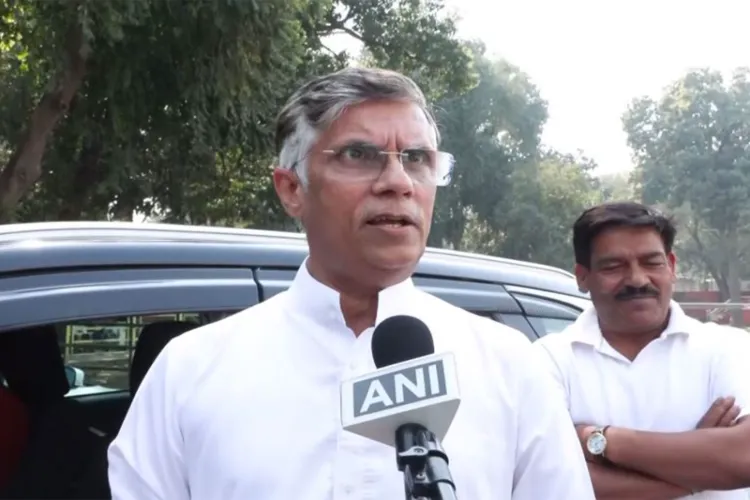
Chairman of Congress' Media and Publicity Department, Pawan Khera, on Friday lashed out at the Centre after the United States said it had allowed a 30-day waiver for New Delhi to purchase Russian oil amid shipping routes passing through the Strait of Hormuz being hampered.
Speaking to ANI, Pawan Khera called the 30-day waiver "alms" for India.
"When is a waiver given? When someone is bound by an agreement. Has the agreement been signed? When there is no agreement, what is the need for a waiver? They have given us 30 days' worth of alms, and they (BJP) are celebrating," the Congress leader said.
This comes after the US Treasury Secretary's X post, where he announced that the department has issued a 30-day waiver allowing India to purchase Russian oil to enable oil flow into the global market. He announced the short-term measure to counter Iran during the conflict in West Asia, which has severely affected the Gulf countries supplying crude oil.
Washington said that it expects New Delhi to "ramp up" purchases of US oil after this short-term waiver.
Further, Pawan Khera questioned Prime Minister Narendra Modi and EAM S Jaishankar for not sharing a social media post on the demise of the late Supreme Leader of Iran, Ayatollah Ali Khamenei, while Foreign Secretary Vikram Misri on Thursday signed the condolence book at the Embassy of Iran in New Delhi on behalf of the Centre.
Khera said, "When someone expresses grief under pressure, do you think they are actually condoling. Even if you are not aggrieved, it is a custom. He has been our friend. Now you would have found new friends, but Iran is still India's friend. Why did S Jaishankar not go? Why has PM Narendra Modi not even shared a post?"
Earlier on Thursday, Foreign Secretary Misri conveyed India's message of sympathy to the Ambassador of Iran to India, Mohammad Fathali. The Iranian Embassy also lowered its flag to half-mast following the death of the country's Supreme Leader.
READ MORE: J&K's only woman CM Mehbooba Mufti injected compassion into politics
This comes amid escalating tensions in West Asia after a joint US-Israel military strike on February 28 on Iranian territory resulted in the death of its Supreme Leader, Ayatollah Ali Khamenei and other senior figures, prompting a fierce response from Tehran.
In retaliation, Iran launched waves of drone and missile attacks across multiple Arab countries as the conflict now entered its seventh day.








.webp)