Leh
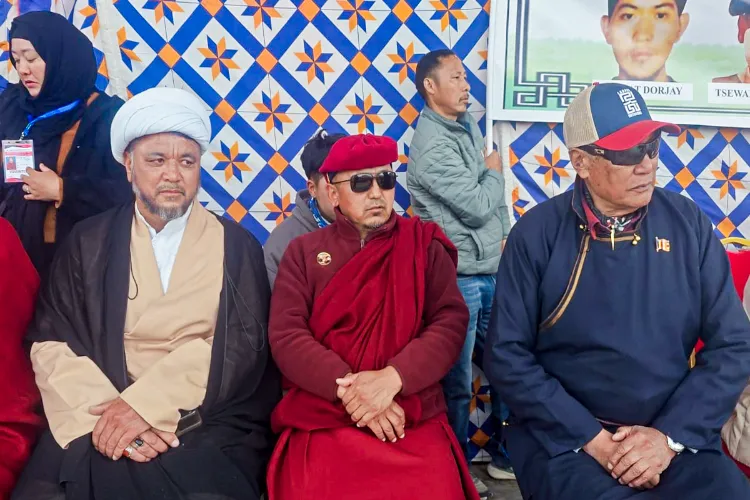
Hundreds of people participated in a rally in Leh on Monday while a shutdown was observed in Kargil in support of demands for statehood and extension of the Sixth Schedule of the Constitution of India to Ladakh.
The call for the protest was given jointly by the Leh Apex Body (LAB) and the Kargil Democratic Alliance (KDA).
It was the first major rally organised by LAB since violence broke out during protests in September last year and comes two days after climate activist Sonam Wangchuk was released by the Centre after nearly six months of detention under the National Security Act.
The rally began at Singay Namgyal Chowk and proceeded to the Leh Polo Ground, led by LAB co-chairman Chering Dorjay.
Participants, including many women, marched while raising slogans demanding statehood for Ladakh and its inclusion under the Sixth Schedule. Some protesters also carried pictures of four people who were killed during firing after a protest rally turned violent in September last year.
Security arrangements were tightened across Leh, with additional personnel deployed. Mukesh Singh visited the rally site to review the security measures.
Meanwhile, Kargil and nearby Drass observed a complete shutdown in response to the joint call by LAB and KDA, the groups that have been spearheading the agitation for the past five years.
Officials said the protest remained peaceful and no untoward incident was reported.
Speaking to reporters, Chering Dorjay thanked residents for turning out in large numbers despite restrictions and barricading imposed by the administration.
“Today, the people of Ladakh have demonstrated that the public stands with the Apex Body and the KDA,” he said, calling the rally a major success.
Wangchuk, one of the prominent faces of the movement, had been detained under the National Security Act in September for allegedly instigating violence during the protests.
READ MORE: An officer can't afford to go wrong, says top cop Ajeetha Begum
The Centre announced on Saturday that his detention was being revoked to facilitate dialogue with stakeholders over the region’s demands.









.webp "UP CM Yogi Adityanath")