New Delhi
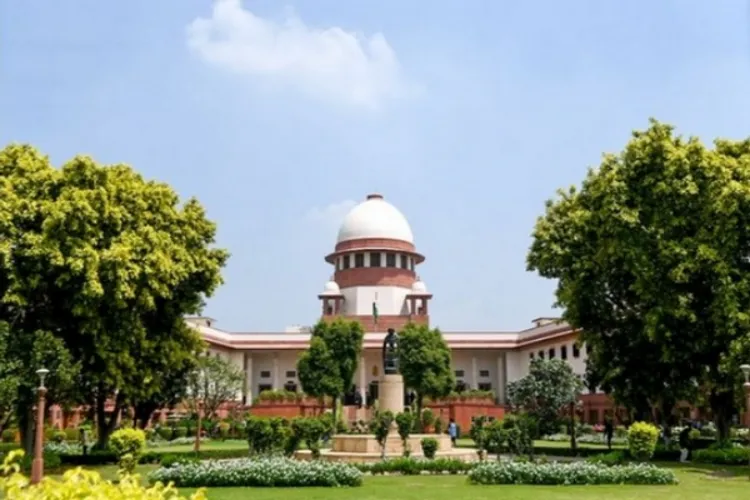
The Supreme Court of India on Thursday issued notices to the Centre and other authorities on a public interest litigation seeking the creation of a dedicated revenue judicial service to deal with land-related disputes.
A bench comprising Chief Justice Surya Kant and Justice Joymalya Bagchi asked the Union government, the Law Commission of India and others to respond to the petition filed by advocate Ashwini Upadhyay. The plea argues that many land disputes are currently decided by officials who lack formal legal training.
According to the petition, nearly two-thirds of civil litigation in the country relates to land issues. It contends that a major shortcoming of the present system is that such cases are handled by revenue officers without adequate legal education, often leading to inconsistent or flawed decisions.
The plea, drafted by advocate Ashwani Dubey, also pointed out that directions on the issue had earlier been issued by the Allahabad High Court but have not been effectively implemented so far.
It further stated that the current arrangement causes significant hardship to citizens, as decisions by inadequately trained officials can be arbitrary and contradictory. This, in turn, creates prolonged uncertainty over property rights, hampers land transactions, increases litigation costs, and restricts access to justice.
The petition claims that such a system violates fundamental rights under Articles 14 and 21 of the Constitution. It has sought directions to both the Centre and state governments to introduce minimum legal qualifications and structured judicial training for revenue officers handling matters related to title, succession, inheritance, and possession.
READ MORE: RJ Saima's Purani Jeans revived love of golden era music among youth
Additionally, the plea has requested that adjudication of such property-related disputes by officials without formal legal training be declared impermissible, and that the process be brought under the supervision of respective high courts.









.webp "Union Railway Minister Ashwini Vaishnaw")
.webp)