




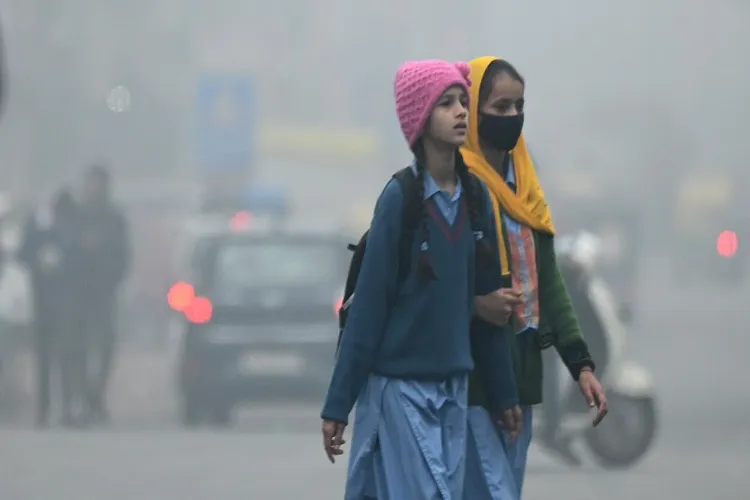
New Delhi
The World Meteorological Organization (WMO) on Thursday reported a 55 per cent probability of a weak La Nina influencing global weather over the next three months.
La Nina typically causes temporary cooling of global average temperatures, but many regions are still expected to experience warmer-than-normal conditions, the UN agency said.
La Nina and El Nino are opposite phases of the El Nino-Southern Oscillation (ENSO), a Pacific Ocean climate cycle. La Nina involves large-scale cooling of sea surface temperatures in the central and eastern equatorial Pacific, affecting tropical winds, pressure, and rainfall. El Nino, the “warm phase,” often weakens India’s monsoon and increases drought risk.
According to WMO forecasts, oceanic and atmospheric indicators in mid-November 2025 point to borderline La Nina conditions, with a 55 per cent chance of crossing the threshold during December 2025–February 2026. The India Meteorological Department also expects normal to below-normal temperatures in central, northwest, and peninsular India this winter.
READ MORE: When neighbours saved my family and firmed my faith in inclusive India
For January–April 2026, WMO predicts a 65–75 per cent chance of a return to ENSO-neutral conditions, with the likelihood of El Nino remaining low. The organization noted that ENSO is one of several factors affecting global climate, alongside patterns like the North Atlantic Oscillation, Arctic Oscillation, and Indian Ocean Dipole.

.webp "S. Irfan Habib with Saquib Salim in Deen Aur Duniya")











.webp)



.webp)