Dehradun
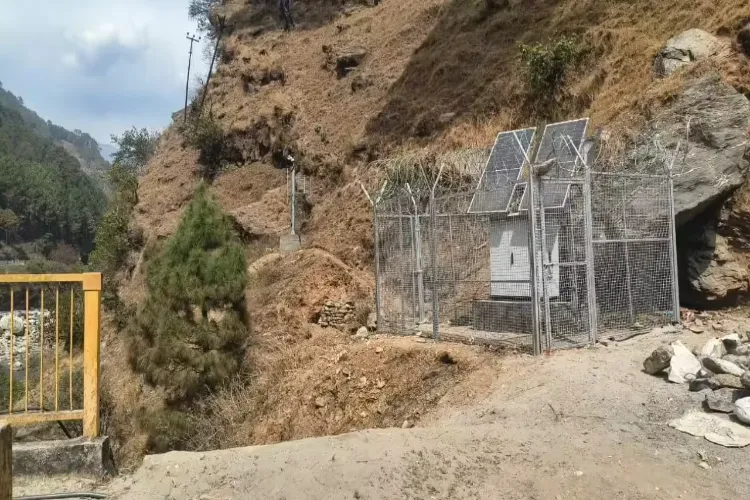
In a move aimed at strengthening disaster preparedness in the Himalayan region, the Uttarakhand government has decided to install advanced early warning and real-time monitoring systems at vulnerable glacial lakes to reduce the risk of glacial lake outburst floods (GLOFs), officials said on Tuesday.
As part of the initiative, the Wadia Institute of Himalayan Geology has begun developing Vasundhara Lake as a pilot site for the deployment of these high-tech monitoring systems.
Officials said the pilot model will later be expanded to other glacial lakes identified as vulnerable across the state, forming part of a broader scientific disaster management strategy.
Chief Secretary Anand Bardhan directed WIHG to submit a comprehensive implementation roadmap covering planned activities through 2028. He also stressed the importance of engineering interventions such as controlled water discharge and reduction of lake water levels to minimise flood risks.
Secretary of Disaster Management and Rehabilitation Vinod Kumar Suman said the state currently operates 169 sensors and 112 sirens under its earthquake early warning network.
He noted that an agreement signed with Indian Institute of Technology Roorkee in February this year ensures the maintenance of the existing network through 2026.
To further strengthen seismic monitoring, the government plans to install 500 additional strong-motion sensors in earthquake-prone regions. Authorities also intend to add 526 more warning sirens, including 500 units developed domestically.
Officials said new permanent seismological observatories are proposed at eight locations, including Roorkee, Kedarnath and Karanprayag, to complement the existing network operated by the National Centre for Seismology.
On landslide mitigation, officials said 48 debris-flow-prone sites have been identified across Chamoli, Uttarkashi and Pithoragarh districts. These locations, mostly situated near drainage channels, have been categorised according to risk levels to prioritise preventive measures.
READ MORE: Firdous Khan's journey is a blend of literature and journalism
A technical committee comprising agencies including the Geological Survey of India and the Central Building Research Institute is overseeing the hazard assessment and mitigation planning.










.webp "Uttar Pradesh Chief Minister Yogi Adityanath")



_(1).webp)