




Bengaluru
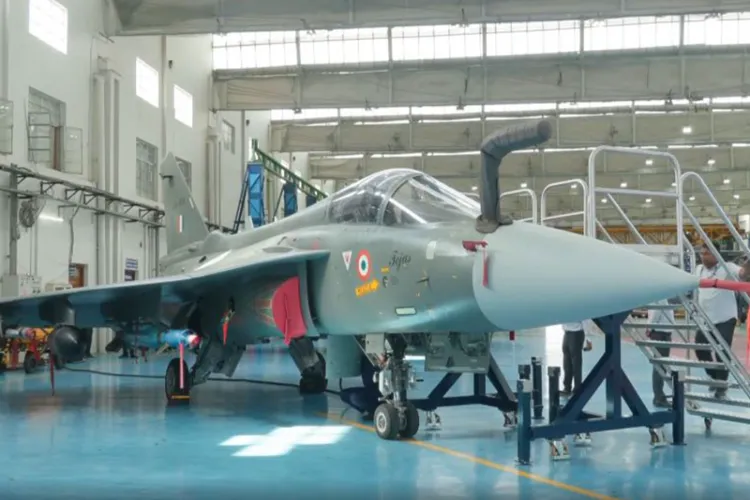
Deliveries of the indigenous Light Combat Aircraft (LCA) Tejas Mk1A to the Indian Air Force (IAF) are facing setbacks due to software integration challenges, with aerospace major Hindustan Aeronautics Limited (HAL) stating that it is working on resolving outstanding issues and focussing on delivery.
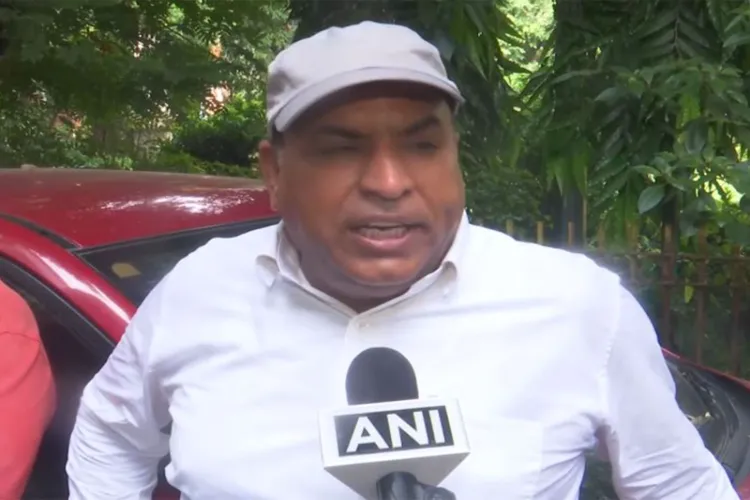
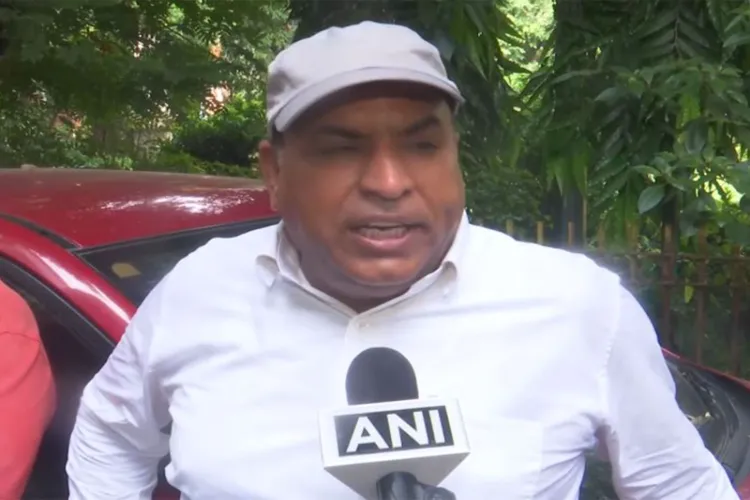
Speaking to ANI, Chairman and Managing Director Ravi Kumar said on Friday detailed the status of the fighter jet deliveries, noting that extensive software modifications are currently underway during testing stages.
"For deliveries to happen, the aircraft should be ready for that; we are still not there yet. We are working very hard for that. We will resolve issues soon and start delivering," Kumar said, while addressing queries regarding pending deliveries.
Declining to set a firm deadline, the HAL CMD explained: "During check-in, there are lots of issues. I can’t commit. Lots of software is involved in this. This software requires changes. That’s why I’m not committing to a timeline."
On the supply of the Hindustan Turbo Trainer-40 (HTT-40) basic trainer aircraft, Kumar affirmed that the state-run aerospace giant is set to deliver the entire order of 70 aircraft to the IAF within the next four to five years.
"In another four to five years, we should be able to complete it," Kumar said. He added that HAL is actively outsourcing non-core manufacturing processes to private industry players across its aircraft and helicopter lines.
To prevent bottlenecks, the production of the trainer has been decentralised across three divisions alongside intensive supply-chain coordination with domestic sub-suppliers.
In a major development regarding India’s futuristic unmanned combat capabilities, Kumar revealed that HAL has initiated the fabrication of the prototype for the 'CATS Warrior' (Combat Air Teaming System) autonomous drone.
"Now we have started building the prototypes of CATS Warrior. Next year, we are planning for certification," Kumar said, pointing to accelerated progress on the loyal-wingman unmanned platform.
With the Indian Air Force scouting options to eventually replace its ageing fleet of British-origin BAE Systems Hawk Advanced Jet Trainers (AJT), Kumar indicated that HAL will pitch an indigenous fighter-trainer derivative.
"We already have our LCA trainers. We are already working with our trainer called the LCA LIFT (Lead-in Fighter Trainer) programme. We are confident that we will be able to convince our customers," the CMD said.
Addressing civil aerospace orders, Kumar confirmed that HAL is executing an order for 10 Dhruv Next Generation (NG) helicopters placed by state-run helicopter operator Pawan Hans Limited.
"We have entered into a contract with Pawan Hans for supplying 10 Dhruv NG helicopters. We are delivering four [immediately], and by December, we will deliver another four. In the next financial year, we will complete all the deliveries," Kumar said.
In a major push for indigenous aerospace manufacturing and self-reliance, Hindustan Aeronautics Limited (HAL) is set to hand over frontline trainer aircraft to the Indian Air Force (IAF) and next-generation helicopters to Pawan Hans Limited on Friday.
Under the delivery programme, the IAF will receive two Light Combat Aircraft (LCA) Tejas Final Operational Clearance (FOC) Trainer aircraft along with the indigenous Hindustan Turbo Trainer-40 (HTT-40) Basic Trainer aircraft.
Additionally, four advanced Dhruv Next Generation (NG) helicopters will be handed over to Pawan Hans Limited.
Defence Minister Rajnath Singh and Civil Aviation Minister K Ram Mohan Naidu will attend the handover ceremony of LCA Tejas Trainer jets, HTT-40 Basic Trainer aircraft and Dhruv Next Generation (NG) civilian helicopters by Hindustan Aeronautics Limited (HAL) to the Indian Air Force (IAF) and Pawan Hans Limited (PHL) in Bengaluru.
HAL said the handover strengthens India's self-reliance in military aviation, civil rotary wing aviation and pilot training.
As part of the handover, HAL will deliver two LCA FOC Trainer aircraft to the IAF, completing Twin Seater deliveries under the Final Operational Clearance (FOC) contract. Four Dhruv NG helicopters will be handed over to PHL, marking the induction of the civil-certified Dhruv NG into the civil aviation segment. HAL will also hand over HTT-40 Basic Trainer aircraft to the IAF, marking the start of deliveries under the 70 aircraft contract.
The LCA FOC Trainer is a lightweight, all-weather, multi-role 4.5 generation aircraft built primarily to support IAF training needs while retaining fighter operation capability. It features relaxed static stability, a quadruplex fly-by-wire flight control system, carefree manoeuvring, an advanced glass cockpit, integrated digital avionics and advanced composite airframe materials.
A contract for 16 LCA fighter aircraft and four Twin Seaters in FOC configuration was placed in 2010 between the Ministry of Defence, the IAF and HAL.
All 16 FOC fighter aircraft were produced and delivered by HAL between 2022 and 2023. HAL began delivering FOC Twin Seaters in 2024–25, with the final two aircraft, SPT7 and SPT8, incorporating enhancements including improved radar performance, autopilot handling, fuel system improvements, Software Defined Radio for secure communications, and an air-to-air refuelling probe. The handover of these two Trainers completes delivery of all four Twin Seaters under the FOC contract. HAL is also developing Twin Seaters under an 83 and 97 aircraft contract, with plans to progressively deliver 29 Mk1A Twin Seater aircraft to the IAF by 2033–34, incorporating AESA radar, an electronic warfare suite and additional weapons capabilities including ASRAAM and BVR weapons.
The Dhruv NG is an HAL-designed and manufactured 5.5 tonne, light twin engine, multi role helicopter, described as India's first indigenously produced civil helicopter. It is powered by twin Shakti 1H1C engines and meets AS 4 requirements for offshore operations. The helicopter has a maximum take off weight of 5,500 kg, a maximum speed of approximately 285 km/h, a range of about 630 km with a 20 minute reserve, and can carry up to 14 passengers. Its configurable cabin supports roles including VIP transport, passenger and utility use, air ambulance operations, offshore operations, law enforcement and disaster relief. HAL said it offers lifecycle support for the platform through manufacturing, maintenance and upgrades, including Power By Hour and Performance Based Logistics models.
The HTT-40, designed by HAL's Aircraft Research and Design Centre, is an indigenously developed Basic Trainer Aircraft intended to meet the primary training requirements of the Indian Defence Services. It made its first flight on May 31, 2016 and has since completed an extensive programme of development, evaluation and validation trials, including handling qualities, systems performance and hot weather and crosswind operations.
READ MORE:Can Muslims flourish under non-Muslim rule?
The aircraft holds a Restricted Military Type Certificate issued by CEMILAC and has an indigenous content of approximately 57 per cent. It has a 1,100 SHP turboprop engine, a maximum speed of 300 knots and a service ceiling of 6,000 metres, and is designed to support basic training, aerobatics, instrument flying, navigation, night flying and close formation flying. The Ministry of Defence has placed a contract for 70 HTT-40 aircraft, and the current handover marks the start of deliveries under that contract.



.webp "Union Home Minister Amit Shah")







.webp)