 Shankar Kumar
Even as the ongoing conflict in West Asia poses significant diplomatic, strategic, and logistical challenges, India appears to be navigating the crisis with caution and pragmatism. New Delhi’s approach reflects an effort to safeguard its core interests while maintaining working relationships with all key stakeholders in the region.
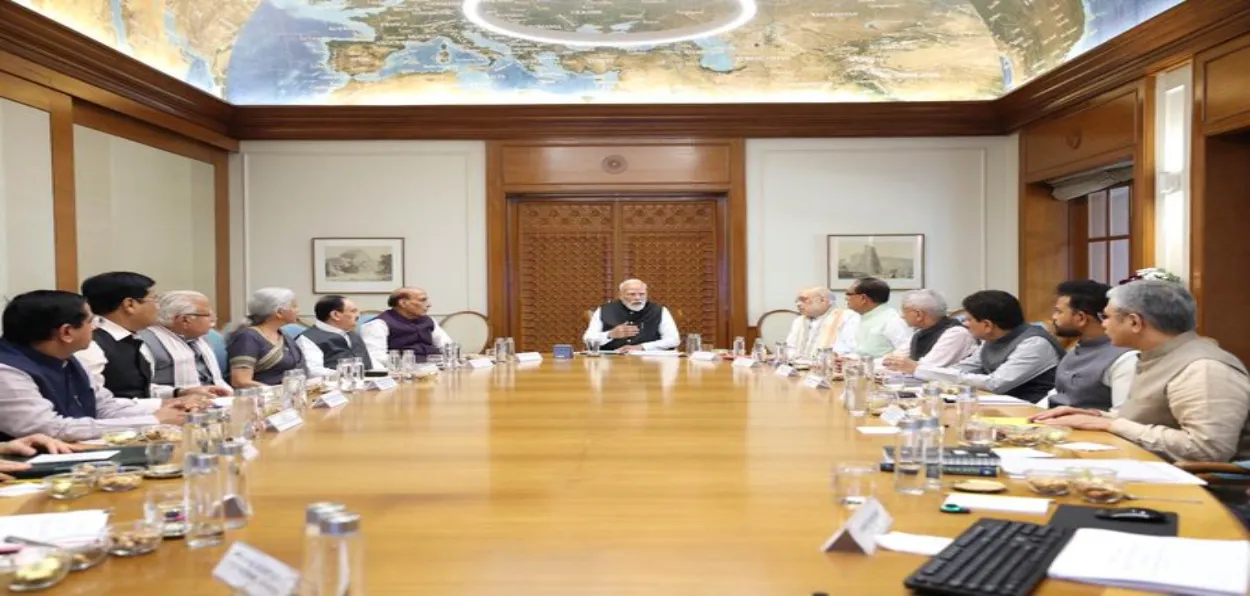
Amid escalating tensions, Indian leaders have been in constant communication with members of the Gulf Cooperation Council (GCC), as well as with Jordan and Israel. Simultaneously, they have maintained regular contact with the Iranian leadership. This multi-channel engagement underscores India’s intent to keep dialogue open with all parties—an imperative given its deep stakes in the region.
India’s energy security is closely tied to the Gulf, from where it imports 45–50% of its crude oil and nearly 60% of its LNG. Additionally, millions of Indian nationals reside and work in these countries. While New Delhi has largely maintained a delicate balance, some observers argue that its stance appears to lean slightly in favour of GCC nations.
India has made deliberate efforts to ensure that Iran does not feel sidelined in its diplomatic outreach. On March 18, New Delhi delivered the first tranche of medical aid to the Iranian Red Crescent Society, a gesture that was acknowledged with gratitude by Tehran.
Earlier, India had granted permission for three Iranian warships—IRIS Dena, IRIS Bushehr, and IRIS Lavan—to dock after participating in the ‘MILAN 2026’ naval exercise in Visakhapatnam (February 15–25). Of these, IRIS Lavan docked in Kochi on March 4. Meanwhile, IRIS Bushehr proceeded to Colombo, Sri Lanka.
Indian-flagged LPG tanker Shivalik docked at Gujarat's Mundra Port on March 16 carrying approximately 46,000 metric tonnes of liquefied petroleum gas from the Persian Gulf pic.twitter.com/9WUFMNesDt
— Mahender Bogi (@xxmahibogixx) March 17, 2026
However, IRIS Dena was reportedly torpedoed by the United States in international waters on March 4 before it could reach Indian shores. Despite these developments, India facilitated the safe return of most sailors from the IRIS Lavan to Iran.
Some experts have pointed to perceived gaps in India’s diplomatic engagement, noting that Prime Minister Narendra Modi spoke to Iranian President Masoud Pezeshkian only on March 12, despite the conflict reportedly beginning on February 28. However, such criticism overlooks the sustained backchannel diplomacy undertaken by External Affairs Minister S. Jaishankar, who remained in close contact with his Iranian counterpart, Abbas Araghchi, from the outset of the crisis.
"Everything was fine in middle east, allah (upar wala) was with us," says a M woman who returned to India from Jeddah, Saudi Arabia
— Frontalforce 🇮🇳 (@FrontalForce) March 6, 2026
Thankless people 😡pic.twitter.com/b4iXOMDrsb
By March 13, Jaishankar had spoken at least four times with the Iranian foreign minister. India also conveyed its condolences following the death of Supreme Leader Ayatollah Ali Khamenei, with Foreign Secretary Vikram Misri signing the condolence book at the Iranian Embassy in New Delhi on March 5.
On March 11, India co-sponsored a GCC-backed resolution at the United Nations Security Council, along with 134 countries, calling for an immediate cessation of attacks by Iran on GCC countries and Jordan. The resolution also condemned any attempts by Iran to disrupt navigation through the Strait of Hormuz.
With an estimated 9.6 million Indian nationals living in West Asia, their safety remains New Delhi’s foremost priority. The region is also a major source of remittances. According to the Reserve Bank of India, over one-third of India’s total remittances—approximately $40 billion—originate from Gulf countries, including Saudi Arabia, the UAE, Qatar, Kuwait, and Oman, accounting for nearly 38% of total inflows.
Beyond remittances, Gulf nations are key investors in India’s infrastructure and development projects. Under the 2024 Bilateral Investment Treaty with the UAE, Abu Dhabi has committed up to $75 billion in investments. Among its flagship initiatives is the proposed Special Investment Region in Dholera, Gujarat, which envisions an international airport, a pilot training institute, an MRO facility, a greenfield port, smart urban infrastructure, rail connectivity, and energy projects.
Other Gulf countries—including Saudi Arabia, Oman, Bahrain, Kuwait, and Qatar—also maintain robust trade and investment ties with India.
Given these realities, any diplomatic misstep could have serious consequences for India’s strategic and economic interests. It is therefore not surprising that Congress MP and former UN Under-Secretary-General Shashi Tharoor has supported the government’s approach, describing it as one of “restraint.”
“Restraint is not surrender; it is strength—a demonstration that we understand our interests and will act to protect them,” Tharoor said.
While critics may question India’s foreign policy posture, the complexity of the Middle East crisis leaves little room for rigid positioning. This explains why Prime Minister Modi and other Indian leaders have maintained active engagement with multiple countries in the region.
On March 17, two LPG vessels—Shivalik and Nanda Devi—safely reached Indian shores after transiting the Strait of Hormuz. Their passage through sensitive waters underscores the importance of India’s sustained diplomatic outreach.
India is currently coordinating with Iran to ensure the safe passage of 22 vessels through the Strait, 20 of which are critical for its energy security. These developments highlight that India’s approach is less about choosing sides and more about managing risk.
ALSO READ: Sarah Rizvi: The first Muslim woman IPS officer of Gujarat cadre
As long as New Delhi continues to balance principle with pragmatism, and restraint with resolve, it stands a strong chance of navigating this complex crisis without compromising its national interests.

.jpg "Gujarat’s women entrepreneurs bring their craftsmanship to life during Navratri")