Zeeba Naseem
Rabindranath Tagore, the first Indian to receive the Nobel Prize in Literature, was far more than a poet. He was a philosopher, educationist, artist and cultural ambassador who devoted his life to fostering intellectual and cultural dialogue between the East and the West. He believed that enduring relations between nations are built not merely on political or economic interests but on the exchange of knowledge, art, civilisation and shared human values.
This conviction took him across the world in search of new ideas and cultures. Among his many overseas journeys, his 1927 visit to Indonesia occupies a special place. More than a travel expedition, it was a quest to rediscover the centuries-old cultural links between India and Southeast Asia and to reinforce the idea of a shared Asian civilisational identity.
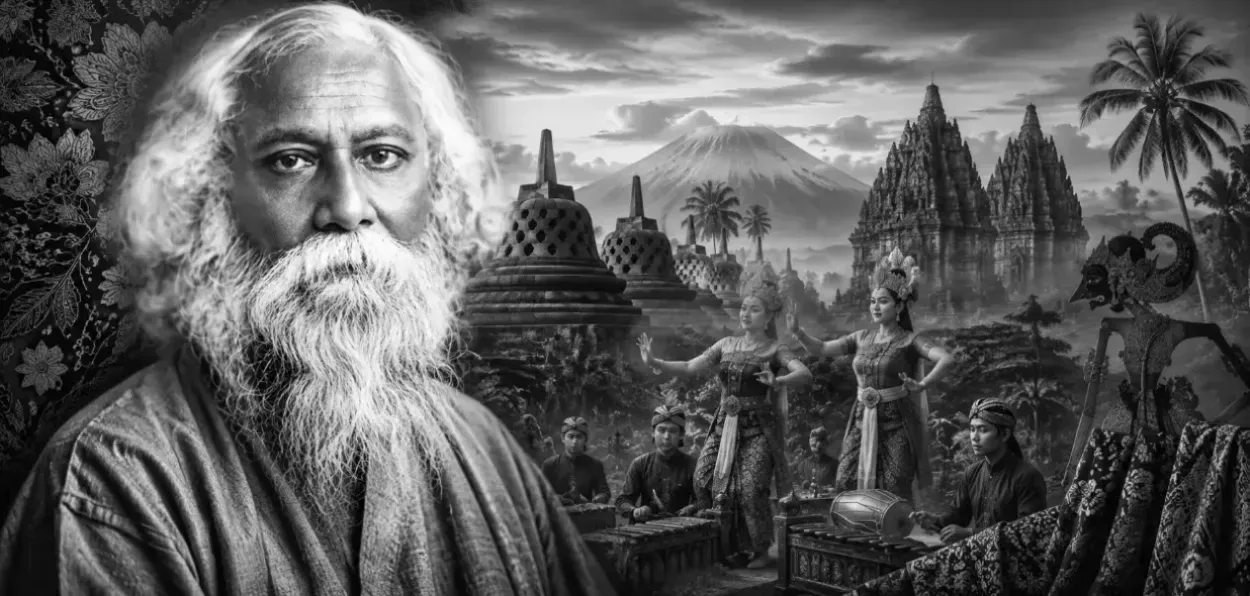
During the visit, Tagore travelled through Belawan, Batavia (now Jakarta), Surabaya, Solo, Yogyakarta, Bali and Bandung, interacting with scholars, artists, educators and social leaders. The journey profoundly enriched his intellectual and artistic vision. Indonesia's architecture, music, dance, painting and traditional crafts, particularly the batik tradition, left a lasting impression on him.
He admired the elegance of Javanese dance, the beauty of traditional costumes and the refinement of Indonesian craftsmanship. On his return, he introduced several of these artistic influences at Visva-Bharati University in Santiniketan, encouraging cultural exchanges between Indian and Indonesian artists, teachers and students. These initiatives reflected his belief that lasting friendship between nations grows through cultural understanding rather than diplomacy alone.
Long before Tagore's visit, India and Indonesia had enjoyed close civilisational ties. Beginning in the first century CE, Indian traders, Buddhist monks and scholars travelled regularly to Southeast Asia, carrying with them Hinduism, Buddhism, Sanskrit literature, architecture, music and artistic traditions.
 Rabinder Nath Tagore with notables in Java
Tagore's first destination was Java, renowned for its rich history and artistic traditions. What fascinated him most was the remarkable coexistence of Hindu-Buddhist heritage within a predominantly Muslim society. He viewed this cultural continuity as an inspiring example of harmony and historical continuity.
One of the highlights of his journey was his visit to Borobudur, the world's largest Buddhist monument, built in the ninth century. The monument's magnificent architecture and intricate reliefs depicting the life of the Buddha deeply moved him. He regarded Borobudur as a timeless symbol of the enduring influence of Indian civilisation and Buddhist philosophy in Southeast Asia.
He also visited the majestic Hindu temple complex of Prambanan, dedicated to Brahma, Vishnu and Shiva. The temple's exquisite sculptures and architectural brilliance convinced him that the artistic traditions of India and Indonesia had flourished together for centuries.
Equally captivating were Java's traditional dances and the enchanting sounds of the gamelan orchestra. Tagore found in these performances the same spiritual depth, grace and discipline that characterise India's classical arts.
 Prambanan Temple complex
From Java, Tagore travelled to Bali, where he encountered a society in which religion, art and everyday life were inseparable. The island's vibrant Hindu traditions, temple rituals and festivals deeply impressed him.
He admired the Balinese people's simplicity, spirituality and close relationship with nature, describing Bali as an example of how a society could preserve its cultural identity while embracing change.
Balinese dance particularly captivated him. The expressive hand movements, graceful postures, elaborate costumes and rhythmic music transformed each performance into a deeply spiritual experience. He was equally impressed by Balinese painting, sculpture and other visual arts, which he regarded as profound expressions of harmony between nature and spirituality.
Tagore returned to India carrying much more than memories. Fascinated by the traditional art of batik, he encouraged his associates to learn the technique and introduced it at Santiniketan. Over time, the craft evolved into the distinctive Santiniketan Batik tradition, blending Indonesian methods with Indian textiles and Bengali artistic motifs.
His exposure to Javanese dance and costume also enriched the evolution of Rabindra Nritya, the dance tradition inspired by his literary and musical works.
Tagore's influence extended beyond the arts. His educational philosophy inspired Ki Hajar Dewantara, Indonesia's pioneering educationist and later the country's first Minister of Education, in establishing the Taman Siswa (Garden Schools) movement. During his visit, Tagore also encouraged academic exchanges between Santiniketan and Indonesian educational institutions, laying the foundation for long-term collaboration among teachers, students and artists.
Throughout his travels, Tagore was deeply touched by the hospitality, artistic sensibilities and spiritual outlook of the Indonesian people. He wrote that Indonesia was a land where art, nature and spirituality existed in perfect harmony, demonstrating that a nation could modernise without losing its cultural identity.
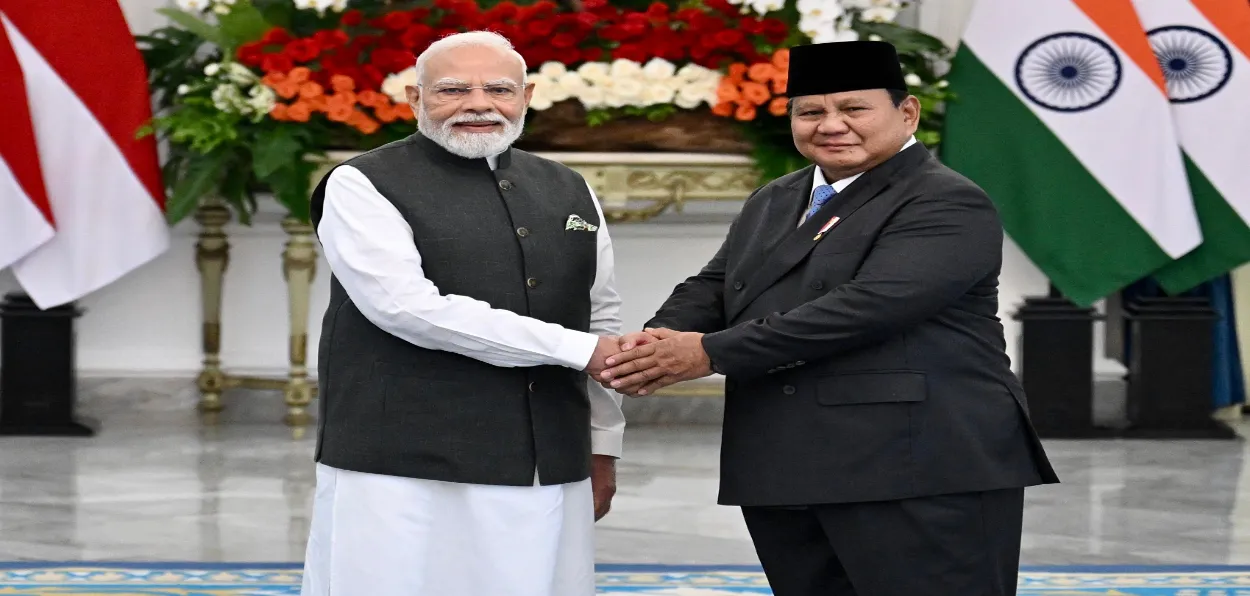
Mendampingi Bapak Presiden @prabowo bersama jajaran Kabinet Merah Putih menerima Perdana Menteri India Narendra Modi. Di kesempatan yang sama Presiden Republik Indonesia menganugerahkan Bintang Republik Indonesia Adipurna bagi Perdana Menteri India Narendra Modi dalam kunjungan… pic.twitter.com/eNWilvHiKk
— A Muhaimin Iskandar (@cakimiNOW) July 7, 2026
Nearly a century later, Tagore's 1927 journey remains a landmark in India-Indonesia relations. It revitalised cultural, educational and intellectual exchanges while reaffirming the deep civilisational ties that have connected the two countries for nearly two millennia.
READ MORE: MEA comes to rescue of Nazneen stuck at Doha airport
His visit continues to stand as a powerful reminder that the strongest bridges between nations are built not through political agreements or commercial interests alone, but through culture, knowledge, mutual respect and a shared commitment to humanity.

.webp "A Maulana with the ancient hand-written Quran")