Ashhar Alam/ New Delhi
In a narrow alley near Jama Masjid in Old Delhi, 70-year-old Painter Kafeel keeps alive a dying art form -- hand-painted Bollywood posters and hoardings.
Tucked inside a modest studio in Matia Mahal, his workspace feels less like a shop and more like a living museum. Faded posters, half-finished hoardings, paint-stained walls, and worn brushes tell a story of an era slowly disappearing.
Long before digital screens and flex banners took over cityscapes, Kafeel Ahmed Ansari’s brushes brought Bollywood legends to life on towering hoardings. He once painted iconic films like Deewaar, Pakeezah, Mughal-e-Azam, and Ram Aur Shyam, turning streets into open-air theatres and walls into emotional storytelling spaces.
.jpeg) Painter Kafeel in his work station
Painter Kafeel in his work station
Born in Aonla in Uttar Pradesh’s Bareilly district, Kafeel, who is also known as Painter Kafeel, developed a love for art in school, where he learned calligraphy under teacher Niamatullah Ansari.
He further honed his skill by spending hours watching local artist Shabir Raza Khan paint with calm precision. Even then, he was drawn not just to drawing, but to storytelling through colour.
His journey was never easy. In 1980, after his father's death and the collapse of the family business, life took a turn. With just Rs 1,000 in his pocket and uncertainty ahead, Kafeel left his hometown and travelled to Delhi in search of survival and opportunity.
Delhi was overwhelming, yet full of possibilities. Staying with relatives in East Delhi, he began navigating the city on a bicycle, carrying brushes, paint cans, and dreams that were bigger than his circumstances. He knocked on doors, searched for work, and slowly built his place in the city’s artistic ecosystem.
His real learning came under master painter Faiz Siddiqui, under whom he trained for nearly 19 years. Those years shaped his discipline, technique, and understanding of scale, and how to transform small sketches into massive cinematic visuals that could dominate entire buildings.
.jpeg) Painter Kafeel interacting with foreign clients
Painter Kafeel interacting with foreign clients
By 1999, Kafeel finally opened his own studio in Matia Mahal, near Jama Masjid. His work soon became part of Delhi’s visual rhythm. From film promotions to commercial signboards, from theatre hoardings to hand-painted advertisements, his art became impossible to miss in the bustling lanes of the capital.
Then came the disruption. The early 2000s brought a technological wave that changed everything. Flex printing machines, digital inkjet banners, and computer-generated designs rapidly replaced the need for hand-painted posters. One by one, painters disappeared from the trade. Entire studios shut down. An art form that once defined Indian cinema’s public identity began fading into memory.
Recalling that transition, Kafeel speaks with quiet reflection. “Many painters left the city. Many stopped working. The brush lost its value when machines took over. We survived only if we could adapt,” he says. For many artists of his generation, it was not just a professional shift; it was the end of a lifelong identity.
Kafeel briefly experimented with digital tools, trying to adjust to the changing world. But something essential was missing. The emotional connection, the physical movement of the brush on the surface, the gradual birth of an image- none of it felt the same. Eventually, he returned to what defined him most: hand-painting.
Even today, Kafeel continues to find meaning in every stroke. He believes hand-painted Bollywood art carries a soul that machines cannot replicate. According to him, international audiences especially value this authenticity. “People abroad see depth in hand-painted work. It feels alive to them. It has a texture, a presence,” he explains.
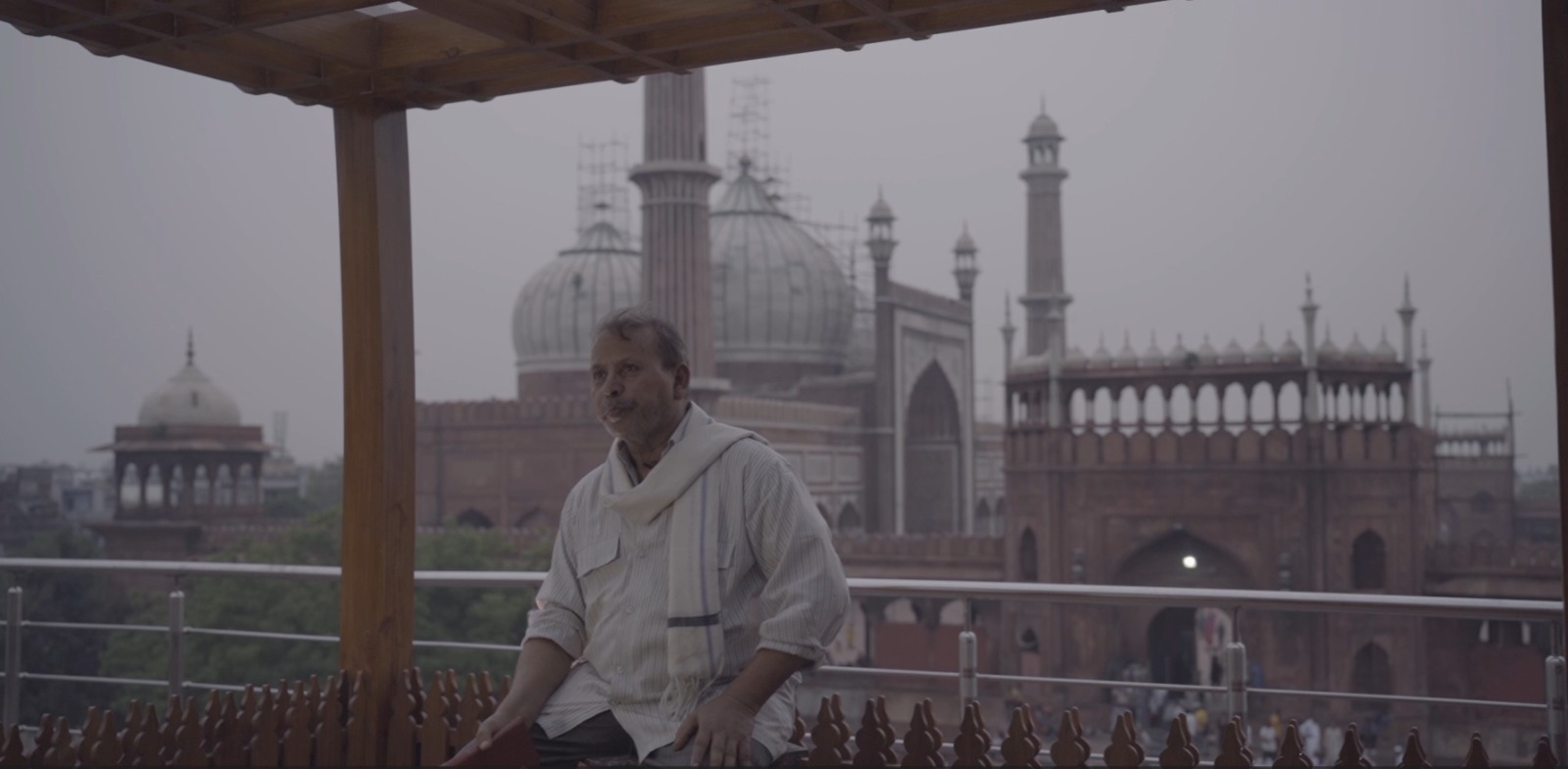 Painter Kafeel sharing his life experiences at Minar Cafe roof top
For Kafeel, this art is more than nostalgia. It is philosophy. The bold, dramatic colours represent India’s diversity. The layered lettering reflects its complexity. The scale of his work mirrors the grandeur of the films it once advertised. Even now, traces of this tradition survive on trucks, old cinema boards, and occasional public murals, but they are rare, like fading echoes.
Despite recognition and respect, one wish remains unfulfilled. Kafeel hopes to find an apprentice, someone young enough to carry forward this dying craft, someone willing to learn the patience it demands and the imagination it rewards.
READ MORE: A Muslim village proves cleanliness, harmony, development go together
For now, in that quiet yet chaotic lane of Old Delhi, his studio remains illuminated not by neon lights or digital screens, but by colour pots, worn brushes, and unwavering dedication. And as long as his hand continues to move, the golden era of painted cinema refuses to vanish completely; it survives, gently, in every stroke he makes.

.jpg "Gujarat’s women entrepreneurs bring their craftsmanship to life during Navratri")