




 Aditi Bhaduri
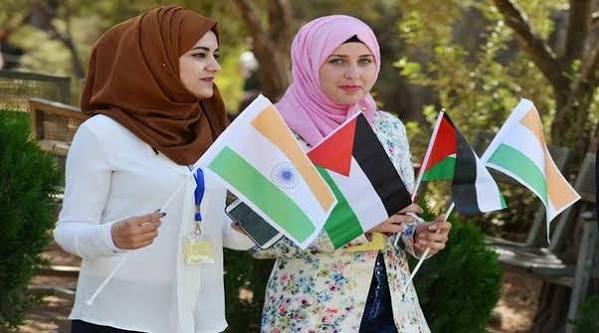
This year marks three decades since India and Palestine established formal diplomatic relations, a milestone that reflects India's enduring support for the Palestinian cause. Thirty years ago, India opened its first representative office in Gaza, which was relocated to Ramallah in 2003.
India's engagement with the Palestinian people, however, predates the establishment of diplomatic relations. In 1974, India became the first non-Arab country to recognise the Palestine Liberation Organisation (PLO) as the sole legitimate representative of the Palestinian people.
This was a significant diplomatic gesture at a time when several Arab governments had turned against the PLO. Jordan had violently suppressed Palestinian groups during Black September, while Lebanon later expelled the organisation. Against this backdrop, India chose to withhold full diplomatic ties with Israel in solidarity with the Palestinian cause.
In 1988, India was among the first countries to recognise the State of Palestine.
To commemorate the 30th anniversary of diplomatic relations, the Representative Office of India in Ramallah has released a documentary highlighting the evolution of bilateral ties across diplomacy, development cooperation, humanitarian assistance, education, trade and capacity building.
India's Ministry of External Affairs describes support for the Palestinian cause as an integral part of its foreign policy. That commitment has remained consistent across successive governments. The close relationship between Prime Minister Indira Gandhi and PLO Chairman Yasser Arafat became emblematic of this partnership and continued under Prime Ministers Rajiv Gandhi and P.V. Narasimha Rao.
Over the decades, India has extended political support, humanitarian assistance, scholarships and financial contributions to the United Nations Relief and Works Agency for Palestine Refugees in the Near East (UNRWA). It did so despite having little direct strategic or economic gain. Unlike many aid relationships, India's assistance was driven largely by political solidarity rather than immediate national interest.
India's support has often been explained through the prism of foreign policy compulsions. For decades, New Delhi depended heavily on Arab nations for energy supplies and for the welfare of millions of Indian workers in the Gulf. Since most Arab states did not recognise Israel and had fought several wars with it, India refrained from establishing full diplomatic relations with Israel until 1992.
The breakthrough came after the Oslo Accords, when Israel formally accepted the principle of a two-state solution. Only then did India establish full diplomatic relations with Israel. According to diplomatic accounts, Prime Minister P.V. Narasimha Rao consulted Yasser Arafat before taking the decision, and the Palestinian leader encouraged the move, believing India could play a constructive role with both sides. Earlier, during India's presidency of the Non-Aligned Movement, the NAM Ministerial Committee on Palestine had been established at the 1983 summit in New Delhi.
Much has changed since then. Several Arab countries now maintain diplomatic ties with Israel, while others cooperate with it discreetly. Yet India's engagement with Palestine has remained steady. It has consistently supported Palestinian rights at the United Nations and other multilateral forums, including voting in favour of Palestine's admission to UNESCO in 2011.
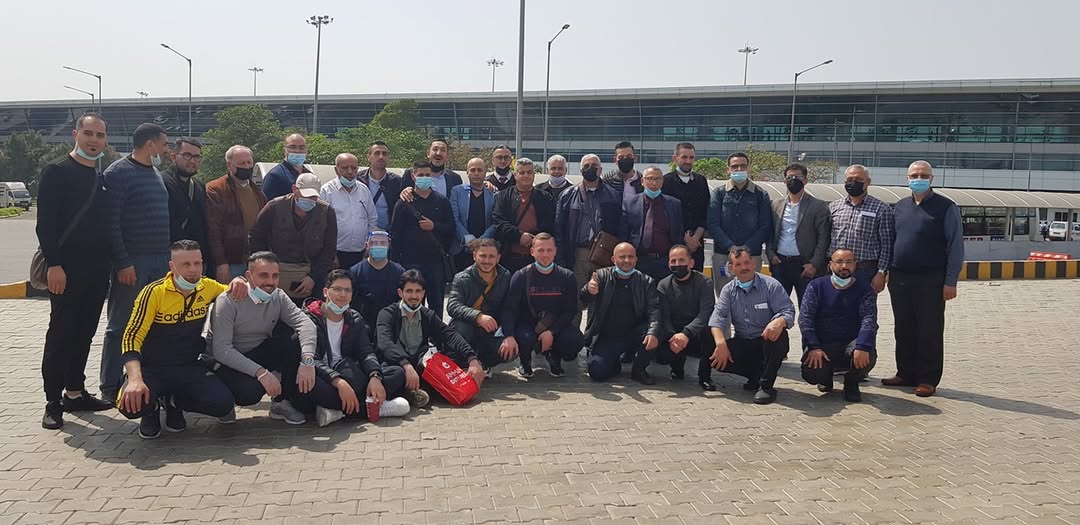 Trade delegation of Palestine in India (Embassy of Palestine)
At the same time, India has built a robust strategic partnership with Israel in defence, security, agriculture and technology. Rather than viewing these relationships as contradictory, New Delhi has pursued them on parallel tracks.
This balanced approach has become even more evident under Prime Minister Narendra Modi. Despite his close ties with Israeli Prime Minister Benjamin Netanyahu, India has continued to back the two-state solution. India's position has been reiterated repeatedly by its representatives at the United Nations and by External Affairs Minister S. Jaishankar, including at the BRICS Foreign Ministers' meeting this year.
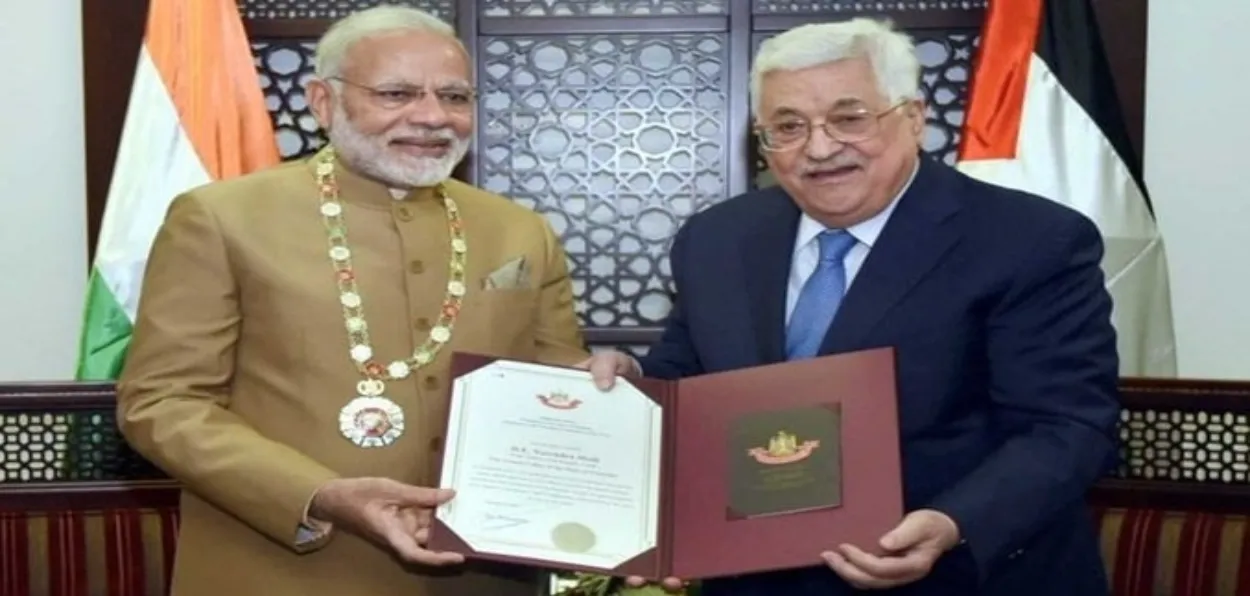
India also opposed the 2017 UN resolution recognising Jerusalem as Israel's capital. In 2015, President Pranab Mukherjee became the first Indian President to visit Ramallah, followed by Prime Minister Modi in 2018—the first Indian Prime Minister to do so.
Development cooperation has remained a cornerstone of India's Palestine policy. India has extended nearly US$141 million in assistance, including US$39 million in budgetary support to the Palestinian Authority. It has helped build schools, libraries, information technology parks and ICT centres, while offering 50 ICCR scholarships and 168 ITEC training slots annually for Palestinian professionals.
India has also remained a steadfast supporter of UNRWA, serving on its Advisory Commission since 2020. When the United States suspended funding to the agency in 2018, India raised its annual contribution from US$1.25 million to US$5 million. Since 2002, its total contribution to UNRWA has reached US$46.5 million.
Following Hamas's attacks on Israel on October 7, 2023, India unequivocally condemned the violence against civilians. At the same time, External Affairs Minister S. Jaishankar reaffirmed India's longstanding support for the Palestinian people during a conversation with then Palestinian Prime Minister Mohammad Shtayyeh.
As the conflict in Gaza escalated into a humanitarian crisis, India dispatched relief supplies and continued humanitarian assistance. National Security Adviser Ajit Doval also engaged with Israeli leaders, including Prime Minister Netanyahu, urging humanitarian relief and a ceasefire during Ramadan.
India's approach has remained consistent: condemning terrorism while supporting the legitimate aspirations and humanitarian needs of the Palestinian people. It has sought to maintain constructive relations with both Israel and Palestine without abandoning its longstanding principles.
ALSO READ: A visit to PoJK reveals the other Kashmir is not so 'azad'
Three decades after formal diplomatic relations were established—and more than five decades after recognising the PLO—India's policy continues to reflect a rare continuity. In a region marked by shifting alliances and changing geopolitical realities, New Delhi has sustained its support for Palestine even as it has forged a close strategic partnership with Israel. That ability to engage both sides, while remaining committed to a negotiated two-state solution, remains one of the defining features of India's West Asia policy.


.jpg "Gujarat’s women entrepreneurs bring their craftsmanship to life during Navratri")







_(2).webp)
.webp)
