
Manjit Thakur
These days, across North India, the sight of crimson blossoms crowning tall, stately trees with bare branches is nothing short of mesmerising. It brings to mind a story from the Hitopadesha, the ancient compendium of moral tales I once read in my eighth-grade Sanskrit textbook. It begins: “Asti Godavari tīre ekaḥ śālmalī taruḥ”—on the banks of the Godavari stood a Semal tree.
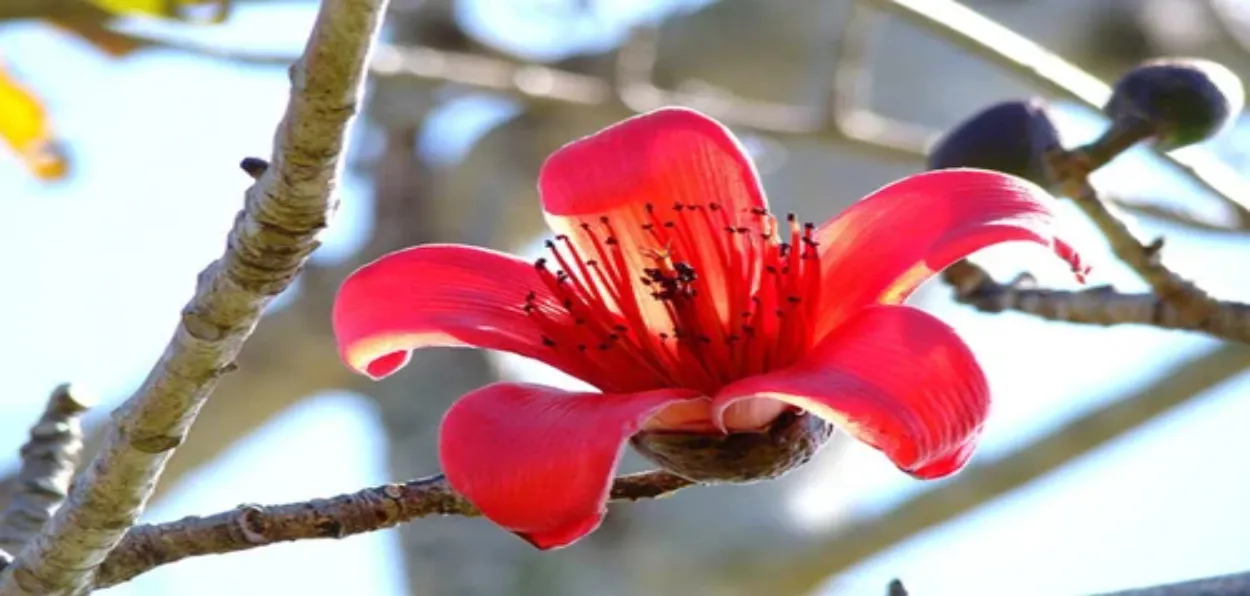
The story apart, the image of that tree has remained etched in memory. It is the very Semal, Silk Cotton tree or scientifically called Bombax ceiba, we see set the cityscape ablaze with colour.
In nature’s almanac, spring is not merely a season of flowering; it is a grand celebration—a time when the earth finds its voice in colours and fragrances. Alongside the intoxicating scent of mango blossoms and the fiery presence of Palash, the Semal emerges as one of spring’s most striking emblems.
To avoid being uprooted, it shed its own branches and leaves, standing bare before the storm. When Vayu arrived, he remarked that the downfall of arrogance begins with self-destruction—a lesson that continues to echo in Indian philosophical thought.
Yet, in contrast to that tale of pride, the Semal tree in bloom embodies sheer beauty. Like a colossal crimson torch reaching skyward, it heralds the arrival of spring. It is not merely a tree, but a season, a tradition, and an experience deeply woven into our cultural fabric.
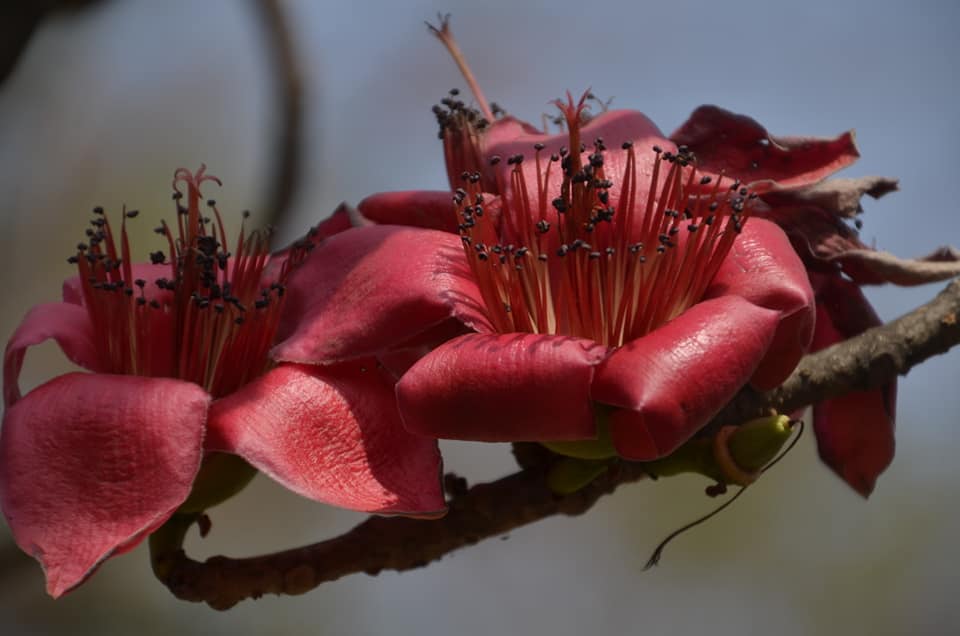
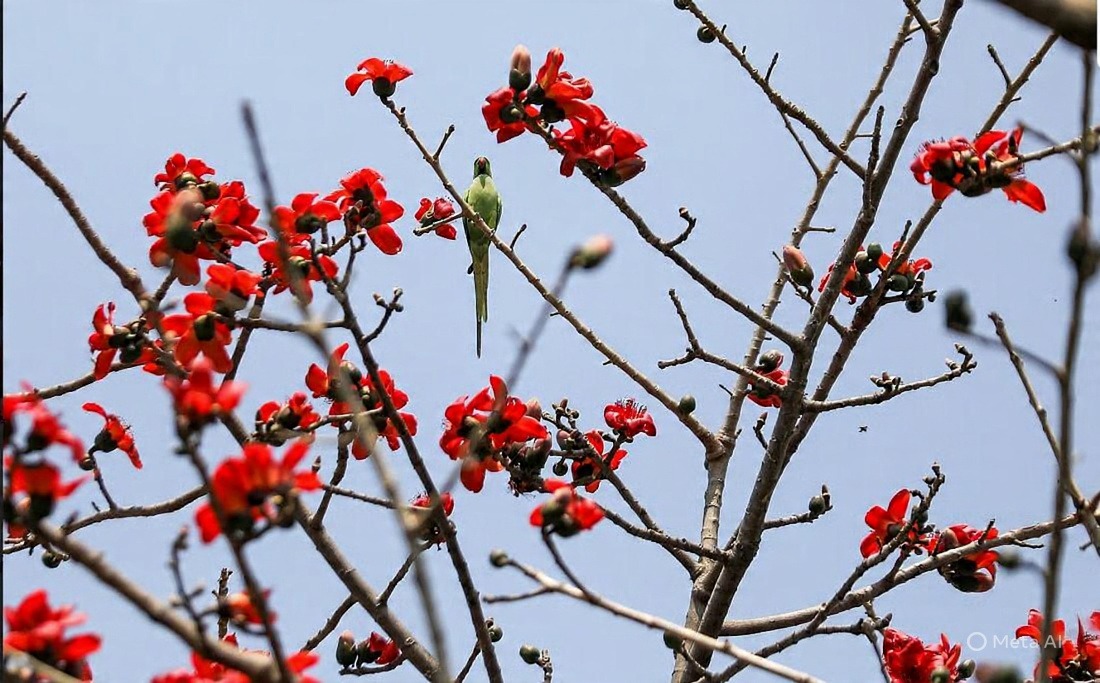
As spring unfolds, the Semal sheds its leaves, and its once lifeless branches suddenly burst into clusters of large, bowl-shaped, deep crimson flowers. These fleshy blossoms, as though brimming with vermilion, face the sky with quiet confidence. When hundreds bloom at once, the tree appears engulfed in dancing flames—a spectacle that dazzles from afar like a floating bonfire.
But the Semal is more than a visual delight. Its blooming becomes a clarion call for life. Mynas, cuckoos, parrots, and countless other birds gather upon its branches, feeding on nectar and filling the air with their chatter. The tree transforms into a vibrant stage where spring's music and movement come alive. As the flowers fall, they carpet the ground in crimson, turning the earth into a regal pathway—one that feels like walking upon the very heart of spring.
In folklore, the Semal is revered as the “Inn of Beasts and Birds.” Its moisture-rich flowers nourish birds and animals during the harsh summer months, when other sources run dry.
Its beauty has long inspired poets and writers. In Sanskrit literature, spring is incomplete without the Semal. Kalidasa, in his Ritusamharam, evokes this splendour, describing a season when mango blossoms and Semal flowers together make the world radiant with love and renewal. The very word Shalmali speaks to the tree’s antiquity and enduring literary presence.
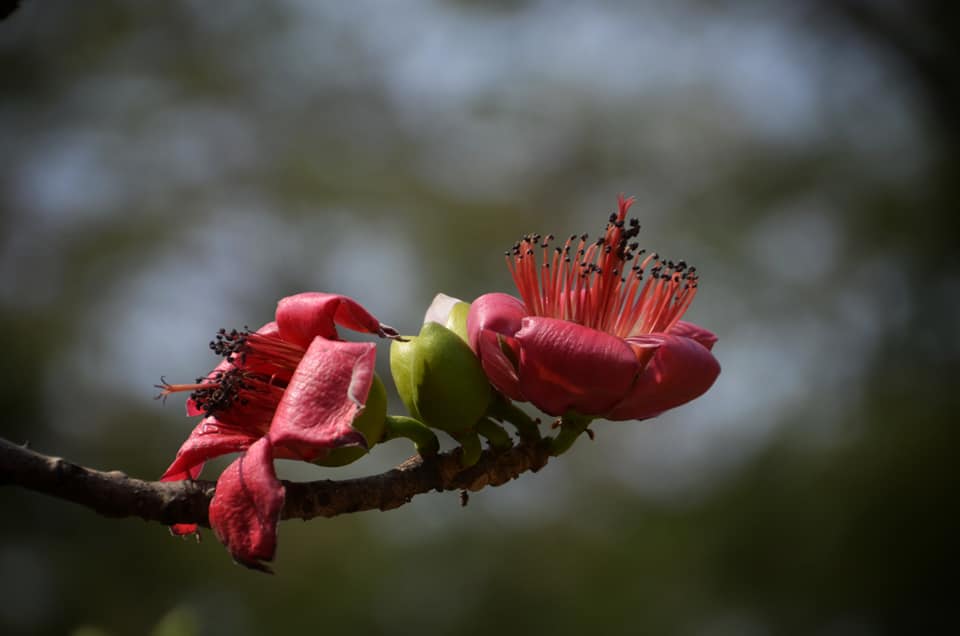
The Semal also finds a place in history and folklore. During the Ulgulan led by Birsa Munda in Jharkhand, while the Sal tree held central importance, the red blossoms of the Semal appeared in folk songs—symbolising both communication and the colour of resistance. Its drifting cotton fibres came to represent dreams of freedom carried on the wind.
Equally evocative is the idiom “Semal ka phool hona”—to be like a Semal flower—meaning to be captivated by something ultimately futile. A folktale tells of a parrot enchanted by the flower’s beauty, waiting eagerly for it to bear sweet fruit. But when the fruit ripens and bursts, it yields only cotton, which the wind swiftly carries away. The idiom thus captures the illusory nature of worldly attachments and desires.
As the season advances, the Semal’s flowers give way to fruit—small, green pods that gradually grow and ripen. With the intensifying sun, they finally burst open, releasing countless tufts of white, silky cotton into the air. These drifting fibres resemble clouds or fleeting dreams, marking the quiet transition from spring to summer.
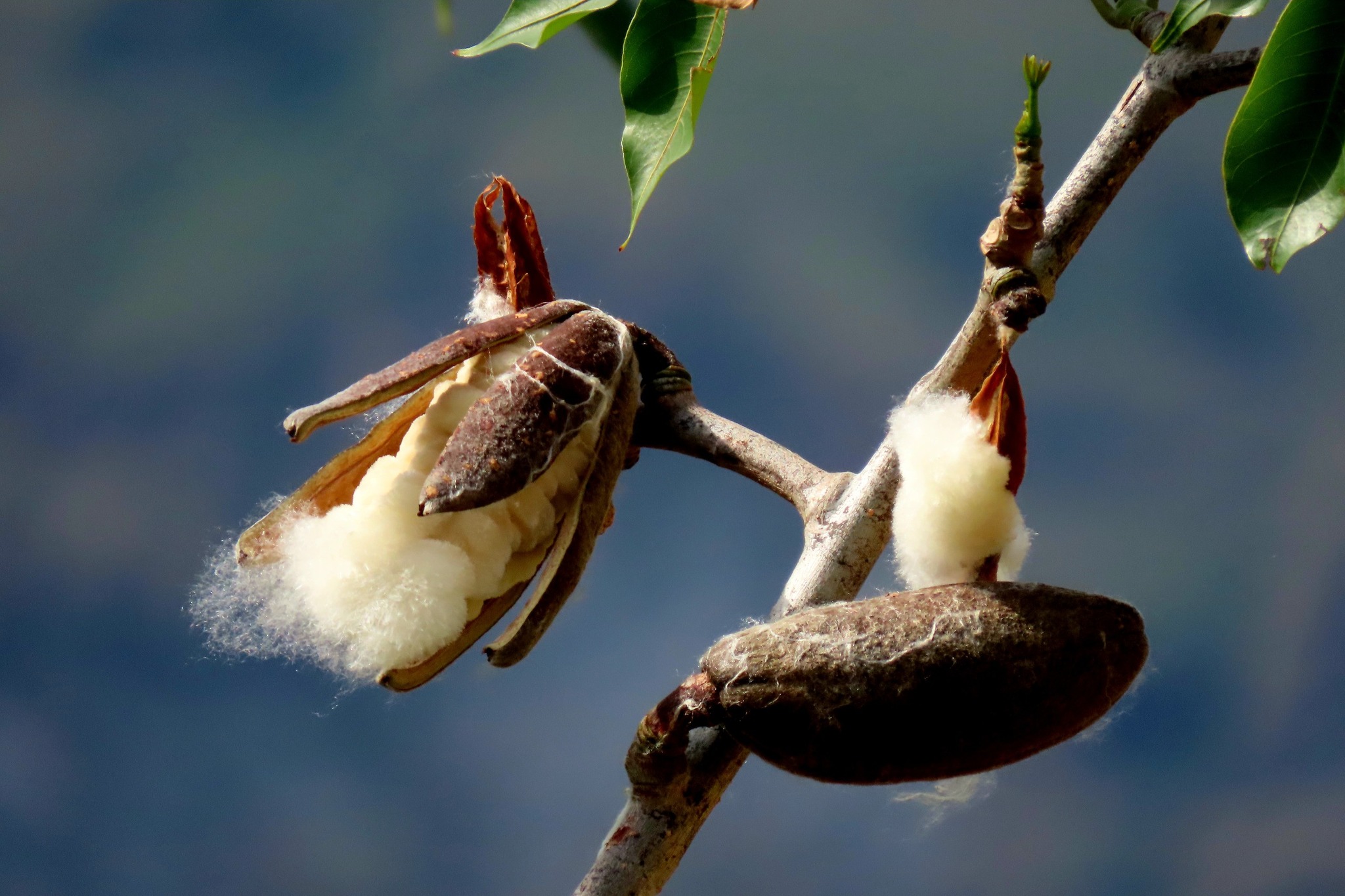
There is a gentle poetry in this moment. The winds soften, and the air fills with these delicate, floating strands. Children chase them with delight, as though trying to catch something magical. Known as Shalmali-rui, this cotton is soft and lustrous, yet ephemeral—lasting only a few days before vanishing.
ALSO READS: First documentary on Kayamkhanis will make you feel proud of this Rajasthan community
It is this very transience that elevates the Semal into a powerful symbol. From fiery bloom to weightless drift, it mirrors the arc of life itself—vibrant, beautiful, and ultimately fleeting.
The author is Editor of Awaz-the Voice, Audio-Visual














_(2).webp)