New Delhi
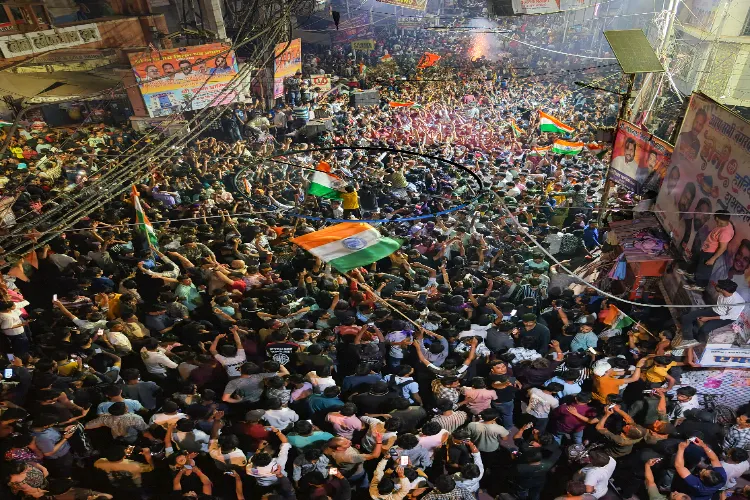
If the victory in Barbados in 2024 ended India’s long wait for an ICC trophy, the triumph in Ahmedabad in 2026 confirmed the arrival of a new era of dominance for the India national cricket team in T20 cricket.
India’s emphatic 96-run victory over the New Zealand national cricket team in the final of the ICC Men's T20 World Cup at the Narendra Modi Stadium sealed a historic achievement — becoming the first team to win the tournament three times and the first to defend the title successfully.
A new era of supremacy
The win reinforced India’s stranglehold over the shortest format, marking consecutive T20 World Cup triumphs in 2024 and 2026. The team’s success is built on a powerful combination of deep talent pools, financial muscle through the Board of Control for Cricket in India (BCCI), and a fearless style of play.
Experts believe the current squad could be among the finest T20 teams assembled since the format’s rise over two decades ago.
India’s dominance is reminiscent of earlier eras when the West Indies cricket team ruled world cricket in the 1970s and 1980s and the Australia national cricket team dominated during the early 2000s.
Strength in depth
One of India’s biggest advantages is its extraordinary depth of talent. Even as players such as Sanju Samson, Ishan Kishan, Jasprit Bumrah, Axar Patel, Hardik Pandya and Shivam Dube starred in the title-winning campaign, several high-profile players did not even make the squad.
Names like Yashasvi Jaiswal, Shreyas Iyer, Shubman Gill, Ruturaj Gaikwad and teenage prodigy Vaibhav Sooryavanshi underline the depth of Indian cricket.
Such depth has led experts to claim that India could even field a second-string team and still compete strongly at the global level.
Tactical evolution
India’s success also reflects a strategic shift toward a high-risk, high-reward brand of cricket — prioritising rapid scoring, aggressive batting and decisive moments in matches.
Match-winners like Bumrah have played a crucial role, with the fast bowler capable of turning games in just a few deliveries.
New Zealand’s continuing heartbreak
For New Zealand national cricket team, the defeat reinforced their reputation for falling short in major knockout matches.
The Kiwis have reached six finals in ICC events since 2015 but have only one major title to show — the ICC World Test Championship victory in 2021.
Captain Mitchell Santner faced criticism for some tactical decisions in the final, including opting to bowl first and leaving out off-spinner Cole McConchie despite India’s vulnerability against off-spin during the tournament.
Pakistan’s decline
The tournament also highlighted the continuing struggles of the Pakistan national cricket team, whose decline has been attributed to frequent leadership changes, lack of cohesion in the squad and administrative instability within the Pakistan Cricket Board.
Debate over tournament structure
Another talking point was the International Cricket Council (ICC) pre-seeding system, which determines Super 8 placements based on rankings rather than group-stage results.
Critics argued that the structure favoured top teams and reduced competitive balance by placing group winners such as India, South Africa national cricket team, West Indies cricket team and Zimbabwe national cricket team in the same group.
Associates show promise
Associate nations also produced memorable moments during the tournament. The United States national cricket team pushed India close, the Netherlands national cricket team nearly upset Pakistan, and Yuvraj Samra of the Canada national cricket team scored a century against New Zealand.
Zimbabwe national cricket team also stunned the Australia national cricket team to knock them out in the group stage.
READ MORE: Shama Mohammad: Battling patriarchy and breaking barriers
Despite these flashes of competitiveness, the gulf between associate teams and the established powers remains large — a gap India’s dominant team currently stands atop.












.webp)