Ashhar Alam | New Delhi
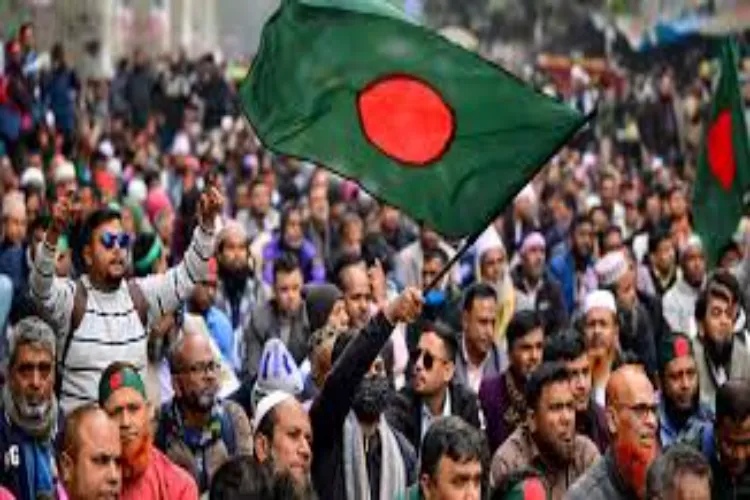
Bangladesh is heading into a high-stakes election and a nationwide reform referendum in less than two weeks, amid a radically altered political landscape and widespread voter uncertainty following last year’s upheaval.
More than 127 million voters are eligible to cast their ballots on February 12 in what is widely seen as the country’s most consequential poll in decades. It will be the first national election since the mass student-led uprising in August 2024 that ended the rule of former Prime Minister Sheikh Hasina and forced her into exile in India.
The vote is being held alongside a referendum on sweeping political reforms, an unprecedented dual exercise that interim government Chief Adviser Muhammad Yunus has hailed as a “grand festival” of democracy. Yunus has promised that the process will be the most free, fair and peaceful election in Bangladesh’s history, laying the groundwork for what he calls a “new Bangladesh”.
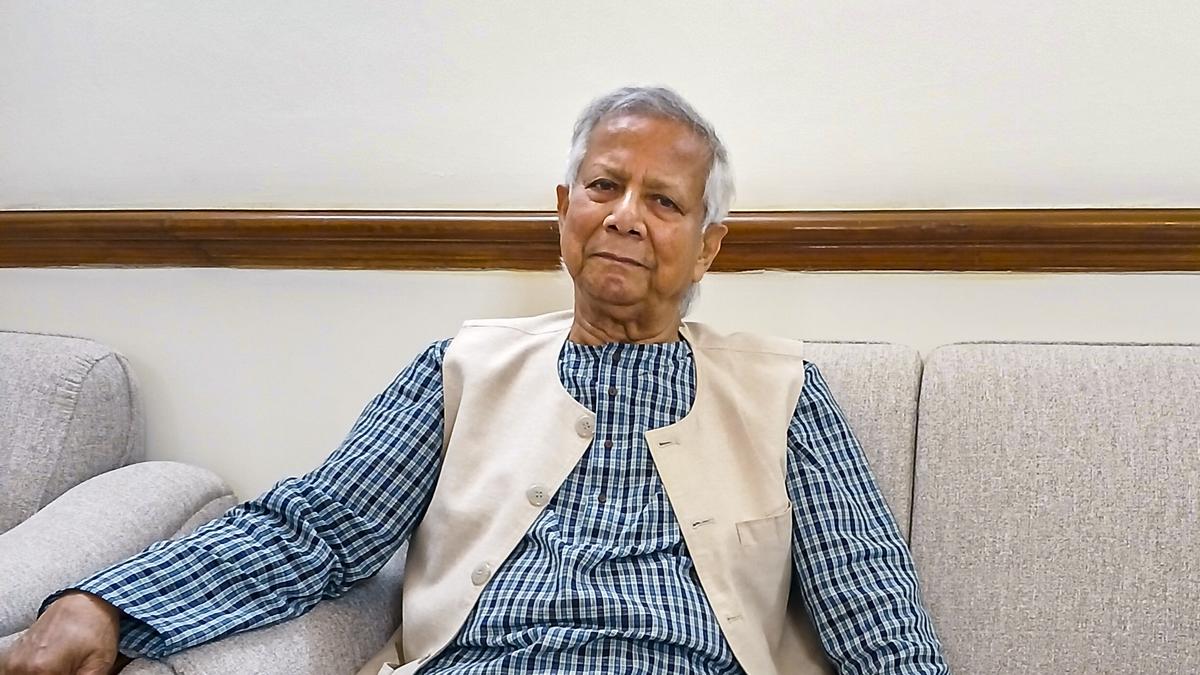 Chief Adviser, interim government of Bangladesh Muhammad Yunus
However, analysts and observers warn that the absence of the once-dominant Awami League from the race has weakened electoral competition and raised questions over legitimacy and long-term stability.
The Awami League, which led Bangladesh’s 1971 Liberation War and dominated politics for decades, was disbanded under the Anti-Terrorism Law months after being ousted from power. A special tribunal later sentenced Hasina to death over crimes against humanity linked to her government’s violent crackdown on protesters, a verdict criticised by several Bangladeshi and international observers as rushed and flawed.
With the Awami League barred, the contest has largely narrowed to the Bangladesh Nationalist Party (BNP), widely viewed as the frontrunner, and Jamaat-e-Islami along with its allies. Yet despite the ban, the Awami League is believed to retain a substantial support base, many of whom now feel politically orphaned.
“I feel no enthusiasm. I am not even sure I will vote,” said Kader Mia, a Dhaka-based tailor in his mid-40s and a lifelong Awami League supporter. “I don’t know whom I should vote for.”
Another Awami League supporter in Barishal, who runs a small garment shop and requested anonymity, said participating in the polls could expose his family to risks. “If we are identified as Hasina supporters, radical right-wing elements could target us,” he said.
Yunus has suggested that Awami League voters are now “up for grabs”, even as Hasina has hinted in interviews that her supporters may boycott the election altogether. She has warned that a government formed through exclusion would deepen divisions and lead to prolonged instability.
Sensing an opening, the BNP has sought to court Awami League supporters by emphasising “secular nationalism”. The party formally ended its long-standing alliance with Jamaat-e-Islami in August 2025, a move analysts see as an attempt to broaden its appeal.
BNP leaders, including Chairman Tarique Rahman and secretary general Mirza Fakhrul Islam Alamgir, have increasingly invoked the ideals of the 1971 Liberation War, a cornerstone of Awami League identity to signal shared political roots. In a recent address, Alamgir said Hasina had fled to India, leaving her supporters “vulnerable”, and claimed the BNP was now standing by them “in a difficult time”.
A panel survey published this week by research group Innovision suggests deep uncertainty among Awami League-leaning voters. According to the survey, 41.3 per cent remain undecided, while 32.9 per cent are inclined towards the BNP and 13.2 per cent towards Jamaat-e-Islami.
Prominent economist and civil society figure Rehman Sobhan has cautioned that democracy cannot function without the inclusion of all major political forces. Speaking at a recent discussion, Sobhan said rebuilding a sustainable democratic system would require finding ways to re-accommodate the Awami League within the political framework.
Concerns over inclusivity have also drawn international attention, with several US and British lawmakers urging the interim government to allow the Awami League to participate to ensure democratic credibility.
Alongside the parliamentary election, voters will decide the fate of the July National Charter, an 84-point reform package aimed at overhauling Bangladesh’s political system. Yunus has said the combined outcome of the election and referendum will shape the country’s trajectory for the next “hundred years”.
The interim government has actively promoted a “yes” vote on the charter, drawing criticism from legal experts and opposition figures who argue that the administration should remain neutral. On January 29, the Election Commission ordered government officials to halt campaigning, warning that advocacy for either side could amount to a punishable offence.
Legal scholars have also questioned the referendum’s constitutional basis, noting that Bangladesh’s Constitution does not explicitly provide for such plebiscites. Others have criticised the ballot design, which presents voters with a simple “yes” or “no” choice on broad reform proposals, arguing that it oversimplifies complex and contentious issues.
ALSO READ: A boy's journey from Kupwara to India’s top labs as scientist
Despite the controversy, Yunus has continued to urge public support for the reforms. “Vote ‘Yes’ to build the state according to your expectations,” he said in a recent televised address. “By choosing ‘Yes,’ you open the door to creating a new Bangladesh.”
As polling day approaches, uncertainty over voter choices, political inclusion and the legitimacy of the process itself, looms large over Bangladesh’s democratic crossroads.













_(1).webp)