Evian
India and the European Union are moving towards signing their long-awaited Free Trade Agreement (FTA) by the end of this year, following the successful conclusion of negotiations earlier this year on what has been described as one of the most ambitious trade arrangements ever undertaken between the two partners.
The proposed agreement, covering trade in goods, services and digital commerce, is expected to create one of the world's largest economic partnerships, encompassing nearly two billion people and accounting for a significant share of global economic activity. The pact is also expected to strengthen cooperation in investment, technology and connectivity.
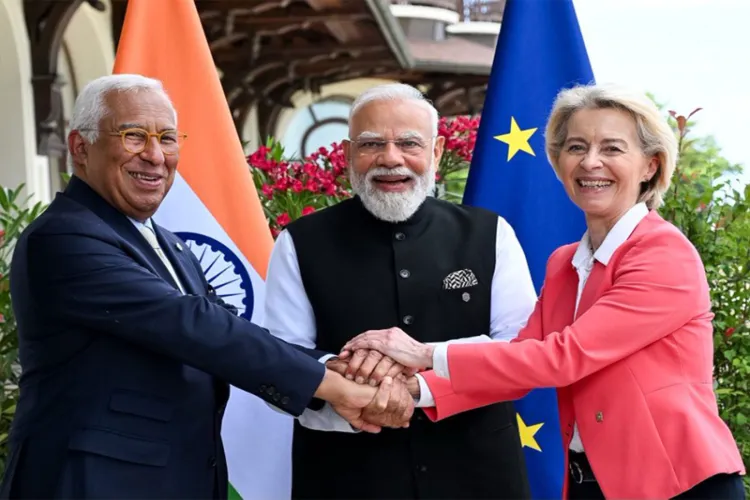
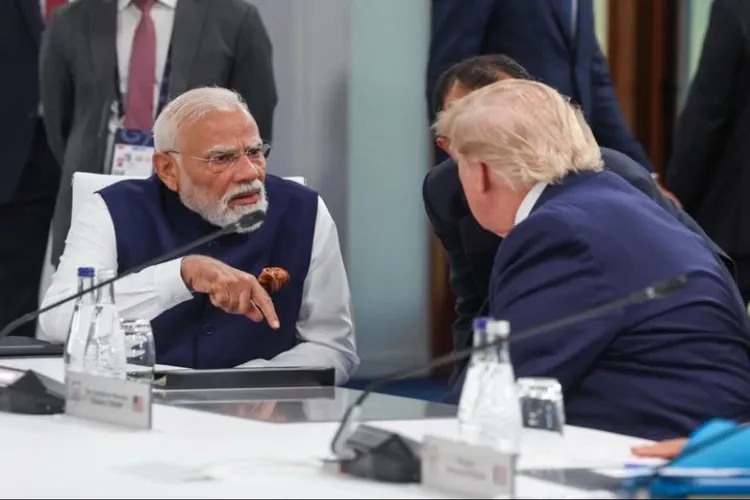
The progress towards finalising the agreement was highlighted during a meeting between Prime Minister Narendra Modi, European Council President Antonio Costa and European Commission President Ursula von der Leyen on the sidelines of the G7 Summit in France.
Following the meeting, the European leaders reiterated their commitment to completing the formal signing process before the end of the year. They also emphasised plans to accelerate discussions on an investment agreement, deepen security and defence cooperation, and advance connectivity initiatives through the India-Middle East-Europe Corridor (IMEC).
Prime Minister Modi expressed satisfaction with the growing momentum in India-EU relations and described the agreement as a major milestone in the partnership. He noted that discussions focused on expanding economic cooperation and strengthening trade and investment ties in the coming years.
The Prime Minister also underlined the broader strategic significance of India-EU cooperation, stating that stronger economic linkages could contribute to peace, stability and prosperity amid a rapidly changing global environment.
The meeting served as an opportunity for both sides to review the progress achieved since the 16th India-EU Summit held earlier this year and to exchange views on regional and international developments of mutual interest.
The engagement with European Union leaders formed an important part of India's broader diplomatic outreach during the G7 Summit.
Earlier in the day, Prime Minister Modi also held bilateral talks with Friedrich Merz, focusing on strengthening cooperation in areas such as trade, investment, defence, information technology and the circular economy. The two leaders also discussed ways to deepen cultural ties between India and Germany.
Both sides expressed satisfaction over the renewed momentum in the India-Germany Strategic Partnership as the two countries mark 75 years of diplomatic relations. They agreed that the early implementation of the India-EU Free Trade Agreement would further strengthen economic and strategic cooperation between India and Germany.
The summit also featured a series of high-level diplomatic engagements for the Prime Minister. Besides meetings with European leaders, Modi held discussions with several global counterparts, reflecting India's growing role in international affairs and its increasing influence in shaping conversations on trade, security and global development.
As a partner country at the G7 Summit, India has been actively participating in discussions on economic growth, sustainability, connectivity and geopolitical challenges. The summit has provided an important platform for advancing India's strategic partnerships and promoting its vision for inclusive and balanced global growth.
READ MORE: Fatima Husna proudly guides tourists through Hyderabad's history
The Prime Minister's schedule at the summit also included participation in a key working session focused on revitalising sustainable and inclusive economic growth, along with a series of bilateral meetings aimed at strengthening cooperation across multiple sectors with leading global economies.
.webp "Rocks bearing inscription in ancient Arabic excavated in Saudi Arabia's Madina region")











_(1).webp)