Dubai
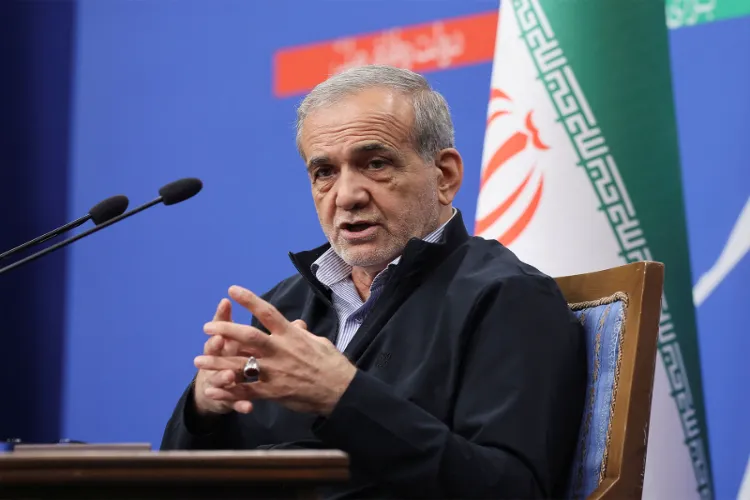
Iran on Wednesday marked the 47th anniversary of its 1979 Islamic Revolution amid mounting domestic and international pressure, with President Masoud Pezeshkian issuing a rare apology over the government’s violent crackdown on nationwide protests even as tensions with the United States continue to escalate.
The anniversary came at a sensitive moment for the Islamic Republic, which is engaged in uncertain negotiations with Washington over its nuclear programme. At the same time, the UN’s nuclear watchdog, the International Atomic Energy Agency (IAEA), has been unable for months to inspect or verify Iran’s nuclear stockpile.
Addressing a ceremony marking the revolution, President Pezeshkian said he was sorry to “all those affected” by the protests and the subsequent crackdown, though he stopped short of directly acknowledging the role of security forces in the bloodshed.
“We are ashamed before the people, and we are obligated to assist all those who were harmed in these incidents,” Pezeshkian said. “We are not seeking confrontation with the people.”
He said he understood the “great sorrow” felt by citizens during the unrest, while also criticising what he described as “Western propaganda” surrounding the protests.
On Iran’s nuclear stance, Pezeshkian reiterated that the country was “not seeking nuclear weapons” and was open to “any kind of verification.”
Pressure from Washington and regional tensions
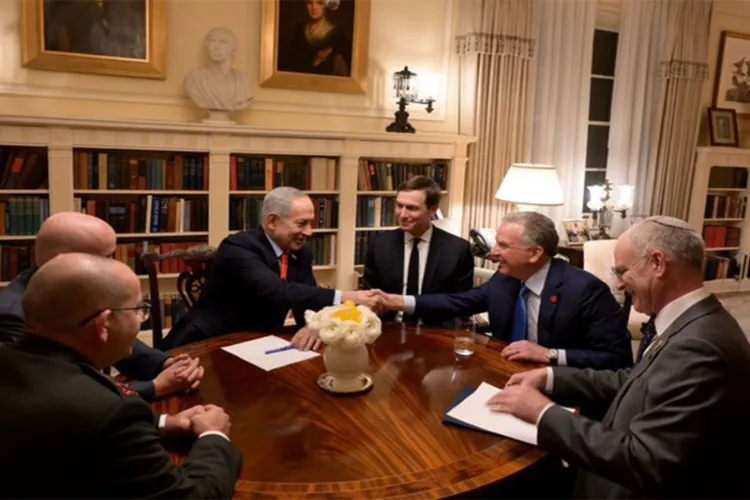
The anniversary unfolded against rising pressure from the United States. US President Donald Trump suggested he may deploy a second aircraft carrier strike group to the Middle East, as Israeli Prime Minister Benjamin Netanyahu visited Washington to press for tougher terms in any potential nuclear agreement with Tehran.
The United States has already deployed the aircraft carrier USS Abraham Lincoln, along with warships and combat aircraft, to the region. US officials say the deployment is intended both to pressure Iran diplomatically and to provide military options if needed.
Trump told news outlet Axios that another carrier could be sent, saying, “We have an armada that is heading there and another one might be going.”
Meanwhile, US forces recently shot down a drone they said approached the Lincoln too closely and intervened when Iranian forces attempted to stop a US-flagged vessel in the Strait of Hormuz.
Diplomacy continues amid distrust
As events unfolded in Iran, senior security official Ali Larijani travelled from Oman to Qatar, following earlier mediation efforts by Muscat. Qatar, which hosts a major US military base, has played a key diplomatic role in previous negotiations with Tehran and shares a large offshore gas field with Iran.
Iranian Foreign Minister Abbas Araghchi, speaking to Russia’s RT television, said Tehran remained deeply sceptical of Washington’s intentions.
“We do not have full trust in the Americans,” Araghchi said, recalling that negotiations last June were followed by US military action. “We need to make sure that scenario is not repeated, and this is mostly up to America.”
Despite the mistrust, Araghchi said Iran could still reach “a better deal than Obama,” referring to the 2015 nuclear agreement from which Trump withdrew during his first term.
Official rallies and public dissent
State television aired footage showing tens of thousands of supporters of the Islamic Republic rallying across Iran, waving images of Supreme Leader Ayatollah Ali Khamenei and the late Ayatollah Ruhollah Khomeini, founder of the Islamic Republic. Chants of “Death to America!” and “Death to Israel!” were heard at official gatherings.
However, signs of public dissent were also evident. On Tuesday night, as government-sponsored fireworks marked the anniversary, witnesses in Tehran reported hearing people shouting “Death to the dictator!” from inside their homes.
READ MORE: Khan Sir’s affordable hospital in Patna becomes lifeline for poor
Iran’s leadership continues to face public anger following last month’s protests, which were crushed by security forces, including the Revolutionary Guard. The crackdown reportedly killed thousands and led to tens of thousands of arrests, deepening divisions within Iranian society.








.webp)