New Delhi
India’s campaign against child marriage has received international recognition with the United Nations declaring November 27 as the International Day for the Elimination of Child, Early and Forced Marriage, turning a date associated with India’s national movement against the practice into a global day of action.
The date marks the launch of the Indian government’s ‘Bal Vivah Mukt Bharat’ campaign in 2024. The UN decision follows an international campaign spearheaded by Bhuwan Ribhu, founder of the child rights network Just Rights for Children (JRC), for the creation of a dedicated global day to end child, early and forced marriages.
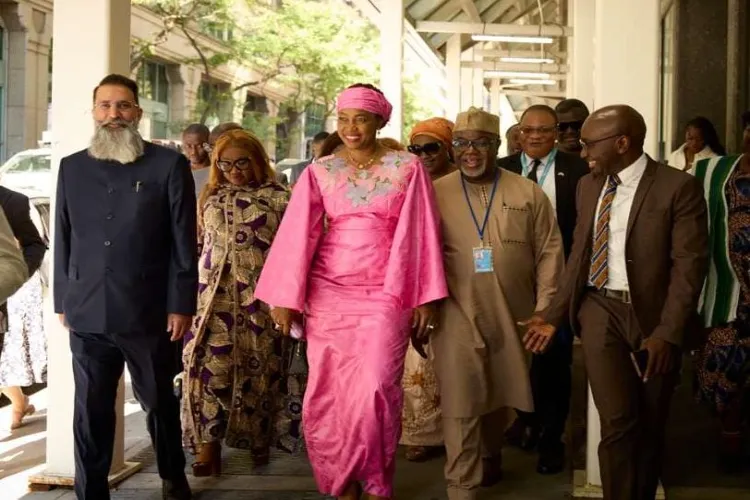
Ribhu had first called for the international observance as part of efforts to take India’s campaign against child marriage to the global stage. In March 2026, he reiterated the demand while addressing the United Nations in the presence of international leaders, including Dr Fatima Maada Bio, First Lady of Sierra Leone, who backed the initiative.
Sierra Leone subsequently took the lead at the United Nations, introducing a resolution before the UN General Assembly to designate November 27 as the International Day for the Elimination of Child, Early and Forced Marriage. The resolution received the support of 67 countries, including India, before being adopted by the General Assembly.
STORY | India co-sponsors UNGA resolution declaring Nov 27 as day against child marriage
— Press Trust of India (@PTI_News) September 6, 2026
India has co-sponsored a resolution in the UN General Assembly proclaiming November 27 every year as the International Day for the Elimination of Child, Early and Forced Marriage.
The… pic.twitter.com/wCJbtD4VFT
During the presentation of the resolution, Dr Fatima Maada Bio also acknowledged the contribution of JRC to the global campaign.
Ribhu, who was present alongside the UN delegation during the adoption of the resolution and was the only civil society representative present, described the development as a landmark moment for India’s child protection movement.
“India is the Vishwaguru of child protection today,” Ribhu said, crediting children, communities, faith leaders, civil society organisations and the Indian government for building momentum against child marriage.
He recalled that more than 25 crore people participated in the campaign and took a pledge on November 27, 2024, saying the movement had now evolved from a national initiative into an international commitment.
Ribhu also thanked Prime Minister Narendra Modi and Union Minister for Women and Child Development Annapurna Devi for what he described as their “decisive leadership and commitment”.
“The world is looking at us, and our work has only just begun,” he said.
Ribhu said the UN decision should now translate into stronger political action worldwide, with governments expected to accelerate efforts to meet the global target of ending child marriage by 2030.
“Today marks the tipping point, showing that the end of the crime of child marriage is inevitable and imminent,” he said. “Now is the time for governments globally to provide decisive leadership to end child marriage by 2030 and ensure education, protection and development of every child to realise their full potential.”
He particularly credited Sierra Leone’s First Lady for bringing different stakeholders together and building international consensus around the resolution.
Dr Fatima Maada Bio described the UN declaration as more than a symbolic gesture, saying it created a global responsibility to act against child marriage.
“Today, the world has spoken with one voice: child, early and forced marriage has no place in our societies,” she said. “This resolution is far more than symbolic -- it is a global mandate for action.”
She said the international community had a responsibility to ensure that girls could pursue education and realise their aspirations without being forced into marriage.
The UN development comes amid signs of a decline in child marriage in India. According to the National Family Health Survey (NFHS) data cited by JRC, the proportion of women aged 20-24 who were married before turning 18 declined from 23.3% in NFHS-5 (2019-21) to 20.1% in NFHS-6 (2023-24).
The government has set a target of reducing the prevalence of child marriage by 10% by 2026, while continued interventions at the national and state levels are expected to bring the figure below 15% by the end of the year.
Ending child marriage by 2030 is also part of the global Sustainable Development Goals, specifically Target 5.3 under SDG 5 on gender equality, which calls for eliminating harmful practices including child, early and forced marriage.
India’s campaign has also inspired initiatives beyond its borders. Following the launch of ‘Bal Vivah Mukt Bharat’, JRC helped initiate the ‘Child Marriage Free Nepal’ campaign in December 2024. The organisation says the movement has since expanded to more than 99 countries, with over 25 crore people pledging to work towards ending child marriage.
Between December 2025 and March 2026, JRC also conducted a 100-day ‘Child Marriage Free World’ campaign, aimed at engaging governments in 100 countries and reaching one lakh schools. Its experiences and recommendations were subsequently presented at international forums, including the United Nations.
In India, JRC operates through a network of partner organisations working with governments and law-enforcement agencies across 782 districts. Its interventions involve schools, panchayats, women’s groups, community organisations, faith leaders, police and political representatives.
According to JRC, its partners have helped prevent or stop more than 5.5 lakh child marriages in India.
The UN’s declaration now gives the movement an international platform and places November 27 on the global calendar as a day dedicated to strengthening efforts to protect children from early and forced marriage.
READ MORE:Dr Syed Abdullah and his team save nine newborns from NICU fire
For India, the date carries an added significance: a campaign that began with a national pledge in 2024 has now become part of a worldwide call to ensure children are protected, educated and allowed to determine their own futures.