Washington
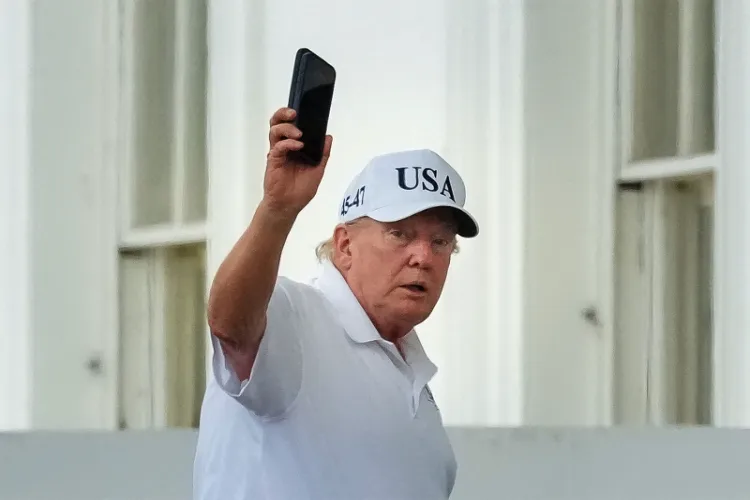
In a landmark ruling, the US Supreme Court on Tuesday invalidated President Donald Trump's executive order seeking to restrict birthright citizenship, reaffirming that children born in the United States are entitled to automatic US citizenship under the Citizenship Clause of the Fourteenth Amendment.
According to the court's decision, children born in the US to parents who are either unlawfully present or temporarily residing in the country remain eligible for citizenship by birth. The ruling also reaffirmed the court's longstanding precedent in United States v. Wong Kim Ark, which established that children born on American soil to foreign parents are entitled to US citizenship.
The judgment represents a significant setback for Trump, who had made ending so-called "birth tourism" and tightening immigration policies a central part of his political agenda during his campaign for a second term.
Earlier in May, Trump had argued that any decision preserving birthright citizenship, coupled with what he described as the Supreme Court's adverse tariff ruling, would be "economically unsustainable" for the United States.
According to The New York Times, the ruling was opposed by conservative Justices Clarence Thomas, Neil Gorsuch and Samuel Alito, who dissented. Justice Brett Kavanaugh joined the majority but wrote separately, stating that his decision rested on federal law rather than constitutional grounds.
Writing for the majority, Chief Justice John Roberts underscored the constitutional significance of citizenship.
"Citizenship, then and now, was the right to have rights — to freely participate in our political community. The Framers of the Fourteenth Amendment extended that promise to 'every free-born person in this land.' We keep that promise today."
During the proceedings, Trump's legal team argued that the Fourteenth Amendment should apply only to individuals whose parents were domiciled in the United States, meaning they intended to remain permanently in the country. The court rejected that interpretation.
The ruling was welcomed by civil rights and immigrant advocacy organisations. Deborah Fleischaker, a former Homeland Security official now associated with UnidosUS, described the decision as "a huge relief," according to The New York Times.
READ MORE: Fauzia Dastango's journey of reviving the art of storytelling
The verdict preserves the long-standing interpretation of the Fourteenth Amendment and reinforces birthright citizenship as a constitutional guarantee for children born within the United States, regardless of their parents' immigration status.









.webp "Informal Heads of Delegation (HODs) meeting in Nairobi was led by Adarsh Swaika")


.webp)