.gif)




London (United Kingdom)
As the West Asia conflict intensified with the Israel led strike on Iran's South Pars Gas field and retaliatory attacks by Iran on Qatar's LNG facilities, Oil and gas prices rose on Thursday over fears of a global supply crunch, reported CNBC.
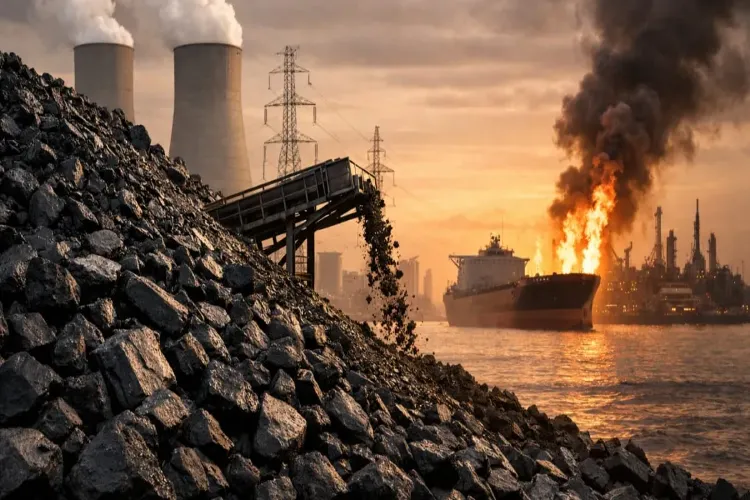
Qatar Energy confirmed that Ras Laffan Industrial City was the subject of missile attacks late on Wednesday night. It also reported that In addition to the previous attack on Ras Laffan Industrial City that resulted in extensive damage to the Pearl GTL (Gas-to-Liquids) facility, several of its Liquefied Natural Gas (LNG) facilities were the subject of missile attacks, causing sizeable fires and extensive further damage. The fires at the facility have since been contained.
According to CNBC, International benchmark Brent crude futures with May delivery rose 6.3% to USD 114.13 per barrel. Gas prices were also sharply higher. The front-month gas price at the Dutch Title Transfer Facility (TTF) hub, a European benchmark for natural gas trading, traded nearly 30% higher at 70.8 euros per megawatt-hour."
GB News reported that UK gas prices have also surged by more than 20 per cent on Thursday morning. GB News said that as of 7:54 am (UK Time), UK gas prices were sitting at 173p per therm, which is up more than 24 per cent from Wednesday.
The report further noted that Qatar had already suspended LNG production on March 2 after Iranian drone attacks on Ras Laffan and Mesaieed Industrial City. The country is the world's second-largest LNG exporter after the U.S., accounting for nearly a fifth of global shipments, according to Kpler.
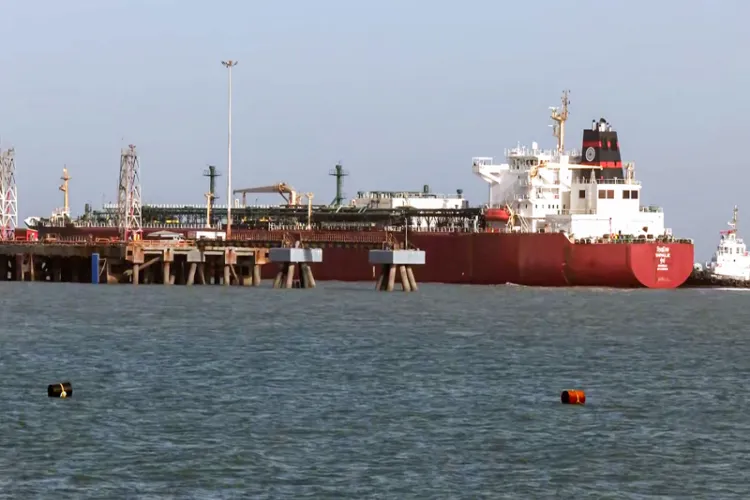
Brent crude rose above the $110-$115 per barrel range, reflecting heightened geopolitical risk and uncertainty over production and transport routes, especially through the Strait of Hormuz, a key artery for global oil shipments. Tanker movement through the strait, which typically handles about 20% of global oil supplies, is now largely blocked, raising the risk of a deeper supply shock.
Gulf Oil's senior energy advisor Tom Kloza, warned that markets could enter an "all bets are off" scenario if the conflict expands beyond the Gulf and begins targeting energy infrastructure in other regions.
"Can you imagine the response in the world if [Iran] targeted something outside of the Persian Gulf, a refinery in Rotterdam or a facility somewhere in the United States? That's when all bets are off and prices could go absolutely apocalyptic," he told CNBC .
Such a shift, the report noted, would signal a transition from contained geopolitical risk to a full-scale global supply shock, where traditional pricing models and risk assumptions may no longer apply. In that environment, fears of widespread disruptions to refining and fuel distribution could trigger extreme volatility, with oil and gas prices surging sharply.
Echoing similar concerns, Dan Pickering, founder and CIO of Pickering Energy Partners, told CNBC, "We're moving from a supply chain problem to potentially a supply problem. There's a big difference. You fix supply chain problems quickly."
"If you start changing the ability to produce, whether it's LNG or oil, and all of a sudden you can't move the same amount of volumes because the volumes aren't there ... this is an escalation," he told CNBC.
READ MORE: Pregnant Bushra Bano appeared for the Interview, became an IPS Officer
Earlier, Iran's Islamic Revolution Guards Corps (IRGC) took onus of attacks on what they dub are Oil facilities associated with the US in the Region. IRGC said the attacks were part of the 63rd wave of its ongoing retaliatory Operation True Promise 4 which was undertaken after the US-Israel strikes on Iran.
Meanwhile, US President Donald Trump said that said the US and Qatar were not aware of the attacks on Iran's South Pars Gas field and stated that Israel would not target the Gas Field unless Iran decides to attack Qatar again. He said that Washington would not be afraid of authorising destruction and violence on Tehran if Qatar's energy facilities are targeted again.