New Delhi
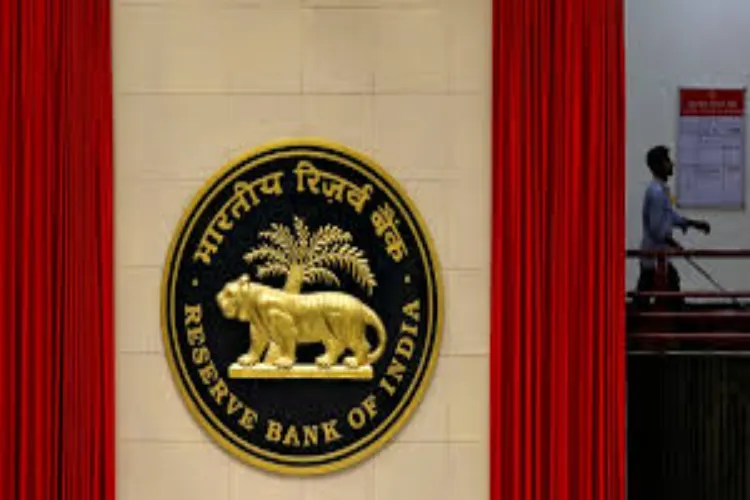
The Reserve Bank of India (RBI) is expected to revise its inflation projections upward while flagging risks to GDP growth in its upcoming policy review, according to a report by PhillipCapital.
The report said that "the latest available inflation projection is 4.1%, for the first half, i.e. April-September 2026" but added that "it will be revised upward, and the guidance for second half i.e. October-March may be issued."
In the policy review meeting on 6 February 2026, the RBI projected CPI inflation for Q1, i.e. April-June 2026, at 4% and that for Q2, i.e. July-Sep 2026, at 4.2%. That is, CPI inflation for first half, April-Sep 2026, was projected at 4.1%.
Highlighting the importance of the upcoming policy, the report noted that "the aspect we are looking forward to is projections on inflation and GDP," especially amid evolving global conditions.
The report further indicated that the extent of revision remains uncertain, stating, "the question is, to what extent it will be notched up."
On the trajectory, it added that if the RBI's inflation projection is "little bit higher than 4.1%, say 4.3% or 4.4%, it would not move the needle much," but "if it is noticeably higher, e.g. nearer to the 5% handle, it will move the market."
On growth, the report flagged emerging concerns, noting that "there are downside risks to GDP growth and upside risk to inflation," particularly due to elevated crude oil prices and currency pressures.
It also cited projections indicating that "real GDP growth is projected at 7.1%... [with] downside risk," with risks linked to geopolitical tensions and their impact on investment, inflation and trade.
READ MORE: Against odds, Saba Anjum becomes India’s speedy forward
The report emphasised that key assumptions, such as crude oil prices and exchange rate levels, will shape RBI's projections, stating that the RBI will assume revised levels for crude oil and rupee for inflation projections.
Overall, the report underlined that inflation and growth projections in the April 8 policy review have assumed increased significance amid heightened global uncertainty due to West Asia crisis.

.webp "S. Irfan Habib with Saquib Salim in Deen Aur Duniya")






.webp)