Mumbai
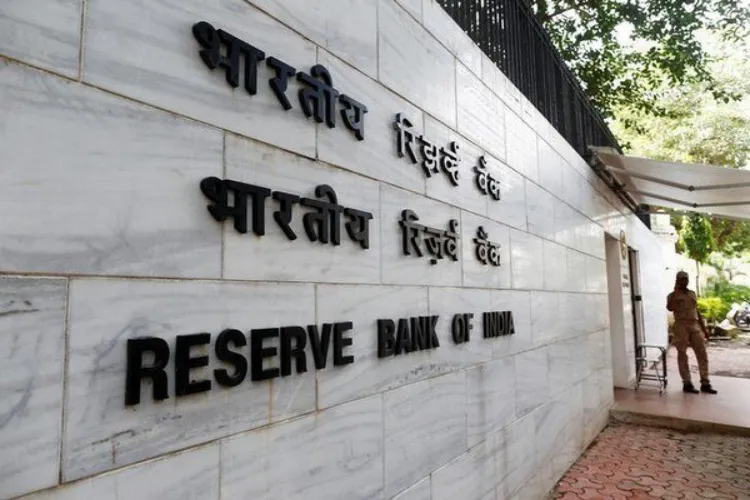
The Reserve Bank of India's Monetary Policy Committee (MPC), chaired by RBI Governor Sanjay Malhotra, commenced its three-day policy meeting on Wednesday amid expectations that the central bank may retain the benchmark repo rate at 5.25 per cent despite mounting global uncertainties.
The six-member committee will conclude its deliberations on June 5, when the monetary policy decision will be announced.
Economists believe the RBI is likely to adopt a cautious approach as geopolitical tensions in West Asia continue to influence crude oil prices, inflationary pressures and overall economic growth prospects. Rising energy costs, supply chain disruptions and weakness in the rupee have added complexity to the policy outlook.
Several analysts expect the central bank to maintain interest rates while reassessing its inflation and growth forecasts. Higher fuel costs and increasing input prices across sectors may prompt the RBI to revise its inflation projections upward, while growth estimates could face some downward adjustment.
In its previous policy review held in April, the RBI had kept rates unchanged, choosing to closely monitor developments related to the West Asia conflict and their impact on domestic economic conditions.
A report by Yes Bank noted that although immediate concerns surrounding the conflict have moderated, risks linked to supply-side disruptions remain. The report highlighted that wholesale price pressures are gradually being transmitted to consumers through increases in fuel prices and commercial LPG rates. Rising costs of agricultural and manufacturing inputs are also expected to influence retail prices.
The bank, however, believes the RBI is unlikely to alter either the policy rate or its stance at this stage, preferring to assess whether current price pressures generate broader second-round inflation effects.
According to Gaura Sen Gupta, Chief Economist at IDFC First Bank, inflation remains within the RBI's target range, giving policymakers room to look beyond the initial impact of higher fuel prices. However, concerns about slower growth due to rising production costs may encourage the central bank to remain cautious.
Market participants are also closely watching the RBI's communication. Experts expect the central bank to acknowledge inflation risks while signalling readiness to respond if price pressures become more entrenched.
Abhishek Bisen of Kotak Mahindra Asset Management Company said that while retail inflation remains relatively moderate at 3.48 per cent, higher wholesale inflation, fuel costs, exchange-rate volatility and monsoon-related uncertainties warrant vigilance. He expects the RBI to maintain the current repo rate while adopting a more hawkish tone.
Under India's inflation-targeting framework, the RBI aims to keep consumer inflation at 4 per cent, with a permissible range between 2 per cent and 6 per cent.
Retail inflation edged up to 3.48 per cent in April, mainly driven by higher prices of precious metals and select food items. Despite this increase, inflation remains below the RBI's target level.
HSBC Chief India Economist Pranjul Bhandari described the upcoming decision as a close call but expects policymakers to leave rates unchanged. She noted that financial conditions have already tightened and the RBI may avoid creating the impression that interest rates are being used to defend the rupee.
Stakeholders from the real estate sector have also advocated policy stability. Industry representatives said unchanged rates would support housing demand, improve affordability and encourage investment by maintaining favourable borrowing conditions.
Business leaders and economists alike have stressed the importance of a stable interest-rate environment at a time when India continues to witness strong economic activity, entrepreneurial growth and rising participation in emerging sectors.
READ MORE: Chabina Hassan's work helped in securing World Heritage status for the Charaideo Maidam
The RBI has already reduced the repo rate by a cumulative 100 basis points during the 2025-26 financial year. With inflation still within the target band and external risks persisting, markets are now focused on the central bank's guidance for the months ahead.

















.webp)
.webp)