New Delhi
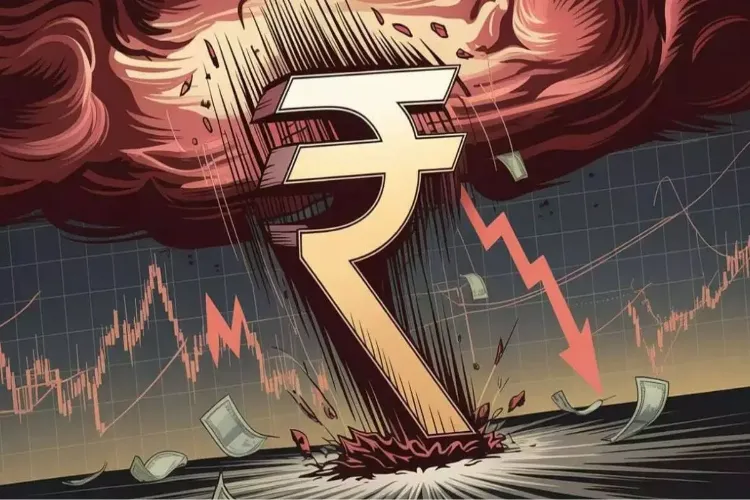
About a fortnight after breaching the 90 mark, the Indian Rupee continued its downward slide on Monday, inching closer to 91 against the US dollar and touching a fresh all-time low.
At the time of filing this report, the rupee was trading at 90.904 per dollar, with an intraday low of 90.957, just short of the 91 level.
So far this year, the domestic currency has depreciated by over 5 per cent on a cumulative basis.
Anindya Banerjee, Head of Currency and Commodity at Kotak Securities, said persistent foreign portfolio investor (FPI) outflows were weighing heavily on the rupee.
“USD-INR remains under pressure due to continued FPI outflows from both bonds and equities. There are incremental positives around the India-US trade deal, which could offer intermittent relief. Overall, we expect the spot pair to trade in a broad range of 89.50–91.00,” Banerjee said.
Echoing similar views, Manoj Kumar Jain, Director and Head of Currency Research at Prithvi Finmart, said the rupee’s fall was driven by heavy equity market outflows and a widening trade deficit.
“Record trade deficits and the imposition of a fresh 50 per cent tariff on Indian goods by Mexico have added to the pressure. The rupee has slipped to record lows against major global currencies,” Jain said.
However, he noted that weakness in the dollar index and optimism around a potential India-US trade deal could lend support at lower levels. “We expect the rupee to remain volatile this week and trade in the range of 89.65–91.40,” he added.
The rupee’s depreciation has also pushed up domestic gold prices, which have risen nearly 60 per cent this year.
According to Akshat Garg, Head of Research and Product at Choice Wealth, the currency reflects mounting pressure from global uncertainty and domestic capital-flow challenges.
“FPIs continue to pare exposure to Indian equities and debt, leading to steady dollar outflows. Importers are actively buying dollars, while exporters are delaying conversions in anticipation of further rupee weakness, creating a demand-supply imbalance,” Garg said.
He added that while the Reserve Bank of India has been intervening to smooth volatility, it is allowing a gradual adjustment rather than defending any specific level.
READ MORE: Rajesh Khan Machchari's dedication has changed conditions for his backward community
“In the near term, the rupee is likely to remain volatile, with movements driven more by flows and sentiment than fundamentals,” Garg said.














.webp)

.webp)