Sreelatha M
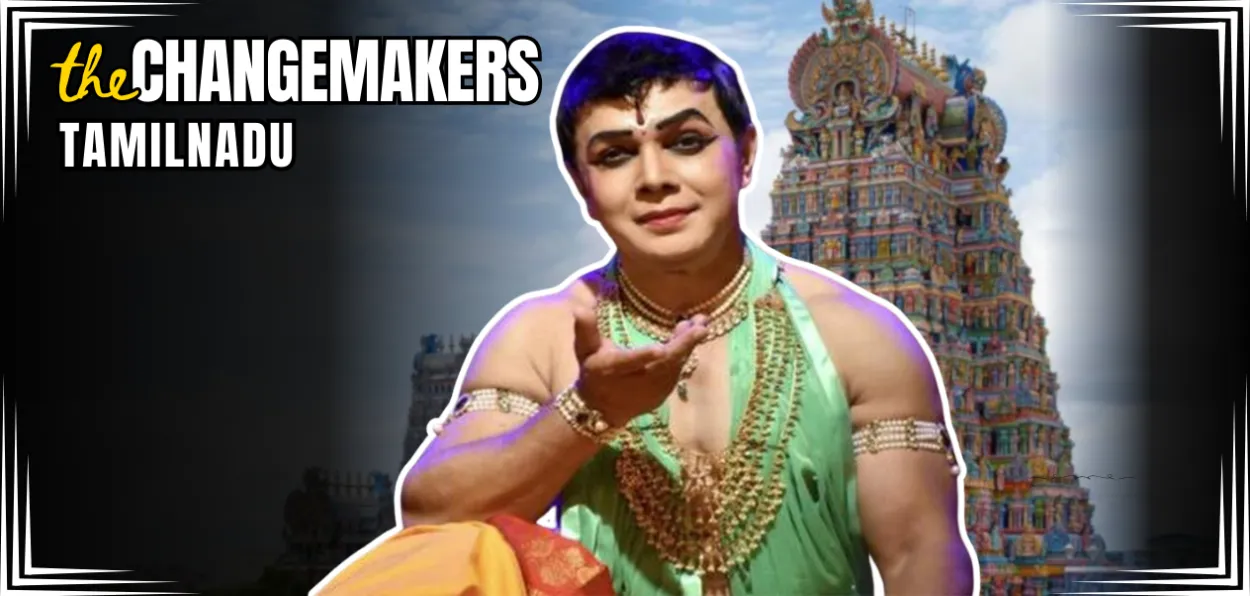
Imagine a little boy joyfully dancing on his own, quite to the surprise and even concern of his parents. As the boy grew up, so did his love for dance. This was tricky for young Zakir Hussain growing up in a very traditional Urdu-speaking Muslim family in Salem.
Today, Zakir Hussain, 55, is a well-known Bharat Natyam exponent and honorary director of the Tamil Nadu Department of Art and Culture.
Recalling his childhood, Hussain says that his family had migrated from Telangana to Tamil Nadu. We spoke Urdu at home and Tamil outside. Hussain says that his father never liked his love for dancing.
Following the popular trend, he took his degree in computer science, but he remained restless after that. “I started thinking of taking dance as my career.” So, Hussain, who had never attended any dance class till the age of 20, left home in Salem and reached Chennai looking for a dance teacher.
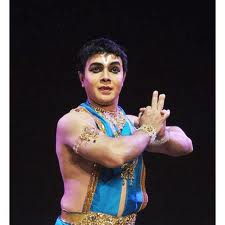
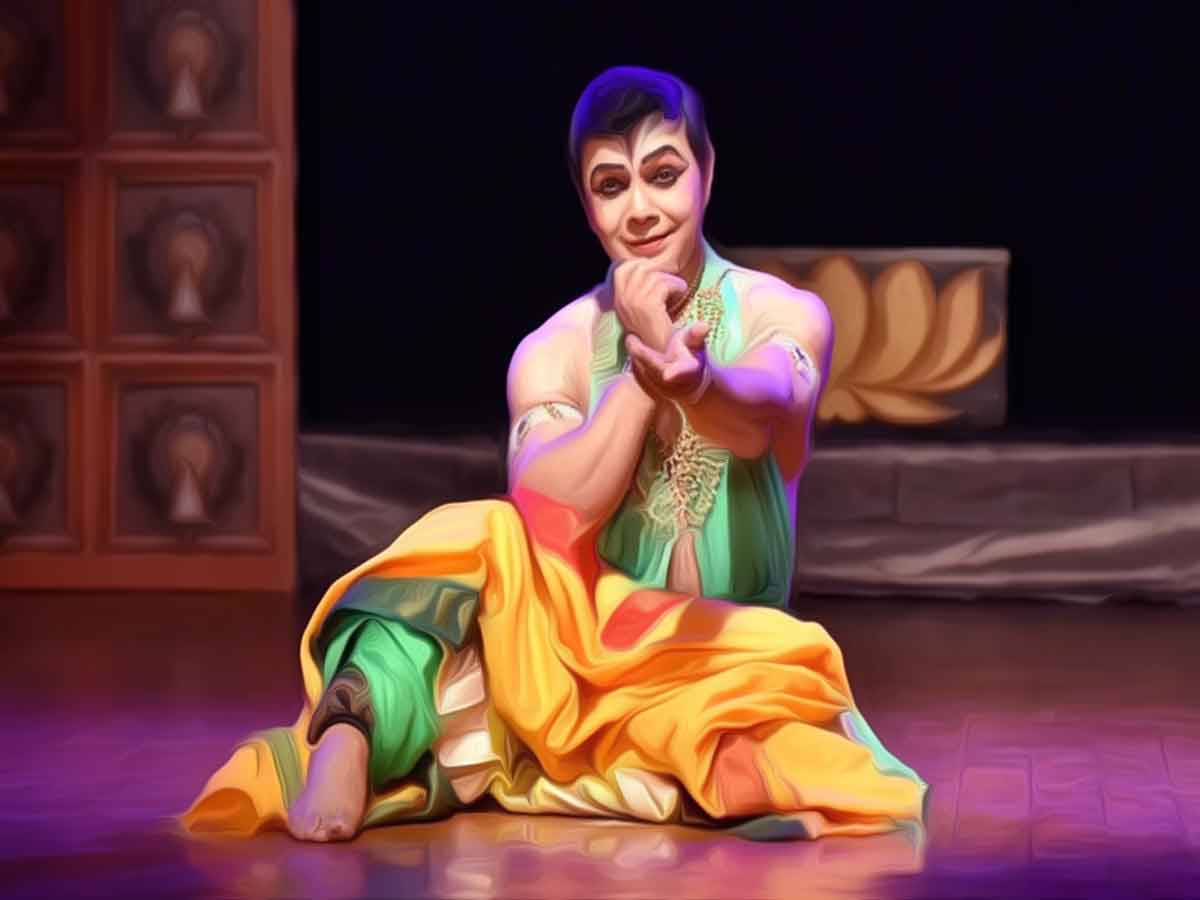 Zakir Hussain on the stage
He never looked back. He even took up a job in a hotel to meet expenses while trying for an appointment with the famous dancer Chitra Visweswaran. I got the appointment and joined her classes, he recalls. ”Chitra taught me for free, and she also used to give me Rs 250 as a stipend,” recalls Hussain.
“I did not bother about my family as I lived alone. I never married either and travelled and lived outside India most of my younger days. For about 14 years, I was abroad, coming home only briefly each year during December when no work was possible abroad. He lived in Canada, Switzerland and Germany, conducting dance classes for Indians there. I got a name performing abroad,” he says.
Despite being a male Muslim classical dancer, Hussain says that he did not face much of a problem except in recent times.
Hussain has now decided to quit dancing and join politics.
“My journey is now into politics’’ says Hussain, who has chosen to join DMK.

“You have to call people to come for the performance. Only dancers or parents of dancers attend performances, as they are just supporting one another. The public is not interested. The situation has become pathetic, especially after corona. We get barely 20-23 people for performances now. If you get 200, you call it massive. Earlier, 800-900 people would come for a performance. GenZ is out of touch with the past and has other things that interest them. Everyone is busy earning money. Dancers and musicians are left in the middle of this race to earn money.”
Hussain says that classical dance and music are endangered as they are not in demand anymore.
He says classical dance has become irrelevant to society as youth cannot relate to it anymore.
Giving an example, he says: `”A 23-year-old boy may earn a couple of lakh rupees working in the IT sector. Can a dancer get anything like that? So why would anyone dance? Only the top-most names can charge a good amount for a performance.’’
It is not just falling demand for art forms, it is also the distortion of art forms to meet the demands of the time that is hitting dance and music, he says.
Earlier there were two-hour performances. Now these have been squeezed into a 20-minute dance in states like Kerala.
In dance festivals held in Kerala, audiences don’t want more than a 20-minute dance, he says. Cricket matches have now been reduced to five hours and 20 overs. People are in a hurry and have no time or money to spare for dance or music, he says.
Hussain is known for his compositions on the story of Krishna devotee Andal, who, according to legends, married the presiding deity of the Ranganatha temple in Srirangam.
“Many dancers have danced to the story of Andal. “For me, dance became a journey for my soul, and Andal’s story always moved me,” says Hussain, who is known for his donations to the Ranganathaswamy temple from time to time.
He says he never had a problem performing anywhere in India till 2014. “Now my name is more important than my dance,” he says bitterly. “I have faced difficulty as a dancer, as a devotee offering donations to the temple…If Muslims create trouble, they are blamed. If a Muslim is a peacemaker, you don’t want him,” he says.
“In DMK, now I feel safe. It stands for social justice. They never say Muslims can't perform or offer at a temple. I just went to Ranganathaswamy temple yesterday. No one can stop me now,” he says proudly.
Hussain is the honorary director of the Department of Art and Culture, which runs dance and music schools in the state.
Hussain, who runs a dance academy to teach students, says he has no plans as he doesn’t believe in planning. I believe in going with the flow and taking things as they come.
ALSO READ: Sofia Ashraf: From burqa rapper to an agent of change
He says he would not want to compel anyone to learn dance or music. You can't force anyone. My only wish is that every artist should be allowed to perform, learn. It should be left to each individual whether he wants to pursue art or not, he adds.

.jpg "Gujarat’s women entrepreneurs bring their craftsmanship to life during Navratri")