Sreelatha. M
Sofia Ashraf rapping the streets of Chennai in a kind of music activism protesting in song against V.K. Sasikala stepping in as chief minister temporarily after the death of Tamil Nadu Chief Minister J. Jayalalitha marked the rise of a new rap star on the music horizon of Tamil Nadu and India.
Today, she is much more than just a rapper.
Her rap feels like a tongue lashing against the tendencies that rile her as a woman and as a human being.
She says in one of her talks that rap, being an angry medium, helped her express herself on things that upset her. Growing up in Chennai and belonging to a Malabar Muslim orthodox family, she says many things were denied to her, and hence she rapped against patriarchy and oppression.
She always loved the stage, music and dance, but was not allowed to dance and play sports. Finally, she found someone performing rap in a rather imperfect way, and she thought she could do it better and yet violate the red lines set by the family.
She started rapping. As she wore a hijab then, she was rapping in a veil. Hence, during her college days, she was known as the Burqa rapper.
.avif) Sofia Ashraf
Sofia Ashraf
She makes satirical videos on anything and everything concerning women. Sometimes she posts her beautiful drawings, which make a statement. In fact, her Instagram showcases her creativity, her drawings and paintings, her nonverbal expression, and her loud silences.
As she says in one of her videos: I’m a content creator by profession and a rapper by digression.
Her songs touch upon issues concerning women, and also against corporate abuse of the environment on the other.
Her humorous videos are on the hijab, on menstruation and even the expectation that women have to look good, sexy and ’attractive’. Her songs on these are hilarious and yet thought-provoking. The humour may make an angry cleric wink at her audacity, while the truth in her words is moving.
The song ‘Any good news’ mocks the belief in social expectations that many Indian women face…the idea that a woman’s only good news is pregnancy or marriage.
The song shows a mother repeatedly asking ``any good news?’’ and the daughter subverting the situation by interpreting the good news as every day victories like a good hair day, promotion, green traffic signals or even hilariously exaggerated achievements like flying to space, solving global issues, finishing off ISIS, or solving the Syrian crisis to highlight how limited and skewed the social priorities are.
Another song, ‘I can't do sexy…’ tears apart the absurdity of the standards of beauty set by society for women.
The blunt and humorous lyrics send the message sharp and clear as she raps lines like “Forget washboard abs, I got washboard breasts and My ass is flatter than a dosa…” — These songs are exaggerated, self-deprecating and humorous in pointing out how the rigid and unrealistically absurd beauty standards set by society prevent a woman from being herself.
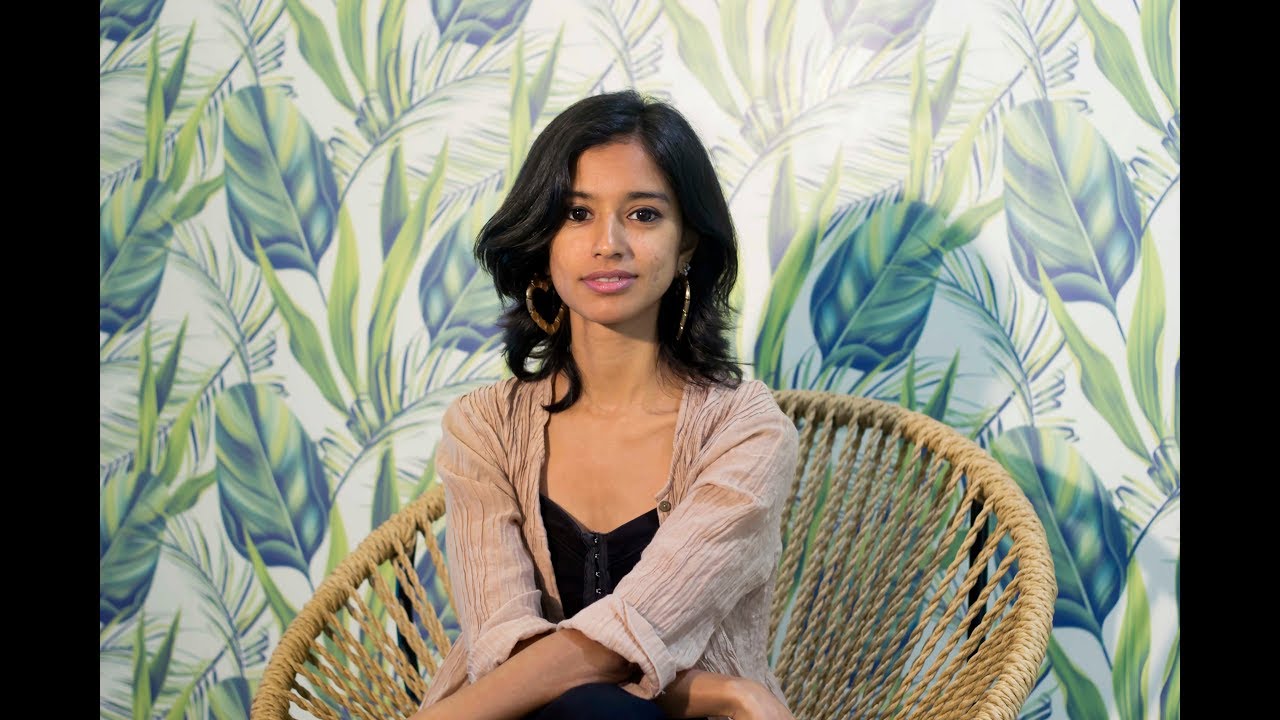 Sofia Ashraf
The song celebrates being one’s true self rather than trying to fit into a mould created by society.
Similarly, Period Pattu discusses menstruation directly and doesn’t use euphemisms.
Using folkstyle storytelling from Tamil Nadu and Kerala, which is similar to Villu Pattu - a question-answer format - to talk about menstrual hygiene, tampons, cups, discussing the pros and cons, health concerns and piercing through the silence covering the subject.
Her relationship with feminism is neither theatrical nor theoretical; It is real. In a talk, she recalls how she was deprived of the simplest of joys, like playing sports, dancing, or even dreaming, because she was a girl. She says she has spent many nights as a young girl on a prayer mat, pleading with God to make her a boy.
She says that she envies people who say that feminism is irrelevant. It means that these people have everything going in their favour. “But as far as I’m concerned, feminism is relevant so long as there is even a single girl who prays to God to make her reborn as a boy.’’
“Female-forward content that breaks taboos is my favourite kind of content to create and consume,’’ says Ashraf on her web page, which gives glimpses of her fairly impressive body of work so far. And that includes over 150 videos directed by her, direction of one season of No Filter Neha, and Big Mouth.
"Female-forward content that breaks taboos is my favourite kind of content to create and consume."
Singing for the Bhopal gas victims, she attacks Dow Chemicals, which refused to take accountability for the tragedy after buying Union Carbide. The song goes: Don't, don’t, don’t, don’t work for Dow. So don’t get swayed, c’mon people awake…keep this evil away from murdering our nation…"
And later came the more famous rap campaign she launched against Unilever at Kodaikanal, and it was noticed internationally as the news spread through the media.
.jpg) Sofi Ashraf
Sofi Ashraf
Though a native of Kerala, she grew up in Chennai and began rapping as a student in Stella Mary’s college, where she did her MA in graphic design…The hijab clad rapper soon made headlines as the `burqa rapper’ after she performed in a hijab to protest prejudice against Muslims, particularly in the aftermath of the 9/11 Islamophobia.
While her rap campaign against Hindustan Unilever at Kodaikanal made news, the less-reported and less-newsworthy song videos take us back to the MTV/V channel era … with their quirkiness, wit and irreverence.
She started in the advertising industry, scripting and directing advertisements in O&M. She has since scripted many popular ads, including enter fresh ``yeh wala ad…’’.
Her music, laced with satire, humour and sass, caught the attention of greats like A R Rahman. She has already collaborated with AR Rahman in Jab Tak Hai Jaan for the song Jiya Re.. and Maryan in the song Sona pareeya.
She was part of his team for almost seven years, lyric writing, rapping, video editing, managing costumes, social media and stage design. She was a rapper, voice actor and writer of an episode in season 7 of the Netflix series Big Mouth.
Sofia is currently far from the madding crowd in the quietude of the Himalayan hills, working with the girls at the NGO Kranti. Kranti is an alternate school for children from red-light areas. "If the girls put out a song, I will reach out,‘’ she promised.
ALSO READ: Mohammad Saleem watches over birds, endangered animals and trees
For an artist who has been whipping up Kranti through her life choices, her art and the expression of her angst, it is ironic that her latest abode goes by that name.
Meanwhile, she said she is focusing on writing and filmmaking. And she did not rule out a track coming out.

.jpg "Gujarat’s women entrepreneurs bring their craftsmanship to life during Navratri")