Sreelatha M/Coimbatore
He is also a Salim, and a bird and animal conservation activist like the more famous bird man of India, Salim Ali. However, Mohammad Saleem never attended a course in conservation biology or simple biology. He did what everyone else of his age was supposed to do those days - took a degree in computer science.
However, his heart was always wanting to take care of the speechless species -- birds, snakes, dogs and other beings -- around. He started an NGO, ‘The Environment Conservation Group’, for a focused and action-oriented approach to saving endangered animals.
Today, Saleem has undertaken multiple rescue operations leading to seizure of hundreds of wild animals from illegal hunters and pet vendors and is also instrumental in eliminating hundreds of snares meant to trap wild animals. He has been recognised by the Wildlife Crime Control Bureau among its first batch of volunteers in India.
.jpeg) Mohammad Saleem
Mohammad Saleem
Saleem is known for the series of campaigns he and the ECG undertook over the last few years and across 28 states to spread awareness about endangered species of birds and animals.
As an animal and bird-centred NGO, they get calls to rescue animals and birds all the time.
We get calls from people to rescue a peacock or a snake. But we transfer them to other NGOs that are dedicated to this work. We confine ourselves to just awareness building around endangered special animals. He started with snakes, and it was here that he developed
Now we receive calls for rescue calls. And we have focused on migratory birds, specifically the Indian pitta.
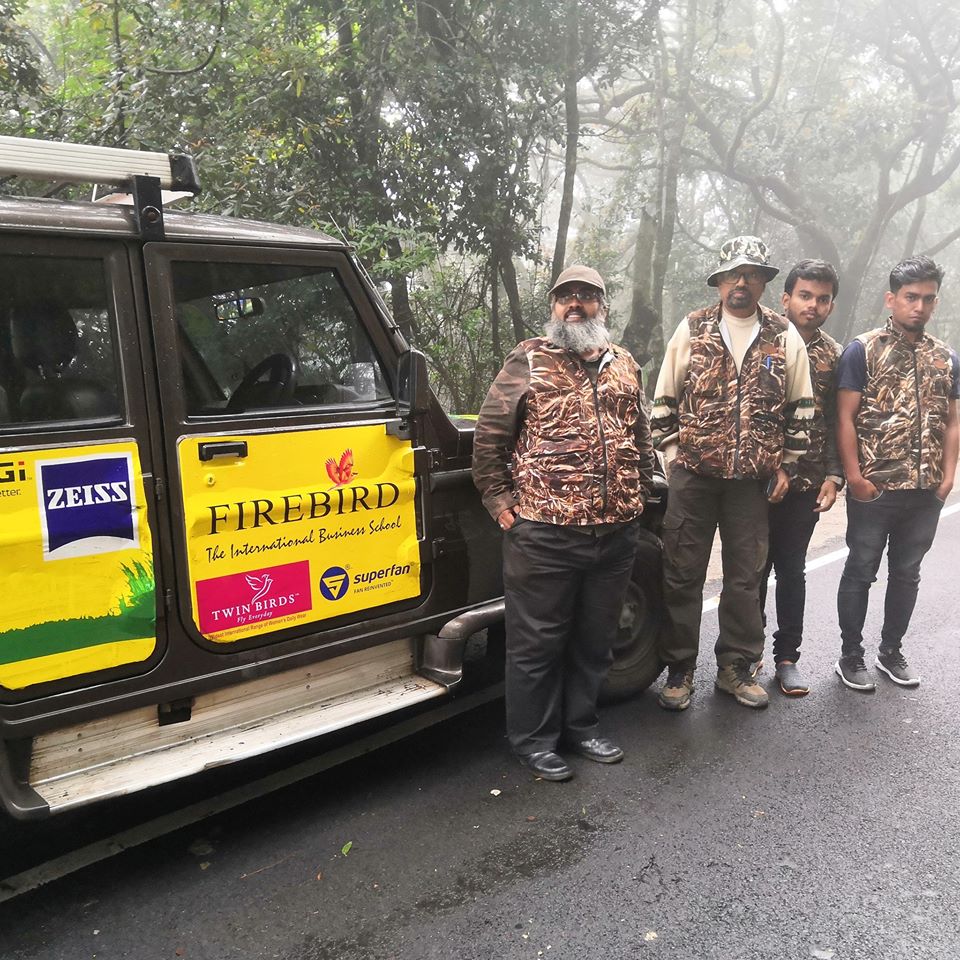 Mohammad Saleem and other volunteers on a rescue mission in a forest
We get calls when birds fall, are unable to fly for some reason or are electrocuted. Now it mostly calls to rescue peacocks in areas around Coimbatore, he says.
Most of these calls are passed on to other NGOs that do rescue as their primary activity. Saleem, meanwhile, was aiming at something bigger. He was looking at the bigger picture and a long-term plan to save birds. So, in 2009, he and his friends at the Conservation group started the Seek expedition.
The purpose was to spread awareness about the rare species and the need to save them. Each expedition had a theme. So, the first one was about animals killed on the roads. So, we spread the message for the need for flyovers in forest areas to avoid human and animal collisions in forests, says Saleem.
It was 2015, and five of them spread around on the road and took pictures, and documented animals dead in road accidents. Then they went to government schools in the surrounding areas and spread the message. We went around telling people not to feed animals on roads as we are becoming a cause for their death on road, he says.
.jpeg) Mohammad Saleem with school students on an educational trip
Mohammad Saleem with school students on an educational trip
We made posters and handouts telling people that animals don’t need humans to feed them. They can feed themselves. He speaks.
Mahindra Motors and Force Motors sponsored their expedition.
Next Seek expedition, they focused on endangered species in the Himalayan foothills and the North East specifically. The North East was important for two reasons, one good and one not so good.
The good reason was Jadav Payeng, the forest man of India, who built an entire forest after seeing snakes die in a treeless sandbank in Assam after a flood.
Saleem says meeting him was an inspiration. Students of IIT Guwahati were also very helpful in our efforts to reach out in the North East. The problem was customary hunting, and it could hurt some endangered species, like the migratory birds. One of the birds whose cause they took up was the Amur Falcon, which comes from Siberia and goes to Africa after a short stay in the North East of India for less than a month.
During this period, they should be protected. We created awareness about the Amur Falcon, and it was a success, he says.
.jpeg) Mohammad Saleem with college students in a jungle
Mohammad Saleem with college students in a jungle
Their third Seek expedition was on endangered birds in Rajasthan, and the focus was on the great Indian Bustard. They were getting killed due to high-tension wires or the windmills.
We created awareness on this issue through media articles and other mediums, says Saleem.
They are huge birds and can’t turn around when they touch the windmill or the wires. So, they crash into them and die or suffer injuries. He pointed out.
The issue was taken up in the Supreme Court, and now high-tension wires are drawn underground rather than overhead. The windmills have been directed to be painted in bright colours, which will warn the birds.
.jpeg) Mohammad Saleem with Forest Protection Force personnel
Mohammad Saleem with Forest Protection Force personnel
In 2019, the fourth Seek Expedition sponsored by Carl Zeiss, the German optical manufacturer, had to be stopped midway due to elections, and later it was restarted in southern India. Here, the scenario is different. There is more awareness, less hunting. The main problem here is the rapidly disappearing habitat, he says.
We are unable to continue due to a lack of funding. We are good at conservation but bad at marketing, he says glumly.
Climate change is causing coastal erosion. These are times when more awareness is needed. But we are unable to do much due to a lack of funds. All we need is about 15 lakh a year for the expedition. It is nothing for companies. But they should see this as a priority, he says.
ALSO READ: From Kashmir to Kanyakumari, India celebrates New Year 2026 in myriad ways
Saleem is moving into Attapadi, the tribal and rainforest area of northern Kerala. I will settle down there and work on the environmental issues there, he says. He is currently in the process of winding up his decades-long operation in Coimbatore. "All of us are shifting", he says, referring to his organisation and his family.

.jpg "Gujarat’s women entrepreneurs bring their craftsmanship to life during Navratri")












.webp)