New Delhi
Researchers at the National Institute of Technology (NIT), Rourkela have designed a low-cost, chemical-free wastewater treatment system aimed at revitalising India’s traditional “dhobi ghats” and protecting urban water bodies.
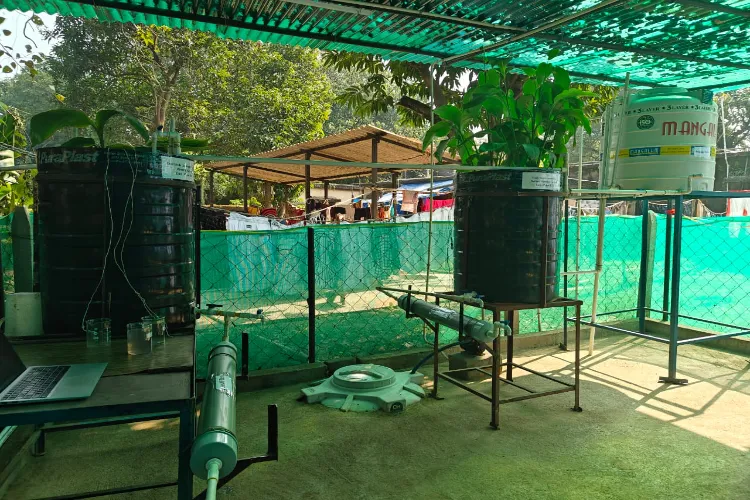
The Constructed Wetland-Microbial Fuel Cell (CW-MFC) system merges wetland plants, engineered filtration layers, and electricity-producing microbes to purify detergent-laden laundry wastewater. The innovation not only cleans water but also generates bioelectricity, offering a sustainable, decentralised solution suitable for urban slums, peri-urban areas, and rural laundry setups.
“The wastewater treatment system uses natural materials like gravel, sand, soil, plants, and microbes. It’s inspired by nature and engineered for clean water,” said Kasturi Dutta, Associate Professor, Department of Biotechnology and Medical Engineering, NIT Rourkela.
A pilot at NIT Rourkela’s own dhobi ghat processed 1,400 litres of detergent-rich wastewater daily, successfully removing surfactants and reducing chemical oxygen demand to standards set by the Bureau of Indian Standards. Treated water can be reused by washermen, easing freshwater dependence and reducing environmental contamination.
The system consists of two cylindrical wetland units integrated with a microbial fuel cell, using layers of gravel, sand, soil, and graphite electrodes to treat water. Its modular design allows capacity expansion for densely populated facilities such as Mumbai’s Mahalaxmi and Bengaluru’s Halasuru dhobi ghats.
READ MORE: When neighbours saved my family and firmed my faith in inclusive India
Officials said the innovation offers a socially and environmentally significant pathway to safeguard lakes, rivers, and drainage systems from chemical pollution while supporting the livelihoods of traditional laundry communities.









.webp "Students at the Exam Centres")
.webp "Representational Image")
.webp "Representational Image")


.webp)

.webp)