Basit Zargar/Srinagar
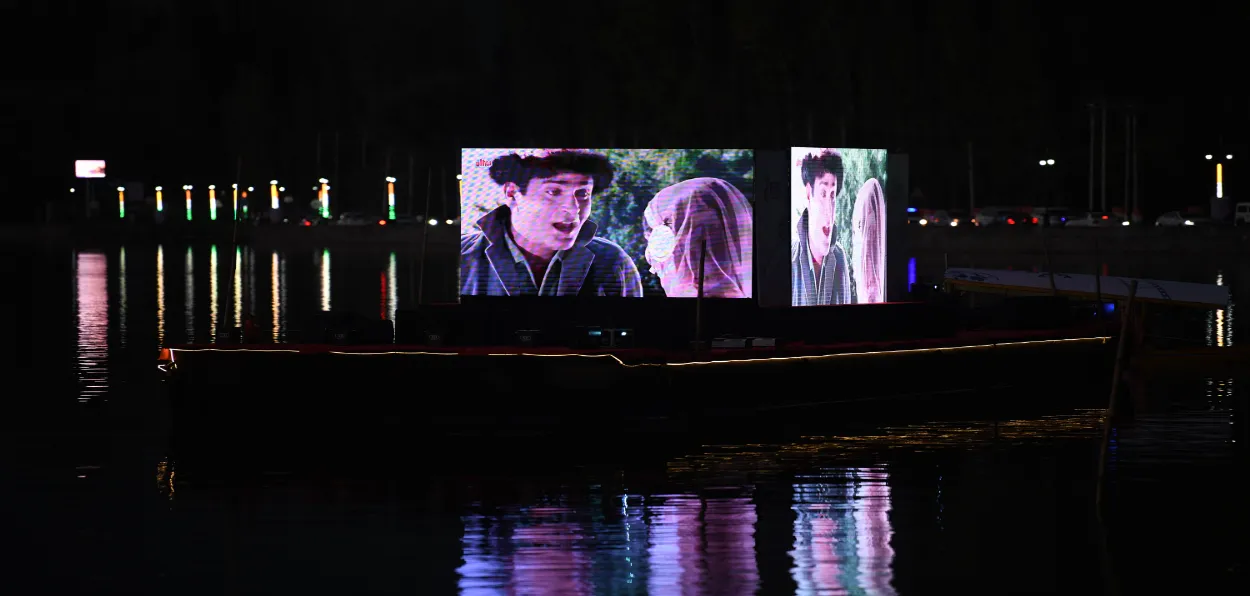
Srinagar’s world-famous Dal Lake looks like a movie set these days. The occasion is Jammu and Kashmir’s first International Film Festival (IFFJK), a four-day event that has brought a never-before-seen cinematic experience to the Valley.
A large floating screen has been erected over the lake’s calm waters near the Sher-e-Kashmir International Convention Centre. In this unique open-air theatre, audiences are watching films while seated in shikaras, turning the lake itself into a cinema hall.
The experience is more than just a novel way of watching movies. It is also reviving memories of Kashmir’s long and enduring relationship with Hindi cinema. As audiences sit surrounded by water and watch familiar songs and scenes from classic films, the setting creates a magic of its own.

The festival began on Monday with a screening of the iconic 1961 film Junglee. A large crowd gathered along the lake shore as the illuminated screen shimmered over the water, with houseboats providing a picturesque backdrop.
On Tuesday, Arjun was screened, followed on Wednesday by Shammi Kapoor and Sharmila Tagore’s evergreen classic Kashmir Ki Kali. Its songs and music, still cherished by generations, seemed to acquire a new charm against the backdrop of Dal Lake.
On the final day of the festival, September 10, Yash Chopra’s timeless Kabhi Kabhie was screened.

The films were carefully chosen for their deep connection with Kashmir. Over the decades, many successful Hindi films have been shot in the Valley, while locations such as Dal Lake and Pahalgam have become an enduring part of the visual imagination of audiences across India.
The floating cinema has given a new dimension to that relationship. Audiences are not merely watching Kashmir on screen; they are experiencing cinema while surrounded by the very landscapes that have inspired filmmakers for generations.
But the purpose of the international film festival goes beyond entertainment. It seeks to present Jammu and Kashmir to the world from a different perspective. Several filmmakers and artists attending the festival stressed the need to look beyond Kashmir’s scenic beauty and bring the stories of its people, traditions and local culture to the screen.
Cinema under stars
— MUNTAHAA (@WaseemMuntaha_) September 10, 2026
Stories on the water
Kashmir in a new frame #BadaltaKashmir
With #DalLake as its backdrop,floating screening celebrates Valley’s rich culture and growing creative spirit#Kashmir is changing—story is being rewritten with every peaceful evening@rishi_suri pic.twitter.com/wZImtOMpIC
For local resident Munir Ahmed Lone, the experience is unlike anything he has encountered before.
“I have seen many films in my life. But watching a film while sitting near Dal Lake and surrounded by water is a completely different experience,” he said, adding that the lake had become an integral part of the cinematic experience.
Another local resident, Yusuf Ali, believes such events could also give tourism a boost. People usually come to Dal Lake for shikara rides, he said, but this time the lake itself has become a cinema hall—an idea being enjoyed by families and young people alike.

As evening descends, the mountains and houseboats surrounding the lake begin to sparkle with lights, creating a spectacular setting for the screenings. The festival itself has a global character, featuring 135 films from 41 countries.
The event has therefore attracted international attention while also creating a unique connection with the local public. It is the first time in the Valley’s history that an international film festival has brought cinema to audiences in such an open-air setting.
Cinema has broken free from the confines of conventional auditoriums and reached people directly. Shikaras, usually associated with tourism and leisure, have been transformed into cinema seats, demonstrating how naturally art and Kashmir’s landscape can come together.
The event was more than a series of film screenings. It became a celebration of Kashmir’s enduring relationship with cinema and its rich cultural landscape. The illuminated floating screen, with a caravan of shikaras gathered before it, is likely to remain etched in the memories of those who witnessed it.
ALSO READ: BRICS Summit: Middle East rivals at one table can broker peace
Once again, Dal Lake has shown that it is not merely a tourist destination. It is a living story—one that continues to inspire cinema, culture and imagination.










.webp)