




.webp "Representational Image")
Ashhar Alam/New Delhi
Scientists have developed an advanced computational method that could significantly speed up the discovery of new materials capable of converting sunlight into usable chemical energy, a breakthrough with potential relevance for clean energy and health-linked sustainability applications.
The research focuses on polyheptazine imides, a class of carbon nitride materials that absorb visible light and can drive key chemical reactions such as hydrogen production, carbon dioxide conversion and hydrogen peroxide synthesis.
By studying the impact of 53 different metal ions on the structure and electronic behaviour of these materials, researchers have built a predictive framework to identify the most effective combinations for enhanced performance.
A team at the Center for Advanced Systems Understanding (CASUS), Helmholtz-Zentrum Dresden-Rossendorf (HZDR), led the study and introduced a reproducible theoretical approach that bridges computational modelling with experimental validation.
Their findings show that inserting metal ions into the material’s porous structure can improve charge separation, a key factor that determines how efficiently light energy is converted into chemical reactions.
READ MORE: Two-time World Champ Nikhat Zareen's story begins with smashing stereotypes
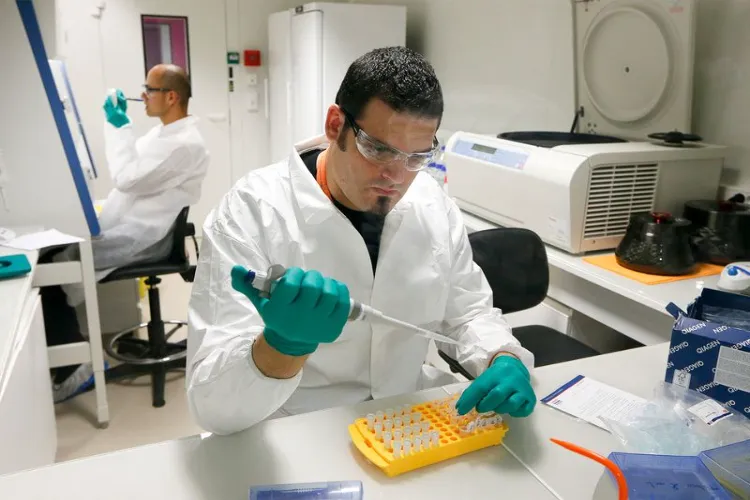
To verify their results, scientists synthesised eight variants of the material and tested them for hydrogen peroxide production, finding strong agreement between theoretical predictions and laboratory outcomes.
Researchers say the method could reduce reliance on slow trial-and-error experimentation and accelerate the design of efficient photo catalysts for sustainable chemical processes, including those relevant to energy and industrial health applications.












.webp "Representational Image")
.webp)

.webp)



_(1).webp)