




 DS Sodhi
The birth of Pakistan on August 14, 1947, as a consequence of the two-nation theory left behind wounds that have yet to heal. Approximately one million people perished in the communal violence that accompanied Partition, while countless accounts, documentaries and films have chronicled the tragedy.
In the aftermath of Partition, the princely State of Jammu and Kashmir initially chose to remain independent. As a Muslim-majority state, its future was uncertain, while its Hindu and Sikh minorities faced potential vulnerability. As an uprising by Muslims in Poonch gained momentum, Pakistan devised a plan to invade Jammu and Kashmir using Pashtun tribal militias, known as Kabali, supported by elements of the Pakistan Army. The operation was reportedly code-named "Operation Gulmarg".
Early intelligence about Pakistan's intentions was conveyed to Maharaja Hari Singh by British officer Maj Gen Scott. Pakistan also cut off supplies of fuel, sugar and salt to Kashmir, contributing to unrest. The Kabali, supported by Pakistani forces operating in disguise, advanced along two main axes—Poonch and Muzaffarabad.
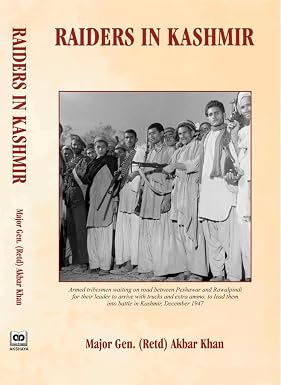 On October 22, 1947, an estimated 4,000 tribal fighters organised into lashkars invaded Muzaffarabad and began advancing towards Baramulla and Srinagar. Their objective was to capture Srinagar airport, which was crucial to any Indian military intervention.
The resistance offered by the Jammu and Kashmir State Forces at Uri proved critical. Brigadier Rajinder Singh, Chief of Staff of the State Forces, fought the invaders with around 200 soldiers. After putting up a determined resistance at Saran Khowan De Bagh in Muzaffarabad, he was forced to withdraw in the face of overwhelming numbers. During the retreat, he ordered the destruction of the Uri bridge, temporarily halting the invaders' advance. Brigadier Rajinder Singh was killed in action near Boniyar on October 27.
The resistance bought the Maharaja valuable time. On the evening of October 26, he signed the Instrument of Accession, paving the way for the deployment of Indian troops.
The invaders had reportedly planned to reach Srinagar airport within five days. However, after crossing Uri and reaching Baramulla, they made a crucial tactical error. Instead of advancing immediately towards Srinagar, they remained in Baramulla and surrounding villages for nearly two days, engaging in looting, arson, killings and destruction of property, particularly targeting members of minority communities.
Meanwhile, following the signing of the Instrument of Accession, the 1st Sikh Regiment of the Indian Army landed at Srinagar airport on the morning of October 27 and began operations against the invaders. Indian forces engaged the Kabalis at Khawaja Bagh in Baramulla, Pattan, Budgam and Shalteng, eventually forcing them to withdraw. Col D.K. Rai was killed at Khawaja Bagh, while Major Somnath Sharma was martyred at Budgam.
The Indian Army subsequently pursued the invaders towards Uri. During their retreat, the Kabalis continued to kill civilians, including Muhammad Maqbool Sherwani, who had reportedly misdirected them towards a wrong route.
This article seeks to highlight some of the lesser-known episodes of supreme sacrifice and interfaith solidarity during those turbulent days. The complete chain of events cannot, of course, be covered within the space available for publication.
The Sikh resistance
In September 1947, as tensions mounted in Pakistan and an attack on Jammu and Kashmir appeared imminent, Akali Kor Singh sent a message from Punjab to Sikhs in Muzaffarabad, urging them to remain vigilant. Sant Gurbaksh Singh Danna, Jathedar Kapur Singh and Giani Ujagar Singh subsequently toured various villages to make the Sikh population aware of the prevailing situation. Jathedar Kapur Singh also convened a meeting of the Shiromani Khalsa Dal at Gurdwara Amira Kadal in Srinagar.
Before the Kabali attack, Mr Wanchoo of the Public Works Department and S. Sadhu Singh of Khadniyar village had visited Muzaffarabad on official duty. When Muzaffarabad came under attack, they fled to Baramulla and alerted the Sikh population about the advancing raiders.
S. Kala Singh Raina, who had fled from Ghaddi Hateyan, met S. Tara Singh Musafir, S. Mohan Singh Bali and S. Nand Singh Kanlibagh. The group met Deputy Commissioner Chaudhary Faiz Ullah, who told them that he had received information that the Kabali were advancing towards Srinagar. He advised the Sikhs to move into the forests. Many subsequently moved towards Singhpora, Dardpura and Ichama, among other places.
Sikhs resisted the advancing Kabalis at several points, delaying their movement towards Srinagar airport. Many members of the community, including women and children, were killed.
At Kanaspora, several Sikhs were killed. A local Muslim, Sultan Dar, reportedly carried the bodies into a house and set it ablaze, seeking to give the dead a dignified funeral. At Chandosa, two Muslims, Khalik Sheikh and Mohammad Sheikh, helped Sardarni Ghoni Kaur cremate the bodies of Sikh victims.
On November 1, 1947, the Kabalis attacked Atna village and began looting and setting homes on fire. Mata Ganga Kaur reportedly came out with a sword, encouraging the Sikhs to resist. She was shot and later succumbed to her injuries.
The tragedy in Kamraz
On the other side of the Jhelum, Kamraz had numerous villages with significant Sikh populations. As the invasion spread, Sikhs abandoned their homes and property and assembled at a gurdwara in Satarna village. A decision was taken to move towards Srinagar.
S. Harnam Singh Ranger of Wampura recited the prayer, after which the group left Satarna. Near Sopore, they reached a marsh known as Nambli at Bulgam Choora. Sikhs who were hiding there reportedly fell into a trap when Kabalis approaching the area raised Sikh slogans to gain their confidence.
According to accounts cited by the author, between 450 and 500 Sikhs were killed at the site. Some managed to escape to Srinagar, while others returned to their native villages.
Sikhs who had travelled from Karnah to Chogal were advised by Kashmiri Pandits living there not to proceed towards Sopore. Sardarni Salinder Kaur, wife of S. Sital Singh Raina, later recalled the events at Sopore, including how some Sikh women attempted to take their own lives rather than fall into the hands of the raiders. She herself sustained injuries to her limbs but managed to escape to her village, Patusa.
She also recalled how a local Muslim, Ghulam Mohammad Mir, provided them with food and shelter. In Mandna village, Muslims including Sultan Tantarey, Gaffar Tantarey and Razzak Goria reportedly pleaded with the Kabalis not to harm the Sikhs.
In Khushipura, bodies of Sikh victims reportedly lay scattered across the village. Sardarni Makhan Kaur, daughter-in-law of S. Ganga Singh, pleaded with a Muslim resident to give the dead a respectful funeral.
According to the account, he agreed on the condition that she marry him. She accepted the condition, but after the bodies had been collected and the funeral pyre lit, Sardarni Makhan Kaur reportedly jumped into the fire with her child, sacrificing her life to protect her honour.
These accounts, passed down through survivours and local witnesses, form a painful part of Kashmir's history. Almost every family in the Valley, in one way or another, has a story from those turbulent days.
Mr Bamzai, in his book History of Kashmir, citing a report in The New York Times, wrote that surviving residents estimated that around 3,000 men from Baramulla, including four Europeans and a retired British Army officer and his pregnant wife, were killed.
A forgotten sacrifice
The central purpose of this article, confined to events in Kashmir, is to draw attention to the supreme sacrifice made by the Sikh community during the 1947 invasion. After the forward defence of the State Forces was breached, Sikh civilians became an important line of resistance against the invading raiders and, in many places, delayed their advance towards Srinagar.

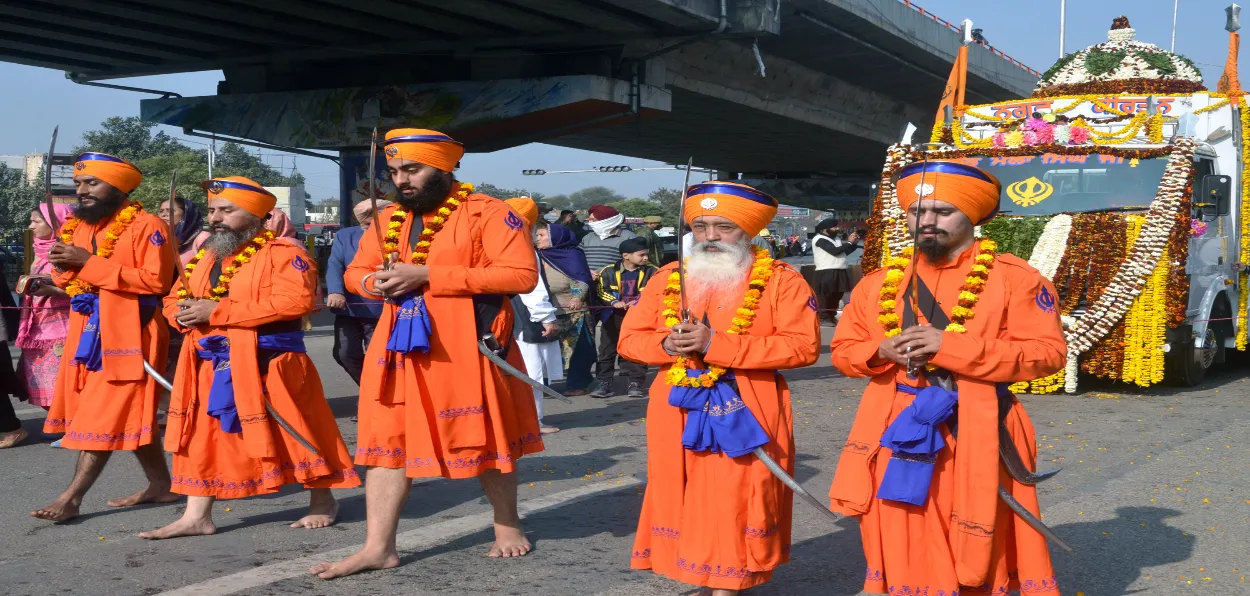
Sikh soldiers of the Indian Army landing in Srinagar on October 27, 1947
The people of Kashmir, in the spirit of indigenous secularism and brotherhood that is now often described as Kashmiriyat, stood together in defence of the Valley and the nation. Yet the Sikh communities of Baramulla, Kamraz, Karnah and Budgam bore a particularly heavy burden, facing the brunt of the violence.
The role and sacrifices of the Sikh community during this defining chapter have been documented through local accounts, eyewitness testimonies and contemporary records. The supreme sacrifice of the Sikh martyrs deserves enduring public recognition.A dedicated memorial has accordingly been proposed to the concerned authorities. Such a memorial would not only honour those who lost their lives but also preserve for future generations an important and inspiring chapter in the history of Jammu and Kashmir—the story of ordinary civilians who, amid extraordinary violence, stood in defence of their homes, their neighbours and their land.
Commodore Dalbir Singh Sodhi, NM (Retd.) is a decorated Indian Navy veteran, defence expert, author, and social activist.

.jpg "Gujarat’s women entrepreneurs bring their craftsmanship to life during Navratri")






_(2).webp)
.webp)


.webp)