




Zeba Naseem
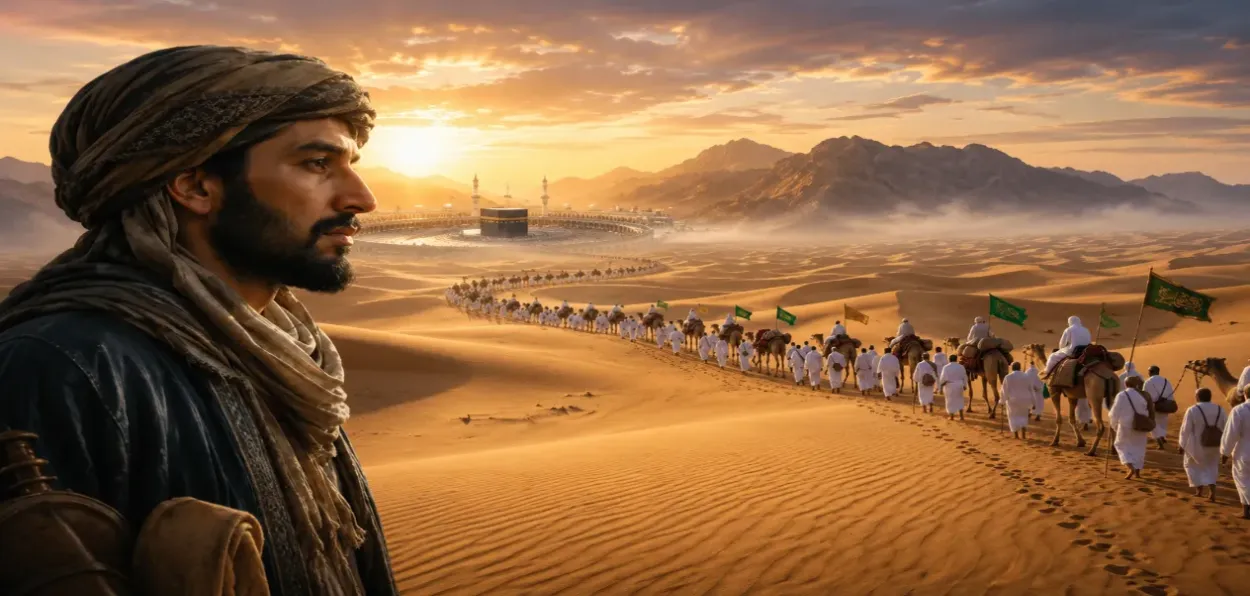
“In the morning, we arrived in Mecca, the city of peace. May Allah exalt its honour.”
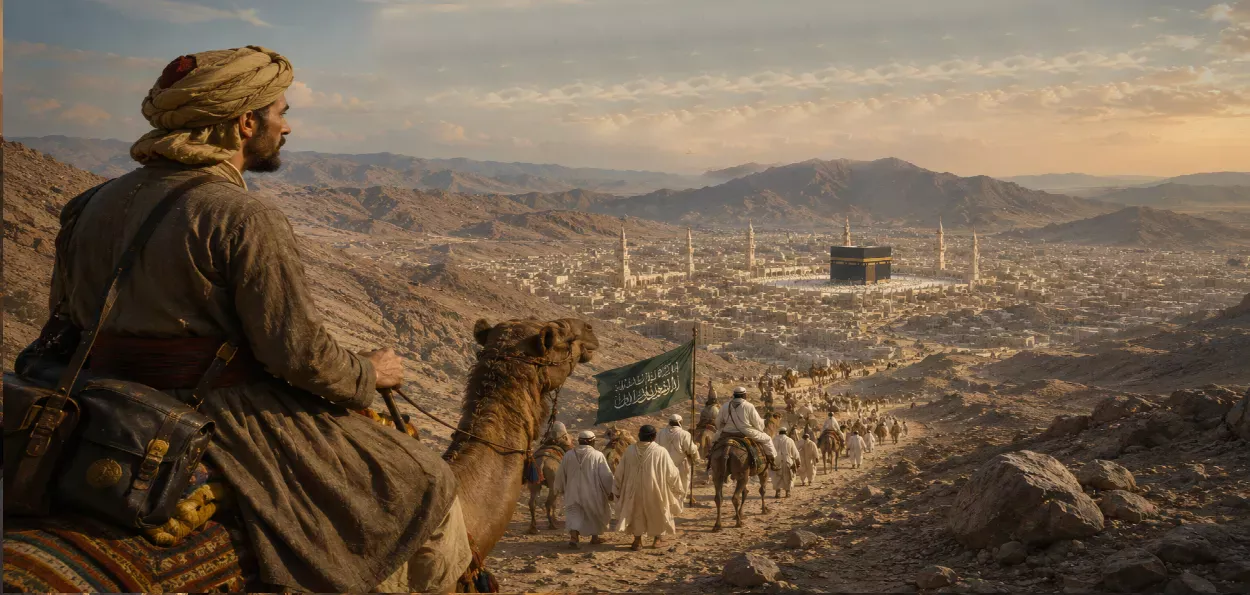
These words, written nearly 700 years ago by the great traveller Ibn Battuta, still resonate deeply with Muslims across the world. In 1326, Ibn Battuta travelled thousands of kilometres from Morocco to Mecca at a time when there were no ships, paved roads or modern means of transport. The route to Makkah passed through harsh deserts haunted by disease, exhaustion and the constant fear of robbers.
Among the countless travel narratives written throughout history, Hajj travelogues occupy a special place. They are not merely accounts of routes and destinations; they chronicle the transformation of the human soul. In these writings, faith speaks through longing, devotion and spiritual awakening. Perhaps this is why such narratives continue to captivate readers even today.
Ibn Battuta stayed in Madinah for four days before donning the white ihram and departing for Makkah. He left behind a moving description of seeing the Kaaba for the first time. “We circumambulated the Kaaba, kissed the Black Stone, prayed at the Maqam-e-Ibrahim, drank Zamzam water, and performed Sa‘i between Safa and Marwa,” he wrote.
His diary was not simply a record of devotion; it was also a vivid portrait of the world of his time. Roads, cities, caravans, markets, food and people all found a place in his narrative. Indeed, the Hajj has never been merely a religious obligation. It has also been a deeply transformative human experience. This is why many educated pilgrims returning from Hajj felt compelled to preserve their journeys in writing.
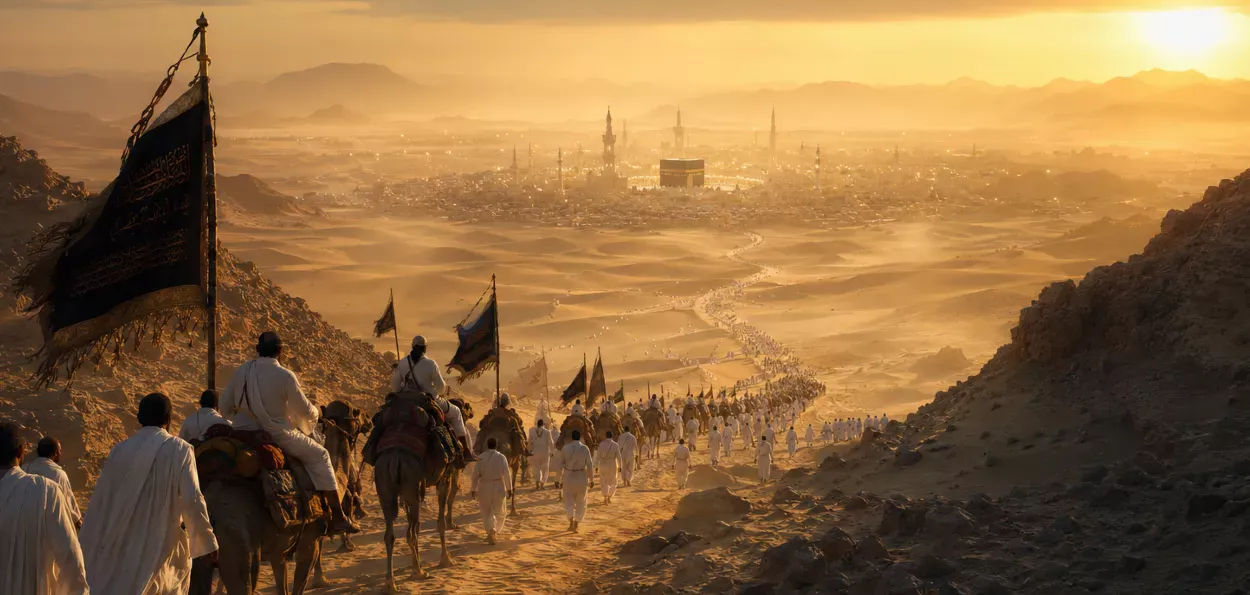
In the twelfth century, the celebrated Andalusian traveller Ibn Jubayr undertook a similar journey from Spain to Makkah. He wrote in detail about violent storms at sea, the hardships of travel and the spiritual atmosphere surrounding the rites of ihram, Arafat, Jamarat and tawaf. His prose carried a rare spiritual intensity that continues to move readers centuries later.
In the fourteenth century, the renowned scholar Ibn Qayyim al-Jawziyya composed a long poem on Hajj in which he described not only the exhaustion of the journey but also the inner condition of the pilgrim. He wrote that travellers arrive with dusty hair and weary faces, yet their hearts are filled with a joy greater than any worldly pleasure.
According to him, when pilgrims first behold the Kaaba, every trace of fatigue disappears. It feels as though a quest stretching across centuries has finally reached fulfilment.
Hajj travelogues are not confined to Muslim writers alone. Travellers from other cultures also attempted to understand and document this profound experience.
In 1964, the celebrated American human rights leader Malcolm X performed Hajj, an experience that transformed his worldview. In Makkah, he witnessed people of every race and nationality — white, black, Asian and African — standing side by side in identical garments and praying together as equals.
Upon his return to America, he famously wrote: “For the first time, I saw human beings standing together without distinction of race or colour.” For Malcolm X, Hajj was not only a religious journey but also a powerful lesson in human equality and brotherhood.
In the nineteenth century, British explorer Richard Francis Burton secretly travelled to Makkah disguised as a dervish, as non-Muslims were forbidden to enter the holy city at the time. He later wrote extensively about his experiences, vividly describing the streets of Makkah, Masjid al-Haram, the immense crowds of pilgrims and the atmosphere of the sacred city. His account became immensely popular in the Western world.
Another British traveller, Eldon Rutter, later wrote about his journey to Makkah and Madinah. His description of the Fajr prayer remains especially memorable. He wrote that in the faint light of dawn, the Kaaba appeared draped in black, while rows upon rows of worshippers gathered around it in silence and devotion.
The enduring beauty of Hajj travelogues lies in the fact that they go far beyond the description of rituals. They capture deeply human emotions — the pain of leaving home, the hardships of travel, the overwhelming joy of seeing the Kaaba for the first time and the tears of pilgrims praying on the plains of Arafat. These emotions breathe life into every page.
This literary tradition has continued into modern times. The celebrated Egyptian writer Bint al-Shati also wrote about her Hajj experiences, while many Arab and Asian authors have produced works reflecting not only the spiritual dimension of Hajj but also the social and cultural worlds surrounding it.
Indeed, Hajj remains perhaps the largest annual gathering of humanity anywhere in the world. Languages differ, colours differ and nationalities differ, yet the purpose remains one. It is this extraordinary unity that has inspired generations of writers, poets and artists.
Beyond books, Hajj has inspired paintings, poetry and music across centuries. Artists of every era have sought to express its spiritual and emotional power in their own way.
Today, in a fast-paced world where people often skim through fleeting and trivial content, the old Hajj travelogues continue to hold readers spellbound. The reason is simple: they contain the authentic heartbeat of humanity.
These narratives reveal not only the routes to Makkah and Madinah but also vivid glimpses of the Muslim world of earlier centuries. Through their pages, the bustling markets, caravans, ships, khanqahs, and mosques of another age come alive.
Historians regard these Hajj travelogues as far more than religious literature. They are invaluable records of social and cultural history, offering rare insight into the Muslim world across different eras.
READ MORE: Gurugram’s ‘Bulldozer Man’ RS Batth joins Muslims in Eid cleanliness drive
Perhaps that is why, even after seven centuries, Ibn Battuta’s words about arriving in Mecca still feel fresh and timeless. For Hajj is not merely a journey to a sacred destination; it is also the beginning of a new journey within the human heart.

.jpg "Gujarat’s women entrepreneurs bring their craftsmanship to life during Navratri")







.webp)