New Delhi
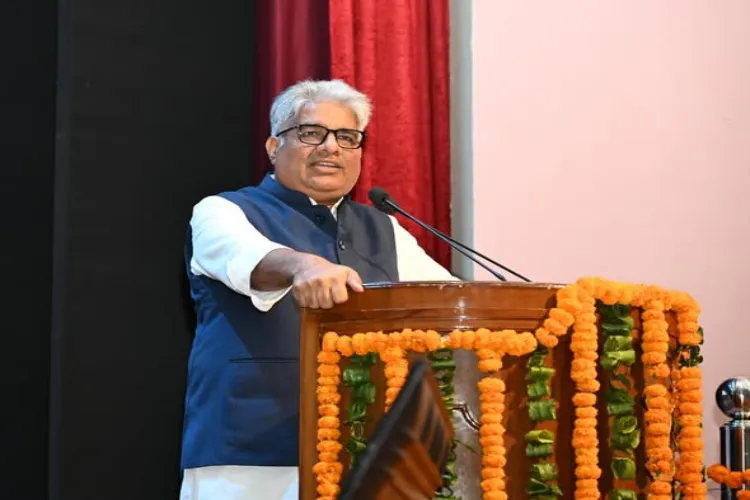
As Delhi-NCR continues to grapple with rising air pollution levels, Union Environment Minister Bhupender Yadav on Monday outlined a comprehensive, multi-pronged strategy adopted by the government to combat deteriorating air quality, with focus on cleaner fuels, dust control, traffic management and strict regulatory enforcement.
In an exclusive interview with ANI, Yadav said fuel transition remains a critical pillar of the government’s pollution control efforts. “PNG gas supply has been provided to 226 out of 240 industrial areas, and industries have been advised to shift to gas-based systems as much as possible. Thermal power plants around Delhi have also been upgraded with new technology,” he said.
Highlighting the role of dust management, the minister said that under the National Clean Air Programme (NCAP), urban local bodies have been directed to implement standards ranging from construction and demolition (C&D) waste management to mechanised cleaning. “With the support of the Finance Commission and continuous coordination by the Commission for Air Quality Management (CAQM), we are reviewing progress regularly,” he added.
Yadav noted that air quality this season has been relatively better compared to previous years but said adverse meteorological conditions in December pose challenges. “When Western Disturbances bring rain, air quality improves. However, when they pass without rainfall, wind speeds drop, causing PM2.5 and PM10 levels to remain suspended,” he said.
To address this, the government has empowered CAQM to implement the Graded Response Action Plan (GRAP) based on weather forecasts. “Based on this year’s experience, we will further strengthen coordination and implementation of GRAP measures,” he said.
The minister said multiple pollution sources in Delhi are being addressed systematically. He cited the transition to BS-VI fuel standards and the withdrawal of protection for older, highly polluting vehicles following a recent Supreme Court decision. “With millions of vehicles on Delhi roads, cleaner fuel and stricter norms will significantly improve environmental standards,” he said.
On industrial emissions, Yadav said nearly 3,500 industries in NCR have been directed to install real-time pollution monitoring devices, with around 1,200 already installed and the remaining to be completed by December 31.
Addressing dust pollution from construction activity, he said meetings have been held with authorities from Ghaziabad, Noida, Faridabad, Gurugram, Sonipat, NDMC and NCD to prepare year-long action plans for C&D waste management for 2026.
Highlighting municipal efforts, Yadav said coordination among Delhi-NCR’s urban bodies has improved, with legacy waste sites at Bhalswa, Okhla and Ghazipur expected to be largely cleared by June. Cities such as Gurugram, Faridabad and Ghaziabad have also made progress, including converting old dumping sites into Miyawaki forests.
READ MORE: Young bride Mrs Yasim taught me differences can be celebrated
Reiterating the government’s commitment, the minister stressed that sustained monitoring, inter-agency coordination and public participation are key to ensuring cleaner air for citizens in the Delhi-NCR region.




.png)