Vidushi Gaur/ New Delhi
More than seven decades after his assassination, Mahatma Gandhi continues to occupy a unique place in the imagination of people across the world. His name is associated with non-violence, civil resistance, truth and the struggle against injustice. His methods have been studied far beyond India, while his life has inspired generations of political leaders, scholars, activists and writers.
Gandhi's international popularity has also produced a substantial body of literature about him. Foreign writers, historians, journalists and political thinkers have approached his life from different perspectives. Some have concentrated on his political campaigns, others on his philosophy, while some have attempted to understand the private individual behind the globally recognised image of the Mahatma.
Here are 10 notable books by foreign authors that offer different perspectives on Gandhi:
1. The Life of Mahatma Gandhi – Louis Fischer
The book traces Gandhi's journey from his early life and legal career to his years in South Africa and his leadership of India's freedom movement. Fischer presents Gandhi not simply as a political leader but as a man whose personal convictions became central to his public life.
 The Life of Mahatma Gandhi by Louis Fischer
2. Gandhi: Prisoner of Hope – Judith M. Brown
The book pays considerable attention to his formative experiences in South Africa and his subsequent political career in India. Rather than treating Gandhi only as a saintly figure, Brown examines the political circumstances in which his ideas developed and the tensions involved in putting those ideals into practice.
Gandhi: Prisoner of Hope by Judith M. Brown
3. The Life and Death of Mahatma Gandhi – Robert Payne
Payne presents Gandhi's life as both a political and personal story. Beginning with his childhood and legal education, the book follows his transformation in South Africa and his eventual emergence as the leader of India's freedom movement. It also gives considerable attention to Gandhi's final years and assassination.
4. Mohandas Gandhi – George Woodcock
Unlike lengthy biographies, Woodcock's book provides a relatively compact introduction to Gandhi's life and thought. It examines both his political activities and the ideas that shaped his approach to social and political change. The book is listed among the major shorter studies of Gandhi in the University of California, Los Angeles' bibliographic guide.
5. Gandhi: Father of a Nation – Catherine Clément
Published in 1996, the book is another example of how Gandhi became a subject of international biography rather than remaining confined to Indian historical writing. Clément examines Gandhi's emergence as a national leader and the ideas that made him an important figure beyond India's borders.
6. Gandhi's Passion: The Life and Legacy of Mahatma Gandhi – Stanley Wolpert
The book examines Gandhi's development, his political activities and his continuing importance after his death. Wolpert's approach is particularly interested in the relationship between Gandhi's personal convictions and his public role, allowing readers to see the complexity behind the familiar image of the Mahatma. Gandhi's Passion is also included in the bibliography of the Mani Bhavan Gandhi Sangrahalaya.
 Gandhi's Passion: The Life and Legacy of Mahatma Gandhi by Stanley Wolpert
7. Great Soul: Mahatma Gandhi and His Struggle with India – Joseph Lelyveld
The book focuses particularly on Gandhi's years in South Africa and his return to India. Lelyveld uses historical material to examine Gandhi's political and personal development and his complicated relationship with the country whose independence struggle he came to lead. The biography generated considerable discussion because of its interpretations of Gandhi's personal life and relationships.
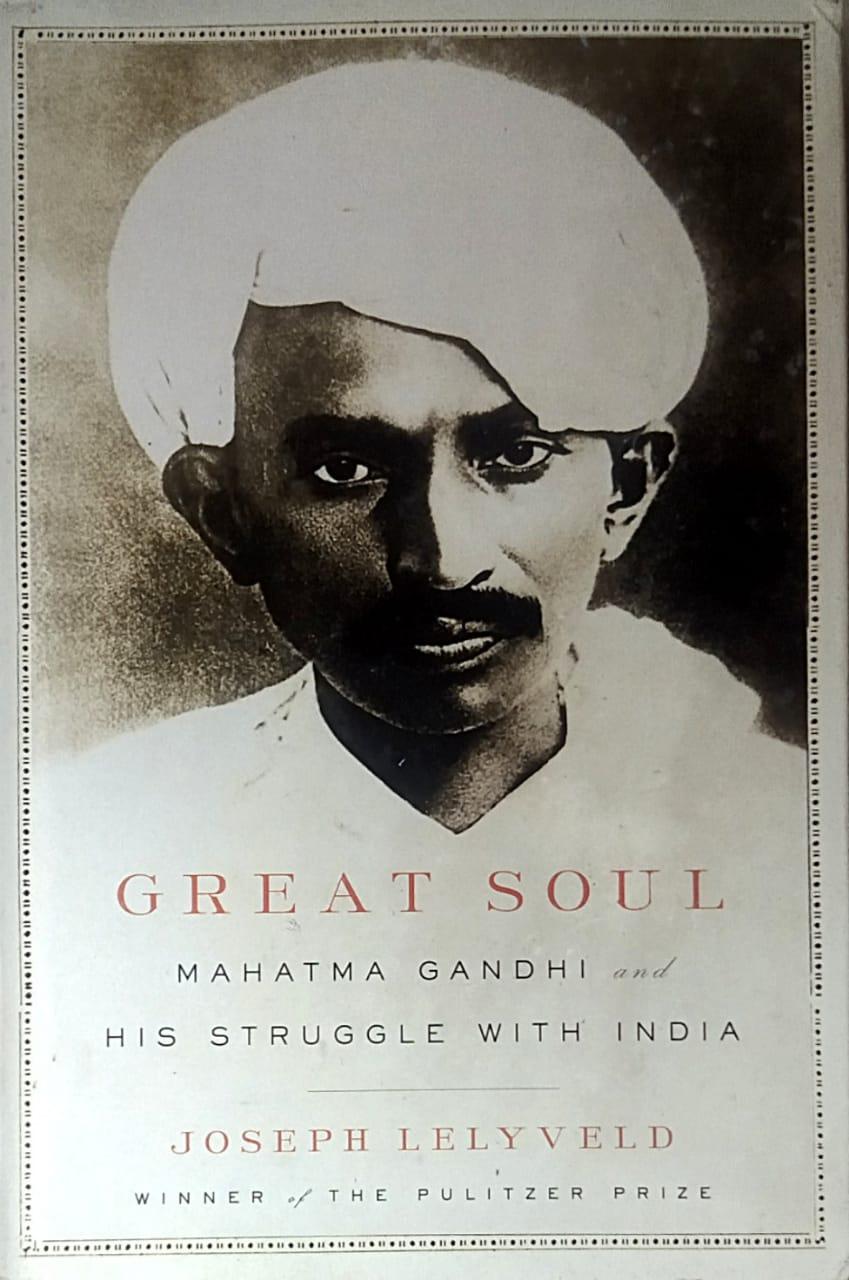 Great Soul: Mahatma Gandhi and His Struggle with India by Joseph Lelyveld
8. Mahatma Gandhi: Nonviolent Power in Action – Dennis Dalton
The book examines the connection between Gandhi's political philosophy and his activism. Dalton pays particular attention to the 1930 civil disobedience movement, including the Salt Satyagraha, and Gandhi's 1947 Calcutta fast. He also places Gandhi's methods alongside the approaches of Martin Luther King Jr. and Malcolm X, examining the continuing relevance of Gandhian non-violence in political movements.
9. Gandhi: Voice of a New Age Revolution – Martin Green
Published in 1993, the book examines aspects of Gandhi's inner life and relationships, while also considering his exposure to different intellectual and spiritual influences. Green's work attempts to explain how the shy young man who travelled to London eventually developed into a figure whose ideas influenced political and social movements around the world.
ALSO READ: Oniza Drabu's The Big Book of Kashmiri Literature encases heritage
10. The Essential Gandhi – Louis Fischer
The collection brings together Gandhi's thoughts on his life, work and ideas, allowing readers to encounter the Mahatma through his own words. It is broadly organised around Gandhi as a person and Gandhi as a public figure, making it useful for readers seeking to understand the principles behind his political and social activities.







.webp "Prime Minister Narendra Modi")



.webp)